Sign in. It’s quick, free and it’s up to you.
An account is an optional way to support the work we do. Find out more.
Sign in. It’s quick, free and it’s up to you.
An account is an optional way to support the work we do. Find out more.
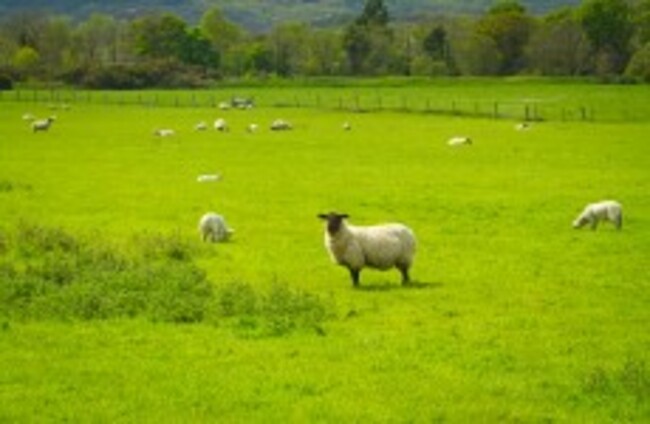

WE HAVE NOW seen two political earthquakes in a row in national elections, reflecting the impact that the crisis on households up and down the country. Rural Ireland has felt it more than most, with unemployment rising by 192% relative 114% in the cities.
The horrendous impact was, to some extent, unsurprising given that how low a priority rural economic development had been in national development strategies over the past decade, where construction was effectively our rural development strategy.
From January to July 2013, Pat Spillane and I experienced this first hand as we travelled around rural Ireland as part of the Commission for the Economic Development of Rural Areas (CEDRA), which had been set up by Ministers Phil Hogan and Simon Coveney to develop a strategy for job creation and economic development in rural areas.
We were determined that this would not be an academic exercise resulting in the proverbial report gathering dust on a shelf. We wanted to hear the real views of the people – we meant this in a genuine way and not just to pay lip service.
We wanted everyone have their say
We decided that we would visit and meet people in every county of the country. We were also determined that we wouldn’t just listen to the loudest voices. At many public meetings it is just the usual suspects, the most confident people or the people with the agendas who talk. We wanted to allow everyone have their say.
So we decided that we set the meetings up in groups of round-tables where we gave people a job to do. Pat asked them two questions
Looking back, it was a truly wonderful experience. Abiding memories for me are the hospitality we received up and down the country, the fresh cut daffodils in our meeting in the community hall Granagh or the over flow group in Scarriff, who had to use dressing rooms of the GAA hall, to hearing the story of those who created the Greenway in Mayo, to picking the brains of the likes of Edmund Harty of Dairymaster in Causeway, County Kerry or Pat McDonagh of Supermacs on how to actually create jobs in rural areas, to the passion for the islands of Joe McDonagh, of the West’s Awake fame in the 1980 All-Ireland Final.
Wherever we went we heard common themes:
We had to rely on voluntary support
Our road trip in the end, extended to 100 meetings from big public meetings to village hall meetings, to meetings with experts and business people.
When we started, we were asked if we were a new quango. However it couldn’t be further from the truth. We effectively had no budget and so we had to rely on voluntary support and help throughout our trip. Local organisations in rural organisations like the GAA or Teagasc, local development companies and community organisations promoted our events, while nearly every local radio station gave us airtime.
We didn’t spend a cent on advertising and hired no consultants. When we needed an image for our report in the end, we ran a school art competition won by Nora Casey of Colaiste Naomh Eoin on Inis Meáin.
Pat Spillane gave up a year of his life without pay to run the Commission and all of the experts on the Commission gave their time voluntarily. Public servants undertook the work on top of their day jobs and interns helped us day to day. Because Pat isn’t a civil servant he wasn’t entitled to civil service mileage rates and so his expenses barely covered his fuel costs. I know he was hurt when lazy journalists took a pot shot at him doing this for money and expenses, when he was out of pocket at the end of the year and spent many nights away from Rosario, munching petrol station sandwiches while running evening meetings.
Pat was our main asset – he has a fantastic capacity to engage with people no matter what background and social status. At the end of the process, when the report was launched, out of appreciation for him, I presented him with a bog oak sculpture, The Guardian by Helen Conneely of Celtic Roots. I thought it served as a metaphor for rural Ireland and its future, tough, resilient, taking a natural resource and through creativity and skill turning it into something of value and of beauty.
We met hundreds of people on our journey. We promised them that we would listen to them and to represent what they told us. I hope what we have done does justice to their input and expectations. It is now up to all of us to do what we can to deliver the better future envisaged in the report.
The report can be found on www.ruralireland.ie
Prof Cathal O’Donoghue is Head of Teagasc’s Rural Economy and Development Programme and was CEO of CEDRA. Cathal.ODononghue@teagasc.ie.
Follow Voices on Twitter: @TJ_Voices
To embed this post, copy the code below on your site






have your say