Sign in. It’s quick, free and it’s up to you.
An account is an optional way to support the work we do. Find out more.
Sign in. It’s quick, free and it’s up to you.
An account is an optional way to support the work we do. Find out more.

‘PLEASE BE SERIOUS’. That was my father’s reaction when I told him I’d booked flights to Albania. ‘It’s Europe’s answer to North Korea!’
He’d never been shy about travelling to offbeat destinations himself. In his 20s he’d driven from Rosslare to Istanbul, staying in communist youth hostels along the way in the former Yugoslavia. ‘But I wasn’t stupid enough to go to Albania’.
I got a little defensive, perhaps realising how little research I’d done. ‘It’s actually a really hot Instagram destination, Dad’ I offered unconvincingly, pointing at some photos of turquoise waters on my phone.
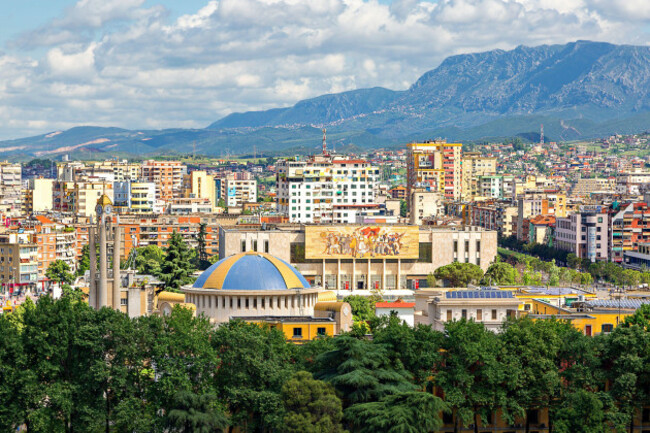
In the capital Tirana, I began to sympathise with my father’s position a little. The city is home to Bunkart 2, an underground bunker turned museum to the brutal communist dictatorship which ruled the country until 1992.
Dirty bulbs cast the shadowy tunnels and oppressive chambers in dim electric light, police gas masks line the walls like mounted deer heads. In one room there was an exhibition on the regime’s hostile attitude to foreigners, with special disdain reserved for hippies. An official directive for border guards singled out ‘Men with long hair like women’, ‘exaggerated sideburns’ and ‘irregular beards’. Had my father shown up with his backpack in the 1970s, he’d almost certainly have been shot on sight.
It’s ironic then that tourism is largely responsible for Albania’s minor economic miracle. They expect to have hosted roughly nine million holidaymakers by the end of 2023. This would mean there will have been about three tourists for every person actually living in the country this year.
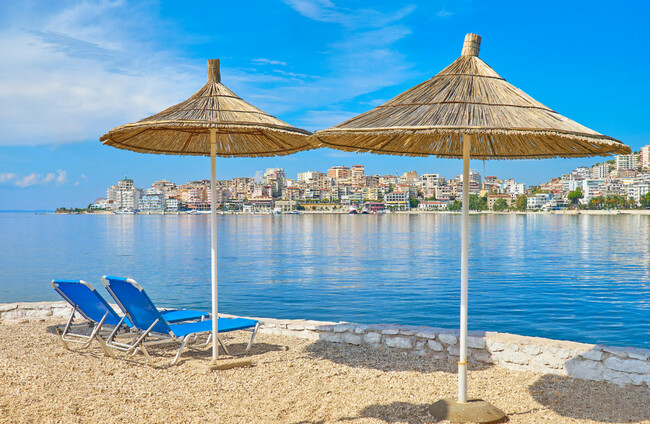
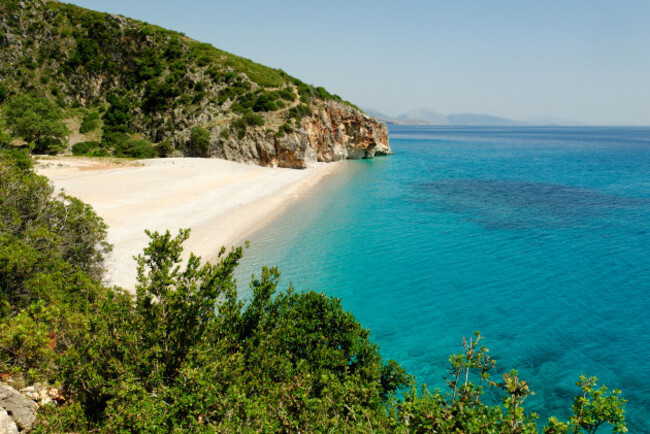
Once a cheap alternative to Greece or Italy for those in the know, social media has turned demand radioactive. The clear waters and unspoilt landscapes in beach towns like Dhermi rival the Maldives, with hotel rooms coming at a fraction of the price.
It remains to be seen if the small nation will be able to cope with the surge in visitors. In Dhermi, diggers leave pockmarks in the hills with the tenacity of termites. Back in Tirana, buildings are being erected with a zeal that would make the Celtic Tiger blush. Albania missed out on most of the 20th century, and there’s a real sense of a people anxious to make up for lost time.
The overnight liberalisation of society had been jarring for the most isolated country in Europe. My guide around Tirana described watching television as a small child with his 45-year-old father sitting beside him, both wide-eyed. Man and boy were learning about the world at the same time.
Freedom didn’t just mean TVs and construction projects. Car ownership, previously banned, boomed too. ‘Many only found out they needed a license after buying the car’, my guide joked. When I told him of my plan to drive to the coast, he shook his head. ‘Good luck’.
I found driving genuinely scary. The road to Dhermi is a concrete chute dicing mountaintops on one side while the sun-bleached Ionian Sea glimmers on the other. The views are breathtaking. But so is the kamikaze-driving of other road users, overtaking at speed around cliff-side bends in Mercedes Benzes while bleary-eyed mountain goats bleat nearby.
Locked up for decades, they drive with the urgency of people with somewhere to be (what could be so important on a Sunday afternoon in the Balkan countryside is anyone’s guess).
An Irishman shouldn’t be so quick to judge, perhaps. I was born into a country where it was entirely acceptable to fail one’s driving test, shake the inspector’s hand, and then drive home. Like Ireland, before it joined the EU, this is a wild, naturally beautiful place with a frustrated, nascent youth culture that yearns to join the international community.
‘We are beginning to take corruption seriously’ my guide told me. He hopes Albania can attain EU membership with the pace Croatia did in the 2000s. Their path, frankly, won’t be easy. Described by some as Europe’s only narco-state, the country is home to one of the world’s most vicious and emergent organised crime networks. Imagine Ireland at the peak of its political cronyism with a blend of Latin American drug cartelism, and you begin to understand the shape of the problem.
They really don’t like it if you mention the mob, though. ‘We are a country of three million people. How could our mafia control London’s drug trade? It’s fake news’ my guide said, a little too defensively.
If corruption and criminality have been lead weights on the ankles of young people, the blossoming tourist trade offers hope.
He smiles at the end of the tour, counting the wad of technicolour bills collected from that evening’s walking tour. It’s a Friday night in Tirana, and the city’s restaurants and cocktail bars are heaving. I wander into the twilight against a backdrop of Orthodox domes, looming minarets and brutalist skyscrapers, guided by the wisp of cooked lamb on the breeze.
That’s one advantage Albania has that Ireland didn’t. Eggplants stuffed till bursting, rice balls, lamb pieces bathed in butter and garlic, fresh fish pulled from the clear waters on the horizon. Go now, while the locals are still excited to meet you. But for the love of God, take it easy on the roads.
Peter Flanagan is an Irish comedian and writer. You can find him on Twitter @peterflanagan and Instagram @peterflanagancomedy.
To embed this post, copy the code below on your site





have your say