Sign in. It’s quick, free and it’s up to you.
An account is an optional way to support the work we do. Find out more.
Sign in. It’s quick, free and it’s up to you.
An account is an optional way to support the work we do. Find out more.
FORTY MORE PEOPLE than last year will be killed by the end of this year if current trends persist, Minister of State at the Department of Transport Jack Chambers has said.
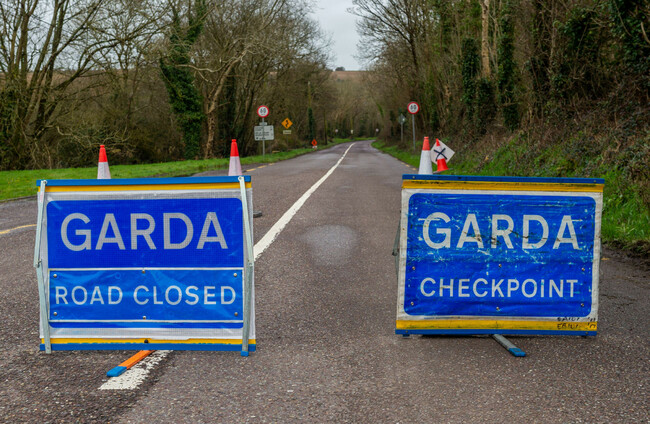
Chambers, the Road Safety Authority (RSA) and An Garda Síochána are today calling on motorists to slow down and keep a safe distance from other road users this Easter Bank Holiday weekend.
Provisional analysis from the RSA shows that 54 lives have been lost on Irish roads to date this year, 12 more than on this date last year.
Speaking to reporters at a joint press conference with RSA and An Garda Síochána, Chambers said last year’s trend of road fatalities has persisted into this year.
“At the moment, based on current trends, we’re heading for upwards of over 40 more people killed on our roads in 2024, which would be well over 200 people,” he said.
“That’s of serious concern to me,” Chambers said.
The Junior Minister said there is a “very worrying, increased trend of drug driving” being detected at checkpoints.
He added: “What’s important is that we have more checkpoints, strengthened enforcement and serious consequences for those who ever get behind the wheel under the influence of a substance.”
RSA team up with professional cyclist Imogen Cotter ahead of the Easter Bank Holiday https://t.co/ugE1e2NiUD 🔗
— RSA Ireland (@RSAIreland) March 27, 2024
Last year nine cyclists lost their lives on Irish roads. We are reminding road users to be aware of people who cycle and to share the road safely.
(1/2) pic.twitter.com/xWN5x2KNcf
RSA research also shows that between 2018 and 2022, there were 1,327 cyclists seriously injured on Irish roads.
The RSA’s cyclist fatalities and serious injuries report shows that 82% of cyclists were seriously injured in multiple vehicle collisions, most commonly with a car or light goods vehicle.
Professional cyclist Imogen Cotter has experienced a serious collision while out on her bike.
In January 2022, Cotter was out on a training ride when she was hit at 60km/h by a driver speeding on the wrong side of the road. She was travelling at 30km/h at the time and described the collision as “incredibly high impact”.
She factured her femur, shattered her patella and broke the bones in her wrist, among other injuries. The incident resulted in two years of recovery with five surgeries and hundreds of hours of physiotherapy.
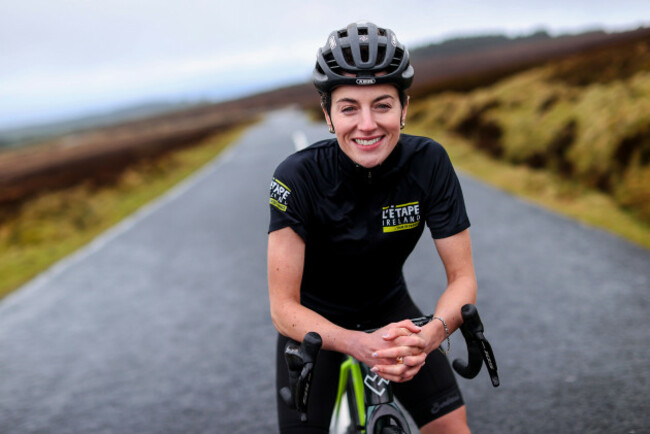
“I was very lucky to survive,” Cotter told reporters this afternoon.
“Eventually, I was able to get back on a bike, I signed another professional contract. My story is one of extreme luck in a very unlucky situation,” she said.
Cotter said the driver of the car that struck her “never apologised, never reached out, never paid a fine, never got a point on his licence”.
“He was driving the same car again a few weeks later, just repaired, and no consequences,” she said.
Cotter said that while it might be easy to look and her and think she has made a great recovery, she has had “really difficult mental struggles coming back” from the experience.
“I’ve suffered really badly with PTSD. I’m on a break from racing at the moment because it got really debilitating at the beginning of the year,” she said.
“That’s the side of the impact of road traffic collisions that you don’t really hear that much.”
Sam Waide, RSA chief executive also told the press conference today that everyone is being asked to “slow down over the bank holiday weekend”.
“Arrive alive, get home safely,” Waide said.
“The weather is going to be poor, there’s going to be poor driving conditions, so that’s an even bigger ask for people to slow down and take more care.”
Waide said there is a “seriously concerning” trend of road fatalities and serious injuries in Ireland this year.
He said one of the reasons behind the trend is the “continued persistence of poor behaviour”.
“There is a persistent use of alcohol and derugs while driving, there’s a persistent districted drive increase, so people need really need to sit up and take notice,” Waide said.
“If your friend is getting into the car to drive you home and they’re under under the influence or they’re distracted, don’t get into the car because, really, they’re not your friend, they’re putting your life at risk,” he said.
Waide said he would like to “encourage everyone to encourage each other for better behaviour because we need to turn the tide on poor behaviours, the killer behaviours”.
With reporting by Valerie Flynn

To embed this post, copy the code below on your site










have your say