Sign in. It’s quick, free and it’s up to you.
An account is an optional way to support the work we do. Find out more.
Sign in. It’s quick, free and it’s up to you.
An account is an optional way to support the work we do. Find out more.
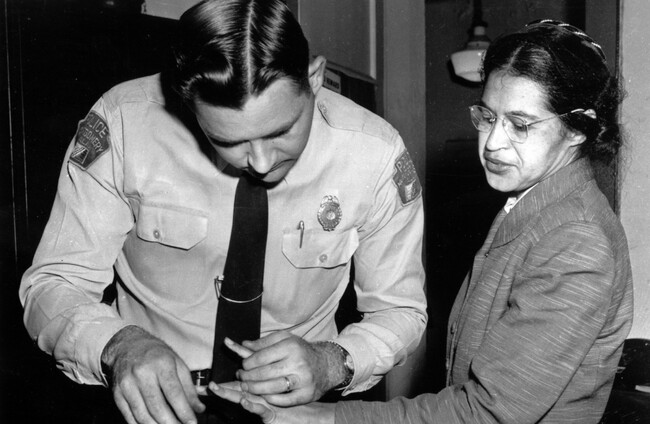
ON THIS DAY, 60 years ago in Montgomery, Alabama, a 42-year-old woman sat on a bus on her way home from work at around 6pm.
In doing so, she changed the course of history.
When Rosa Parks was ordered to leave her seat to allow standing white passengers sit, she refused.
She moved to the window seat instead of moving to the designated “coloured” area, offering a white passenger the seat beside her.
She would be arrested by two police officers, as can be seen in the arrest report below.
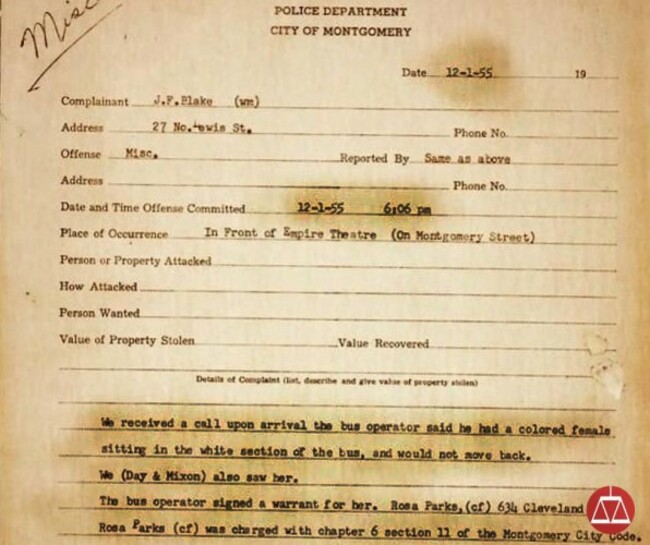
The next day, she was tried on charges of disorderly conduct and violating a local ordinance. After being found guilty in less than 30 minutes, she was fined $10 plus $4 in court costs.
Parks appealed her conviction and formally challenged the legality of racial segregation.
Four days after her arrest, blacks in Montgomery would boycott the city buses despite the driving December rain. The group formed the Montgomery Improvement Association (MIA). MIA would elect Montgomery newcomer Martin Luther King would to lead the local Baptist church.
The small act of defiance would ignite the Civil Rights movement in the American south. Parks would be portrayed as a woman too tired to move, but in her memoir My Story she said that was not the case.
People always say that I didn’t give up my seat because I was tired, but that isn’t true. I was not tired physically, or no more tired than I usually was at the end of a working day. I was not old, although some people have an image of me as being old then. I was 42. No, the only tired I was, was tired of giving in.

To embed this post, copy the code below on your site













have your say