Sign in. It’s quick, free and it’s up to you.
An account is an optional way to support the work we do. Find out more.
Sign in. It’s quick, free and it’s up to you.
An account is an optional way to support the work we do. Find out more.
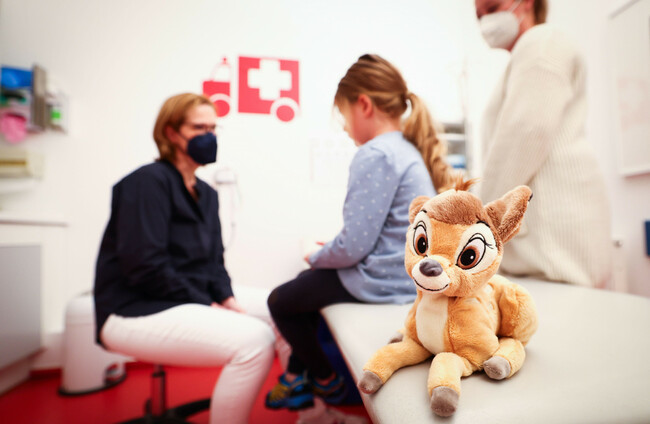
CHILDREN’S HEALTH IRELAND (CHI) has said that the emergency departments in the children’s hospitals in Tallaght, Crumlin and Temple Street are extremely busy due to an increase in Respiratory Syncytial Virus (RSV) cases.
CHI said that, regrettably, children with less serious illnesses may experience longer waiting times while the current wave of cases persists.
While this increase in seasonal RSV cases is expected at this time of year, and for most children the illness will pass within 2 to 3 weeks without treatment, the virus can also make some small infants very sick.
RSV is a common virus that causes coughs and colds, it is the main cause of bronchiolitis and pneumonia in very young children.
CHI is asking parents to be vigilant where symptoms of RSV occur, and to contact their GP or go to the emergency department if a child’s symptoms get worse quickly.
The parent of one child who was admitted to hospital with RSV last weekend told The Journal: “Our daughter went from bad cold symptoms to struggling to breathe in a matter of days. When she was admitted to a ward in CHI Temple Street with severe bronchiolitis, we were told that she was one of very many suffering the same symptoms and in need of oxygen and medication.”
“She came home after a few nights but we are glad that we took her to a doctor rather than dismiss it as something that might go away of its own accord,” the parent added.
Dr Paddy Fitzpatrick, who is a consultant in paediatric emergency medicine in CHI, said that there are measures parents can take to curb the spread of RSV in their communities.
“While seasonal RSV is circulating at a high level, my advice to people looking after very small infants, under 3 months in particular, is to try to cocoon them and avoid having them in large crowds. It is also so important that when we are sick ourselves or have children who are sick that we keep away from other children where possible.
“I understand it’s tough for parents who are working, but it’s also vital that children with cold or flu like illnesses don’t go to crèche or school until they are feeling better to try to avoid spreading these viruses,” he said.
The main symptoms of RSV are very mild, including a runny nose, a cough, and sneezing.
Other symptoms include wheezing, a fever, a sore throat, difficulty feeding or decreased appetite. These symptoms will typically appear in stages, and not all at once.
After 4 to 5 days with the virus, babies and young children can develop bronchiolitis. Their symptoms may worsen at this point, and include increased breathing (meaning more breaths per minute), less wet nappies and wheezing.
These symptoms usually remain for 3 to 4 days before slowly getting better. Some babies and young children may develop a cough with RSV that will persist for weeks after the start of the infection. This cough will not typically require antibiotics.
CHI is urging parents to “trust their instincts” when it comes to monitoring their child’s RSV symptoms. While the effects of the virus will most likely go away within a few weeks without medical intervention, if parents are worried about their child they should seek further medical attention.
To embed this post, copy the code below on your site














have your say