Sign in. It’s quick, free and it’s up to you.
An account is an optional way to support the work we do. Find out more.
Sign in. It’s quick, free and it’s up to you.
An account is an optional way to support the work we do. Find out more.
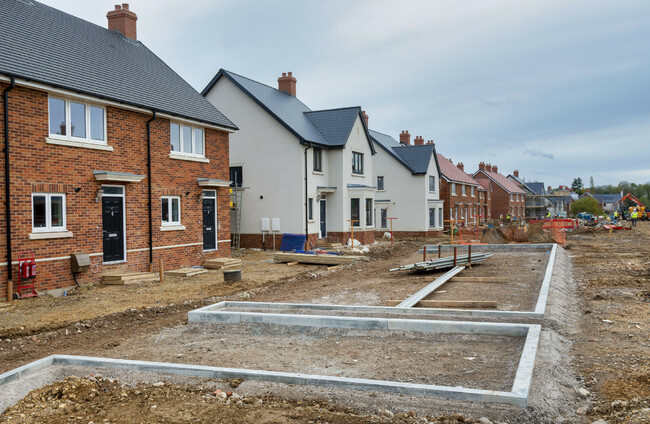
THE AVERAGE SALARY needed to purchase a three-bed home in the Greater Dublin area is now €126,000, research has revealed.
The Real Cost of New Housing Delivery 2023 study, conducted by the Society of Chartered Surveyors Ireland (SCSI), has also discovered that the average cost to deliver a three-bed home is €397,000, excluding Dublin.
The cost to deliver the same house type in Dublin has increased by just over €90,000 to €461,000 since 2019.
The report recommends that more needed to be done to support Modern Methods of Construction, pause future increases to connection charges and levies, as well as ensure the planning process is fit for purpose to de-risk development and bring down cost.
President of the SCSI Enda McGuane said : “While there has been a significant increase in the supply of new housing towards current ‘Housing for All’, it is important that we update those targets considering Ireland’s population increases.
“Housing for All targets were based on the 2016 census, and the population has grown by 8%. Therefore, targets need an immediate revision based on the most up-to-date census figures,” he added.
The schemes under the government’s Housing for All have been extended many times, most recently when the Local Authority Home Loan was extended to derelict properties last month.
Although extensions are needed, according to McGuane, previous extensions have been criticised by housing expert Rory Hearne and Sinn Féin’s Housing spokesperson Eoin Ó Broin, as they both suggested such moves could inflate house prices.
Last month, the government were warned that if it did not meet its housing targets under the Housing for All scheme, it could also lead to rising prices.
McGuane added: “When setting and committing to new targets, we would also urge the Government to establish new targets for the number of units delivered by off-site construction.”
He said doing so will facilitate a more efficient and sustainable use of resources “through the rollout of Modern Methods of Construction”.
Today’s study reflects the increase in prices of not only purchasing a home, but building and developing one too.
According to the report, the increases over the last three years in the Greater Dublin Area have been primarily driven by ‘hard costs’.
Bricks and mortar have increased by 27%, €49,000, on average over the time period. ‘Soft costs’ – such as land, development levies, fees, vat, margin – have also increased by 21% or €41,000 during the same period.
The society’s president said: “Increasingly, we are seeing the viability of developments that receive planning permission impacted by design or density requirement conditions.
“We believe financial viability should be required within the planning permission process, especially concerning planning conditions imposed as parts of grants,” he added.
McGuane added the SCSI would like to see the continued pausing of development levies made a long-term policy – and said improvements must be made to the utility connection process to reduce costly and time-consuming delays, which eventually fall to the purchaser.
“The SCSI believes the Department of Housing, Local Government and Heritage should review the First Homes Scheme purchase price ceilings to ensure the shared equity scheme is accessible to average market values for each county,” he said.

To embed this post, copy the code below on your site









have your say