Sign in. It’s quick, free and it’s up to you.
An account is an optional way to support the work we do. Find out more.
Sign in. It’s quick, free and it’s up to you.
An account is an optional way to support the work we do. Find out more.
LAST UPDATE | 30 Jun 2021
THE UK AND the European Union have agreed to extend a grace period allowing chilled meats to be sent from Great Britain to Northern Ireland until 30 September – as well as a number of other solutions to clunky elements of the Northern Ireland Protocol.
Among the “practical” solutions to problems with the Protocol that have been announced are: drivers travelling from the UK will no longer need an insurance green card in the EU, Ireland included; a solution for the movement of guide dogs which the North’s authorities must finalise; and the EU will change its own laws to allow UK medicines to be used in Northern Ireland after the grace period ends this year.
The UK had made a formal request to extend the grace period for chilled meats by three months in mid-June, following a public row between the UK government and EU leaders at the G7 summit.
Despite the UK having unilaterally extended another grace period in place for supermarket goods sent from GB-to-NI earlier in the year, and the EU subsequently launching legal action, this extension to the chilled meat grace period was formally granted.
Foreign Affairs minister Simon Coveney said today’s announcements “strongly underlines the EU’s commitment” to making the NI Protocol work.
“I welcome that the EU has responded positively to the UK’s request for an extension to the grace period on chilled meats. This cooperative approach recognises that the Protocol is jointly owned and must be jointly implemented,” Coveney said in a statement.
“The time ahead must now be used to work towards longer-term arrangements on broader SPS and veterinary issues.”
European Commission vice-president Maroš Šefčovič said the extension was being granted to allow supermarkets in Northern Ireland in particular to adapt their supply chains to the post-Brexit situation – something he said was “yet to be completed”.
Some pushback to this statement from the UK government has already been reported, however.
The EU has shown tremendous flexibility today, and a willingness to stretch as far as possible within existing legislation. Today’s announcement shows the EU’s commitment to making the Protocol work for the people of Northern Ireland, and it’s respect for both traditions there 🇪🇺
— Thomas Byrne (@ThomasByrneTD) June 30, 2021
Chilled meats
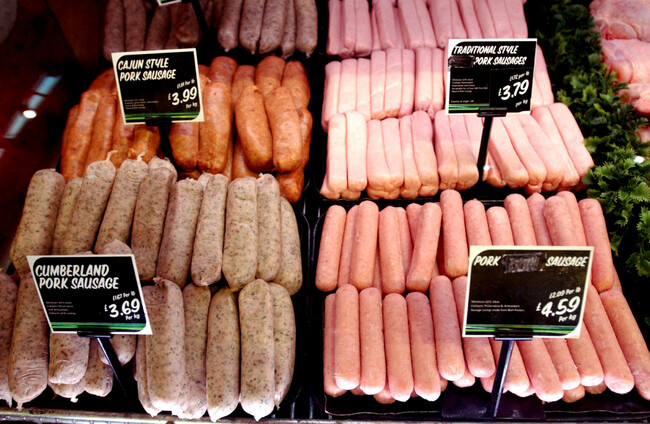
Under EU rules, chilled processed meats such as sausages and minced meat cannot be imported to the EU from third countries – which the UK now is after Brexit.
But because Northern Ireland has slightly different post-Brexit rules than Great Britain, in order to avoid a hard border on the island of Ireland, there have been some problems with GB-to-NI trade, including on chilled meats trade – including sausages and minced meat.
Grace periods have been in place since the new rules came into effect to give businesses a chance to adapt – but there is some suggestion that the UK may simply continue requesting extensions.
The UK’s Brexit minister David Frost and the European Commission vice-president Maroš Šefčovič announced the extension to the chilled meats issue jointly this afternoon.
Frost said in a statement: “We are pleased we have been able to agree a sensible extension on chilled meats moving from Great Britain to Northern Ireland – one that does not require rules in the rest of the UK to align with future changes in EU agri-food rules.
“This is a positive first step but we still need to agree a permanent solution – Northern Ireland is an integral part of the United Kingdom and its consumers should be able to enjoy products they have bought from Great Britain for years.
“This is a very clear sign that the Protocol has to be operated in a pragmatic and proportionate way.”
Šefčovič said the measures agreed between the EU and UK were an “unquestionable response to those in the UK suggesting the EU is inflexible” – but highlighted that it came with some “strict” conditions.
“For example, the meat products that are subject to the channelling procedure referred to in the United Kingdom’s unilateral declaration must remain under the control of the Northern Ireland competent authorities at all stages of that procedure.
“These meat products must be accompanied by official health certificates issued by the UK competent authorities, can exclusively be sold to end consumers in supermarkets located in Northern Ireland, and must be packed and labelled accordingly.
“The EU also underlines the importance of ensuring that Border Control Posts in Northern Ireland have the necessary infrastructure and resources to be able to perform all the controls required by the EU’s Official Controls Regulation.”
Other measures: medicines, livestock, guide dogs and insurance
As part of the joint committee set up between the UK and EU to solve any issues with the Protocol, a number of solutions have been found in relation to four problems:
Stop-gap measure
Aodhán Connolly, director of the Northern Ireland Retail Consortium, welcomed the chilled meats deal but said there were still bigger issues to resolve.
He said: “While it is good to see the EU and the UK cooperating on this issue and reaching agreement, this is, in trade terms, a peripheral matter.
“The most pressing issue is the fate of the thousands of food products moving daily from GB to NI, which will be subject to extensive controls when that grace period ends in October. We are no closer to a decision by both sides on this.”
This is the grace period on supermarket goods that was unilaterally extended by the UK in March.
“There is a frustration felt across business. We can see the technical solutions that are possible, such as a trusted trader scheme, yet there does not seem to be the political will to deliver them.
“We need both sides to live up to their commitments and find a pragmatic solution to ensure NI consumers continue to get access to both the choice and affordability in the food they need. Yet again the clock is ticking.”

To embed this post, copy the code below on your site
















have your say