Sign in. It’s quick, free and it’s up to you.
An account is an optional way to support the work we do. Find out more.
Sign in. It’s quick, free and it’s up to you.
An account is an optional way to support the work we do. Find out more.
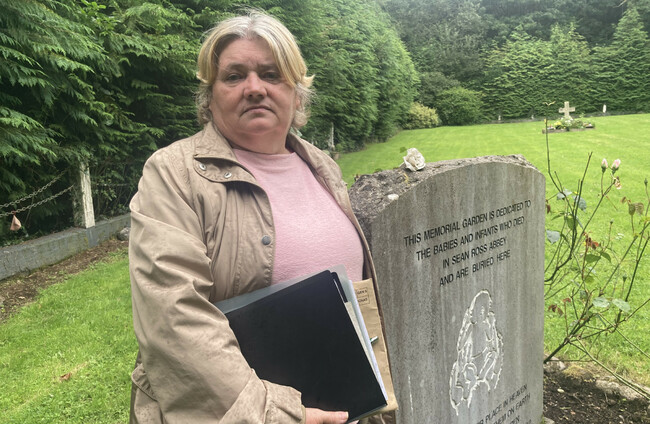
AN IN-DEPTH SURVEY of the earth on the grounds of a mother and baby home in Tipperary will take place in the coming weeks as survivors trace the potential for a “mass grave”, similar to that found in Tuam.
Sean Ross Abbey in Roscrea was where 1,090 children died across almost four decades.
A geophysical survey, funded by the Department of Children, will be conducted on a patch of the land where some locals believe children may have been buried.
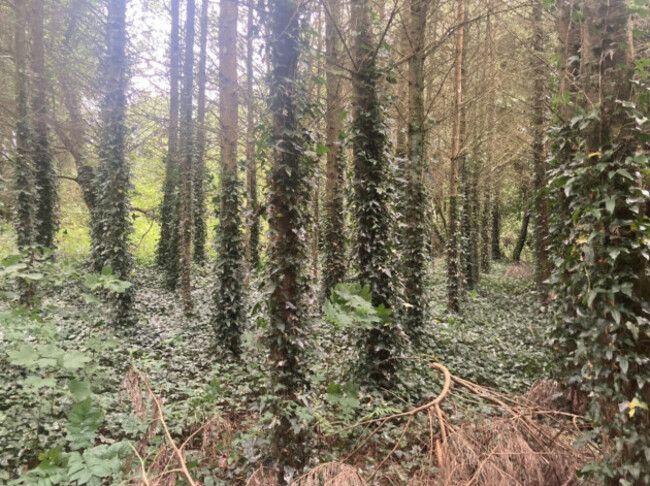
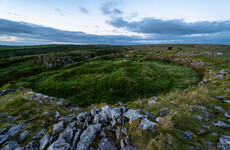
This is located beside a designated burial ground known as the Angel Plot but is currently overgrown with vegetation.
Tuam made headlines around the world after it emerged that many infants who died at the home were buried in a sewage tank on that site.
Run by the Sisters of the Sacred Hearts of Jesus and Mary, Sean Ross Abbey was one of the largest and most notorious mother and baby homes in the State, containing a three-storey mansion, an orchard and a church on its grounds.
Thousands of unmarried pregnant women passed through its doors from 1931 until 1969, with 6,079 babies born there during that period. Among its most well-known residents was Philomena Lee, whose story featured in a 2013 film starring Judi Dench.
Many of the 1,090 children who died were under the age of three. A further 6,414 women were admitted there.
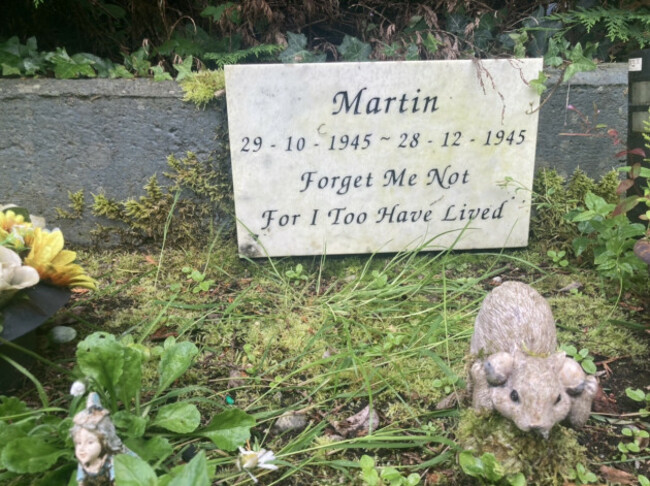
As part of the commission’s work, about a tenth of the Angel Plot was examined four years ago and some excavation work took place, but it only found the remains of 42 infants.
Teresa Collins, who was born in the home in 1963, told The Journal that the “numbers aren’t adding up” so survivors want to press ahead with a further study of the ground.
They have cited “local knowledge and local history” around Sean Ross Abbey, including the recollections of former workmen who tended to the wider estate.
Members of the We Are Still Here group hosted a gathering with representatives of the Department of Children, Tipperary County Council and Tipperary Sinn Féin TD Martin Browne on Thursday afternoon at the grounds of the former home.
Attended by The Journal, Collins explained to the group that campaigners hope that a scan of the grounds will “give these children recognition” and help to finally discover what happened to them.
“It’s been a long, long hard process but all we want in the end of it is if they’re there, we can begin to remember them.
“But it’s also a process of elimination. We may never be able to identify them if we find children there, but if there’s nothing, there is a question of whether the death certs for many children were falsified.”
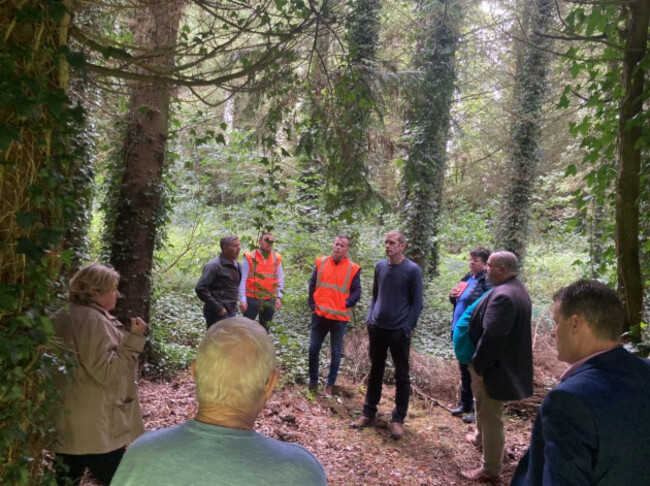
The group has secured permission for a scan from the site owner who purchased the grounds in recent years.
According to the Commission of Investigation into Mother and Baby Homes, investigators were satisfied that a forensic report provided clear evidence that the coffined remains of children under the age of one are buried in the designated burial ground.
The commission’s report on the home said that local testimony had recounted that orders came in from the home every October for “six to ten 18-inch to 21-inch coffins”, but it also recorded that some infants at Sean Ross were buried without coffins in “quick lime”.
The Department told The Journal that without complete excavation, it was not possible to say conclusively that all of the children who died in Sean Ross were buried in the designated burial ground. It added that it did not consider that further investigation was warranted.
Collins pointed to a “discrepancy” in the Commission’s report where it mentioned that an inspector found that there were “two infant deaths” between July 1962 and July 1963, adding that a freedom of information request for a deaths register showed more infant deaths took place during that time.
Mike Donovan, who was a gardener at the grounds as a teenager in the 1980s, told The Journal he remembered “coming across small bones” in the section now earmarked for scanning while ploughing the land.
He alerted a more senior workman and recalled that the land was shortly after filled in with more clay and then trees sown over.
The scanning will be carried out by Limerick firm Precision Utility Mapping, whose director Jonathan Markham attended the gathering on Thursday in Sean Ross Abbey.
A separate scan took place on another part of the estate earlier this year by a separate firm, which reported back “anomalies” requiring further investigation.
Markham explained that the Angel Plot, which the commission examined, is “ideal ground” for scanning as it has been tended to over recent years but that the adjacent overgrown land earmarked by We Are Still Here will take longer.
Vegetation and shrubbery will need to be cleared to allow a thorough scan some three metres deep.
Markham said the firm will “data-driven” about its work and said an excavation may be required if its “non-intrusive” study finds anything of note.
“We’re geophysicists and engineers so it’s not there will be a breakthrough moment, but if we find something we will let you know that this requires further looking at,” he told the gathering.

To embed this post, copy the code below on your site









have your say