Sign in. It’s quick, free and it’s up to you.
An account is an optional way to support the work we do. Find out more.
Sign in. It’s quick, free and it’s up to you.
An account is an optional way to support the work we do. Find out more.
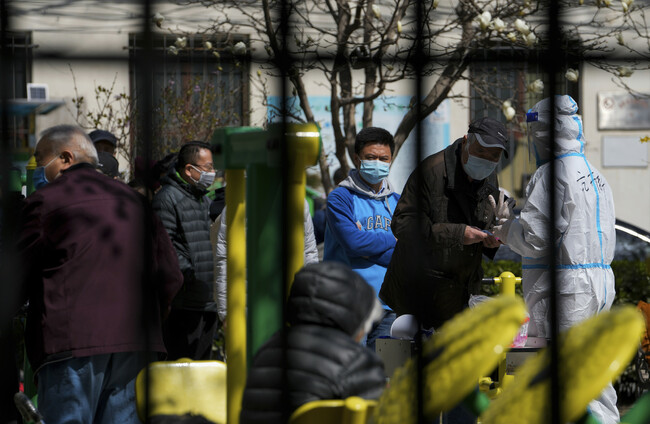
MILLIONS OF PEOPLE in China’s financial hub were confined to their homes today as the eastern half of Shanghai went into lockdown to curb the country’s biggest ongoing Covid-19 outbreak.
The move, announced late last night, caused a run on grocery stores by residents who have become exasperated with authorities’ inability to snuff out the outbreak despite nearly three weeks of increasingly disruptive measures.
Authorities are imposing a two-phase lockdown of the city of about 25 million people to carry out mass testing.
The government had sought to avoid the hard lockdowns regularly deployed in other Chinese cities, opting instead for rolling localised lockdowns to keep Shanghai’s economy running.
But Shanghai has in recent weeks become China’s Covid hotspot, and today another record high was reported, with 3,500 new confirmed cases in the city.
The area locked down is the sprawling eastern district known as Pudong, which includes the main international airport and glittering financial centre.
The lockdown will last until Friday, then switch to the more populated western Puxi section, home to the historic Bund riverfront.
The government said the steps were being taken to root out infections “as soon as possible”.
The unpredictable neighbourhood-level measures employed in recent weeks have left many citizens frustrated with repeated brief confinements at home.
Some complained that only several hours’ notice was given for the new, larger lockdown.
“We really don’t understand Shanghai’s management and control measures. There has indeed been some inconsistency,” said a 59-year-old man who gave only his surname Cao as he queued to buy groceries.
“After so much time, (the city) is not controlling the virus and the numbers are still going up.”
The government has not specified any impact on Shanghai’s main international airport or its bustling seaport.
China largely kept the virus under control for the past two years through strict zero-tolerance measures including mass lockdowns of cities and provinces for even small numbers of cases.
But Omicron has proven harder to stamp out.
China has reported several thousand new daily cases for the past two weeks.
Those numbers remain insignificant globally but are up sharply from fewer than 100 a day in February.
Tens of millions of residents in affected areas across China have been subjected to citywide lockdowns in response.

To embed this post, copy the code below on your site













have your say