Sign in. It’s quick, free and it’s up to you.
An account is an optional way to support the work we do. Find out more.
Sign in. It’s quick, free and it’s up to you.
An account is an optional way to support the work we do. Find out more.
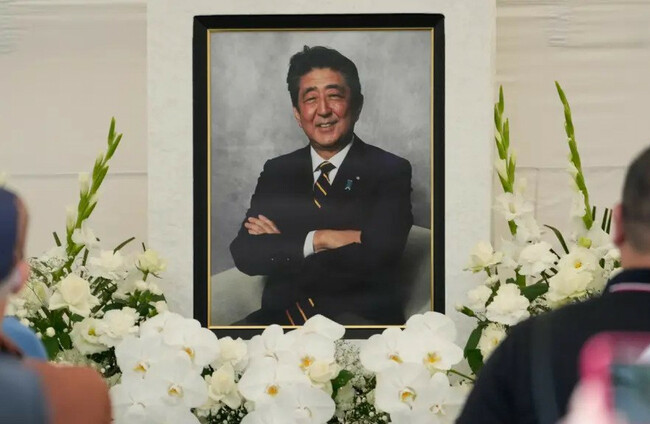
POLITICIANS IN JAPAN have marked one year since the assassination of Japan’s former leader Shinzo Abe, with Prime Minister Fumio Kishida pledging to tackle pressing political goals as a way of honouring Abe’s wishes.
At a Buddhist temple in Tokyo, Japan, Kishida, members of the governing Liberal Democratic Party, representatives from opposition parties and business leaders, attended a closed memorial service hosted by Abe’s widow, Akie Abe and family.
Tables were set up at the temple for flower laying by the public later today.
Kishida said he has tackled policies that could not be delayed “as a way of honouring Abe’s last wishes”.
He added: “I will keep working at it to fulfil my responsibilities.”
Amid a national outcry over botched security, police have tightened their protective measures following a subsequent investigation that found holes in how Abe was guarded.
In Nara, near the site of Abe’s assassination, dozens of people lined up from early this morning to lay flowers.
The suspect, Tetsuya Yamagami, was arrested at the scene and has been charged with murder and several other crimes, including violating the gun control law. A starting date for his murder trial has yet to be set.
Yamagami has told investigators that he killed Abe, one of Japan’s most influential and divisive politicians, because of the former prime minister’s apparent links to a religious group that he hated.
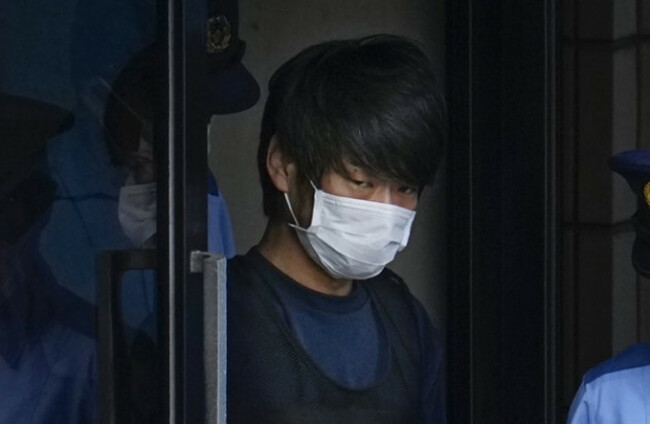
In statements and in social media postings attributed to him, Yamagami said he developed a grudge because his mother had made massive donations to the Unification Church that bankrupted his family and ruined his life.
The investigation into the case has led to revelations of years of cosy ties between Abe’s governing Liberal Democratic Party and the church since Abe’s grandfather, former prime minister Nobusuke Kishi, helped the church take root in Japan in the 1960s over shared interests in conservative and anti-communist causes.
Kishida’s popularity has plunged over his handling of the church controversy and for his insistence on holding a rare, controversial state funeral for Abe in September last year.
Abe, Japan’s longest-serving prime minister, bolstered Japan’s military role and promoted the “free and open” Indo-Pacific vision inherited by Kishida. Abe maintained influence even after stepped down as prime minister in 2020.

To embed this post, copy the code below on your site












have your say