Sign in. It’s quick, free and it’s up to you.
An account is an optional way to support the work we do. Find out more.
Sign in. It’s quick, free and it’s up to you.
An account is an optional way to support the work we do. Find out more.
SCOTT WALKER, THE hugely influential pop singer turned experimental artist, has died aged 76.
His record label, 4AD, said in a statement: “For half a century, the genius of the man born Noel Scott Engel has enriched the lives of thousands, first as one third of The Walker Brothers, and later as a solo artist, producer and composer of uncompromising originality.
Scott Walker has been a unique and challenging titan at the forefront of British music: audacious and questioning, he has produced works that dare to explore human vulnerability and the godless darkness encircling it.
Walker initially found fame as a teen idol as a member of the Walkers Brothers, recording hit songs like The Sun Ain’t Gonna Shine Anymore and Make it Easy on Yourself.
His interpretation of the work of Jacques Brel brought the Belgian songwriter’s music to a new audience. He devoted much of his later career to more experimental work – which, although it sold less well, has been noted as an influence by a range of artists.
His influence as a singer and composer has been cited by the likes of David Bowie, Radiohead, Pulp (who recruited Walker to produce their 2001 album We Love Life) and Neil Hannon of the Divine Comedy.
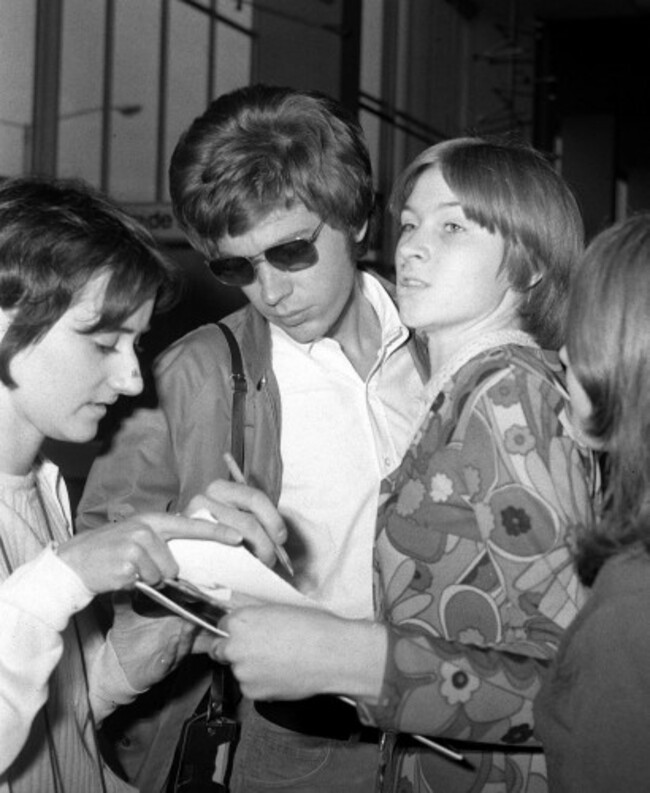
His record label’s tribute this morning included this summary of his wide-ranging career:
Noel Scott Engel was born in 1943, the son of an Ohio geologist. He began his career as a session bassist, changing his name when he joined The Walker Brothers. The 1960s trio enjoyed a meteoric rise, especially in Britain, where hits like ‘The Sun Ain’t Gonna Shine Anymore’ attracted a following to rival that of The Beatles.
But the superstar lifestyle and fame was not for Scott. As an only child, he had grown up in the kind of rich, slow solitude in which imagination could flourish, and he retreated from the limelight, returning as a solo artist to release a string of critically acclaimed albums, Scott, Scott 2, Scott 3 and Scott 4. He disappeared until the late 1970’s, when The Walker Brothers re-joined for their last album together and then a solo album in the 80’s.
Another long silence and Scott then re-emerged in the 90’s and onwards with lyric-driven works that deconstructed music into elemental soundscapes. Drawing on politics, war, plague, torture, and industrial harshness, Scott’s apocalyptic epics used silence as well as real-world effects and pared-back vocals to articulate the void. Sometimes gothic and eerie, often sweepingly cinematic, always strikingly visual, his works reached for the inexpressible, emerging from space as yearnings in texture and dissonance.
From teen idol to cultural icon, Scott leaves to future generations a legacy of extraordinary music; a brilliant lyricist with a haunting singing voice, he has been one of the most revered innovators at the sharp end of creative music, whose influence on many artists has been freely acknowledged. The scope and dynamism of his vision have added dimension to both film and dance, and he has stunned audiences with music whose composition transcends genre, and whose sheer originality defies pigeonholing.

To embed this post, copy the code below on your site












have your say