Sign in. It’s quick, free and it’s up to you.
An account is an optional way to support the work we do. Find out more.
Sign in. It’s quick, free and it’s up to you.
An account is an optional way to support the work we do. Find out more.
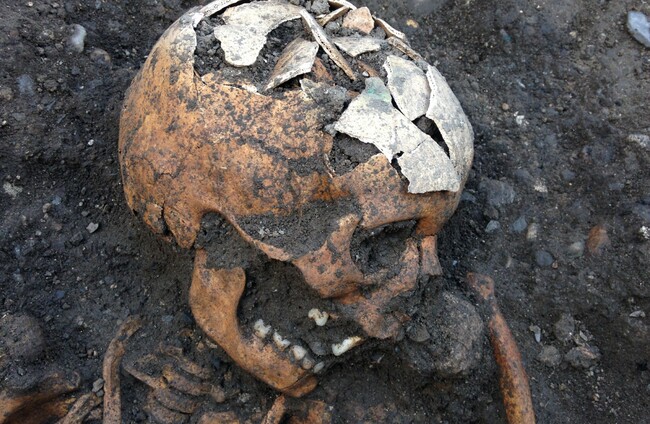
RESEARCHERS AT KILKENNY’S Medieval Mile museum have discovered four skeletons.
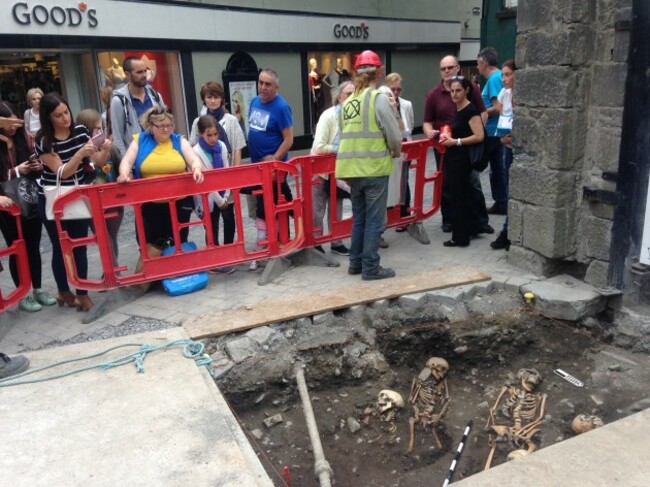
The bones were discovered at the site two weeks ago when Kilkenny Archaeology were monitoring excavations on behalf of the main contractors Duggan Brothers for a service trench for the new museum at St. Mary’s Church.
The skeletons were found at a depth of just 35cm from the surface, meaning that they had to be archaeologically excavated with the consent of the National Monuments Service.
The skeletons, which researchers say are “very well-preserved”, are being carefully recorded and analysed in the ground by the archaeological team and their osteoarchaeologist Dr Linda Lynch.
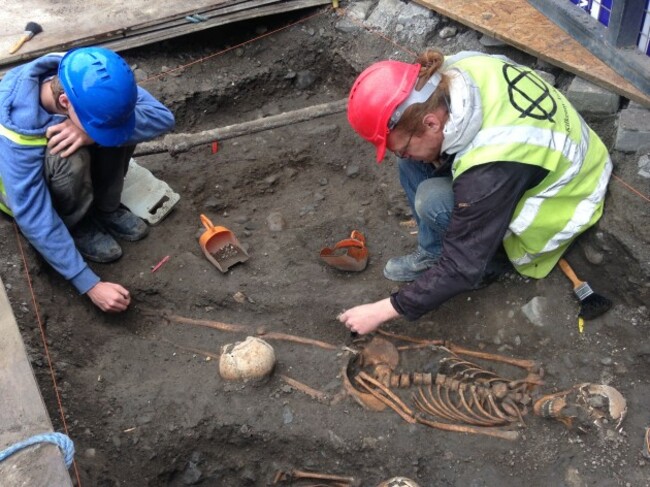
Once exhumed they will be brought to a lab for further detailed analysis. Once this is completed it may be possible to return the burials to St Mary’s, following consultation with the National Museum of Ireland.
Cóilín Ó Drisceoil, Managing Director of Kilkenny Archaeology in his preliminary commentary said that the skeletons could be 800 years old.
The four skeletons can be dated to c.1250-1350 AD based on pottery found in their graves meaning they are of the first few generations of Anglo-Norman colonists in Kilkenny.
Their place of burial, in the south-west corner of the city’s main graveyard around St Mary’s parish church, would typically imply they were not wealthy, and instead they were probably the poor of the medieval town.
“Further proof of this comes from the fact none of the skeletons were buried in coffins and they were instead buried in simple shrouds. These have rotted away without trace but green stains on the bones of the skeletons are the remnants of copper-alloy pins that would have fastened the shrouds around the bodies.”
All of the skeletons are female and there are two children aged around eight years old, a young adult in her teens and an adult aged around 25.
No causes of death have yet been identified but this may come out from the lab analysis.
Researchers say the teenage girl appears to have not had an easy life as her spine was damaged from the prolonged lifting of heavy weights and one of her legs appeared to be shorter than the other, meaning she would have walked with a pronounced limp.
One of the child skeletons also showed evidence of a severe iron deficiency which was probably caused by malnutrition.

To embed this post, copy the code below on your site













have your say