Sign in. It’s quick, free and it’s up to you.
An account is an optional way to support the work we do. Find out more.
Sign in. It’s quick, free and it’s up to you.
An account is an optional way to support the work we do. Find out more.
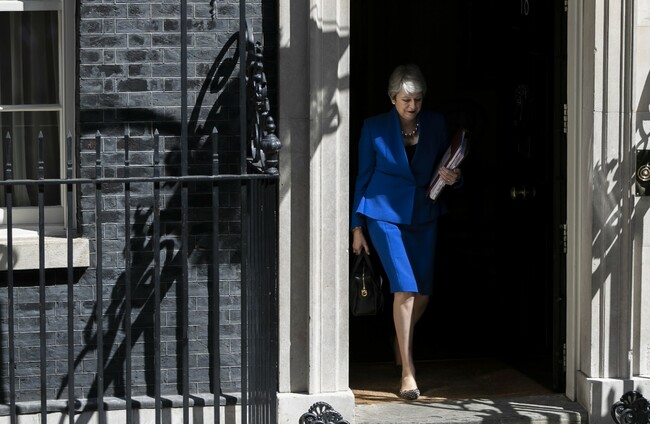
THERESA MAY BOWED out as UK Prime Minister today with a speech that paid tribute to the work of the House of Commons and a promise to keep serving the British people.
In a speech that focused on democracy and duty, May used her final words to praise the power of the parliament that has done everything it could to frustrate the one core aim of her administration - that of achieving Brexit.
Leaving the House of Commons to rapturous applause, May walked past many of the MPs – both in the opposition and in her own party – who had repeatedly voted down her Brexit deal.
At the end of her final Prime Minister’s Questions – during which both opposition and Conservative MPs largely pulled their punches – May acknowledged the “extraordinary political times” the UK was going through.
The House of Commons, she said, was “rightly at the centre” of current events:
That’s because of the vital link between every single member of this house and the communities, the commons, we represent. That’s the bedrock of our parliamentary democracy and of our liberty. And each one of us, wherever we sit, whatever we stand for, can take pride in that. And that duty, to serve my constituents, will remain my great motivation.
May also paid tribute to the growing number of women entering the House of Commons.
Recounting how a fellow MP once assumed she must be a Labour representative because, when she was elected in 1997, the Conservatives had so few female MPs, she said she was “proud to have played my part in getting more women MPs in this house”.
When she made her maiden speech in the House of Commons in 1997, 18% of MPs were female – over 20 years later, the number stands at over 30%.
“And I’m sure among the women in this house there is a future prime minister, maybe more than one,” May added.
During an otherwise largely restrained back-and-forth with Labour leader Jeremy Corbyn, May also suggested that now was his time to go as well.
“As a party leader who has accepted when her time is up, perhaps the time has come for him to do the same,” she said.
But her final words also contained a potential warning to what May’s successor, Boris Johnson, can expect from her when she returns to the backbenches.
Noting that this will be the first time in over 20 years that she’s been on the backbenches, she told the House of Commons: “In future, I look forward to asking the questions.”

To embed this post, copy the code below on your site







have your say