Sign in. It’s quick, free and it’s up to you.
An account is an optional way to support the work we do. Find out more.
Sign in. It’s quick, free and it’s up to you.
An account is an optional way to support the work we do. Find out more.
RADAR SCANS OF the tomb of pharaoh Tutankhamun in the ancient necropolis of Luxor showed a “90 percent” chance of two hidden chambers, possibly containing organic material, Egypt’s antiquities minister announced today.
Experts had scanned the tomb to find what a British archaeologist believes could be the resting place of Queen Nefertiti, the legendary beauty and wife of Tutankhamun’s father whose mummy has never been found.
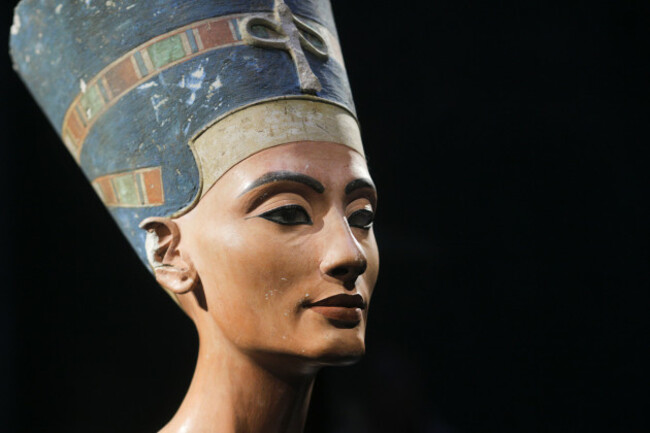
Famed for her beauty, Nefertiti was the subject of a famous 3,300-year-old bust.
Preliminary scans of Tutankhamun’s tomb reveal “two hidden rooms behind the burial chamber” of the boy king, Minister Mamduh al-Damati told reporters.
Yes, we have some empty space, but not total empty, including some organic and metal material.
When asked how certain he was, he said there was a “90 percent” chance.
“It means a rediscovery of Tutankhamun … for Egypt it is a very big discovery, it could be the discovery of the century,” he added.
It is very important for Egyptian history and for all of the world.
A study by renowned British archaeologist Nicholas Reeves has said that Nefertiti’s tomb could be in a secret chamber adjoining Tutankhamun’s tomb in the Valley of Kings in Luxor in southern Egypt.
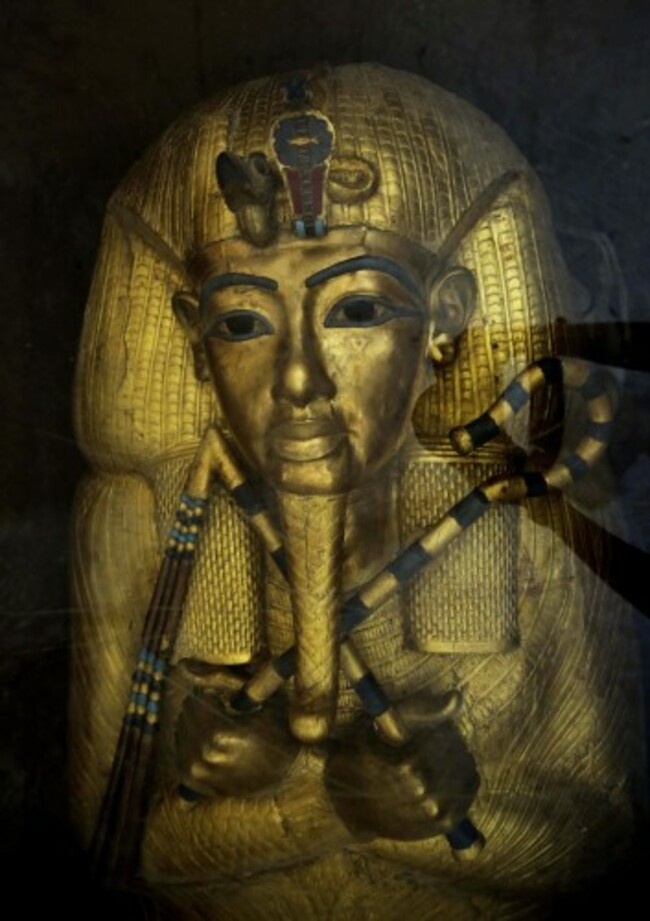
Reeves, professor of archaeology at the University of Arizona, believes one door of Tutankhamun’s tomb could conceal the burial place of Nefertiti.
According to him, Tutankhamun – who died unexpectedly – was buried hurriedly in an underground chamber probably not intended for him.
His death would have forced priests to reopen Nefertiti’s tomb 10 years after her death because the young pharaoh’s own mausoleum had not yet been built.
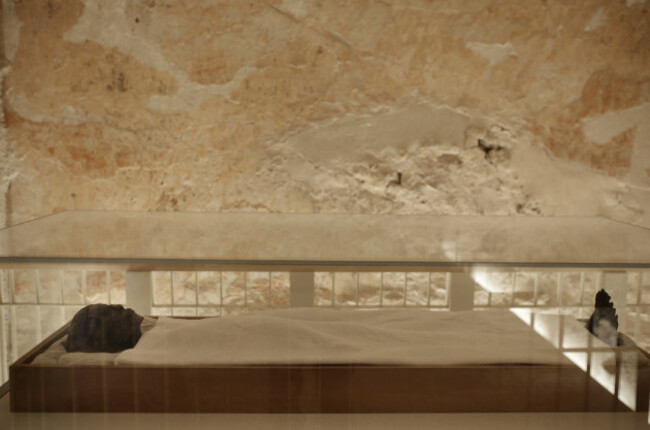
Damati said the two hidden chambers were behind the northern and the western walls of Tutankhamun’s burial chamber.
“What it means, we have two extensions” behind Tutankhamun’s burial chamber, he said.
When asked if the organic material could be a mummy, Damati said:
I cannot say. I can only say we have here some organic materials.
New test planned
Damati and Reeves differ on whose mummy they expect to find, with the minister previously saying that Tutankhamun’s tomb may contain the mummy of Kiya, a wife of Akhenaten.
Today, he said a new radar test would be conducted on 31 March.
“Another radar, more improved, will check and measure for the dimensions of the wall behind and the thickness of the walls,” Damati said, adding that the result of the new test would be announced in Luxor on 1 April.
Nefertiti played a major political and religious role in the 14th century BC.
She actively supported her husband Akhenaten – Tutankhamun’s father – who temporarily converted ancient Egypt to monotheism by imposing the cult of sun god Aton.
Tut, Nefertiti, and Akhenaten’s family ruled Egypt during one of its most turbulent times, which ended with a military takeover by Egypt’s top general at the time, Horemheb. The family’s names were later erased from official records.
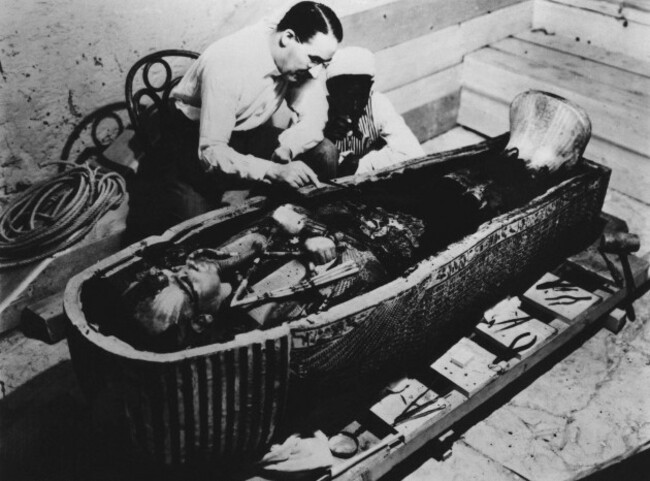
Tutankhamun died aged 19 in 1324 BC after just nine years on the throne. His final resting place was discovered by another British Egyptologist, Howard Carter, in 1922.
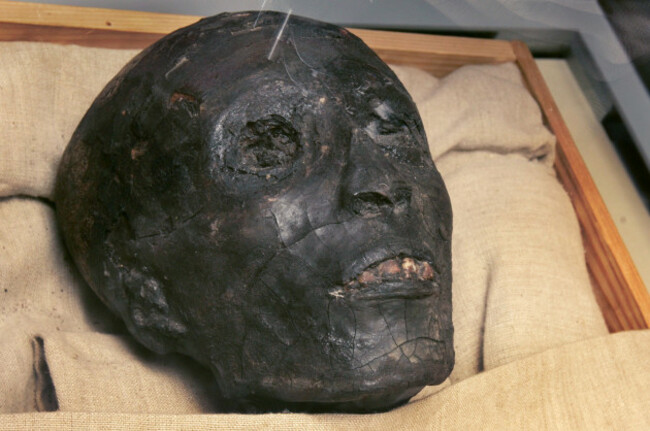
Experts are also scanning four pyramids to unravel the mysteries of the ancient monuments.
Using infrared technology, a team of researchers have been scanning the pyramids of Khufu, also known as the Great Pyramid, and Khafre at Giza and the Bent and Red pyramids in Dahshur, all south of Cairo.
Operation ScanPyramids, which aims to search for hidden rooms inside those four monuments, is expected to continue until the end of 2016.
- © AFP 2016 and Associated Press

To embed this post, copy the code below on your site













have your say