Sign in. It’s quick, free and it’s up to you.
An account is an optional way to support the work we do. Find out more.
Sign in. It’s quick, free and it’s up to you.
An account is an optional way to support the work we do. Find out more.
LAST UPDATE | 18 Jul 2023
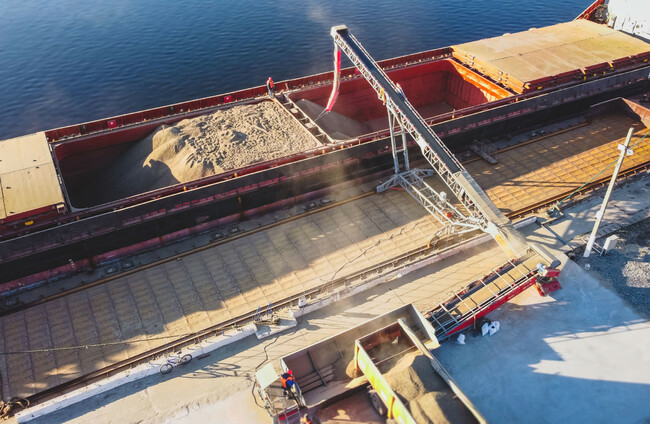
RUSSIA HAS REFUSED to extend a deal to allow Ukrainian grain exports through the Black Sea.
The move has sparked outrage from the United Nations, which warned millions of the world’s poorest would “pay the price”.
Moscow’s invasion last year saw Ukraine’s Black Sea ports blocked by warships until the agreement, brokered by the UN and Turkey and signed in July 2022, allowed for the passage of critical grain shipments.
The Kremlin yesterday said it was exiting the deal, after months of complaining that elements allowing the export of Russian food and fertilisers had not been honoured.
“The grain deal has ended. As soon as the Russian part (of the agreements) are fulfilled, the Russian side will immediately return,” said Kremlin spokesman Dmitry Peskov.
UN Secretary General Antonio Guterres said Moscow’s move would “strike a blow to people in need everywhere.”
“Hundreds of millions of people face hunger and consumers are confronting a global cost-of-living crisis. They will pay the price,” he told reporters.
Ukrainian President Volodymyr Zelenskyy said Ukraine was prepared to keep exporting grain via the Black Sea despite Russia’s exit.
“We are not afraid. We have been approached by companies that own ships. They said that they are ready” to continue shipments, Zelenskyy said.
Moscow’s withdrawal could see Russian ships preventing grain exports by blockading Ukrainian ports, which occurred in the conflict’s early months and helped drive up global food prices.
Ukrainian officials have said an overnight Russian strike damaged port infrastructure facilities in Odesa, hours after Moscow refused to extend the deal to allow grain export from the region.
Six Kalibr missiles “launched from the waters of the Black Sea at Odesa” were destroyed by air defences, Ukraine’s southern command said in a statement.
Twenty-one Iran-built Shahed explosive drones were also destroyed on “approach from the sea in the Odesa region,” it said.
“Unfortunately, the debris of the downed missiles and the blast wave from the downing damaged the port infrastructure facilities and several private homes,” it added.
It did not specify exactly where the port infrastructure facilities or homes were located.
An elderly man was injured in his home and was receiving treatment, it said.
The Odesa region in southern Ukraine is home to maritime terminals that were key to the expired grain export agreement.
An “industrial facility” in the southern port city of Mykolaiv was hit in the overnight attack according to local governor Vitaliy Kim.
A fire had subsequently broken out before being extinguished, he said on Telegram, adding there were no casualties.
Over the last year, the Black Sea Grain Initiative has enabled the export in cargo of more than 32 million tonnes of Ukrainian grain.
The UN said a final ship carrying Ukrainian grain through the Black Sea was inspected in Istanbul yesterday, a few hours before the deal expired.
Moscow’s withdrawal from the deal came hours after drones struck the only bridge connecting Russia’s mainland to the annexed Crimea peninsula, a key supply line for Russian forces in the south of Ukraine.
Kyiv’s navy and SBU security service carried out the “special operation” using seaborne drones, a security service source told AFP.
Russian authorities said a civilian couple was killed and their daughter wounded in the attack on the Kerch bridge, which was also damaged last year in a blast Moscow blamed on Kyiv.
Moscow said the attack had nothing to do with its withdrawal from the grain deal.
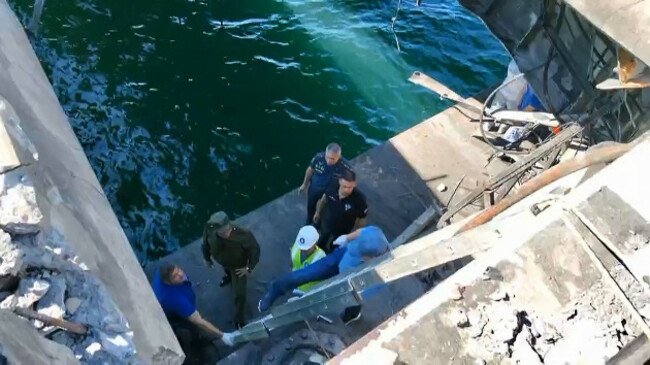
Russian President Vladimir Putin condemned a “senseless crime” in televised remarks, vowing a “response” and calling for tighter security at the bridge.
Local officials said traffic across the bridge had been halted and encouraged holidaymakers stranded in Crimea to drive home through occupied Ukraine.
Vehicle traffic was later “restored in reverse mode on the far right lane” of the bridge, Russian Deputy Prime Minister Marat Khusnullin said.
EU chief Ursula von der Leyen condemned Moscow’s “cynical” decision, while US Secretary of State Antony Blinken said Russia’s “unconscionable” action was “weaponising food”.
Guterres added that Russia’s decision would not stop the United Nations’ efforts to “facilitate the unimpeded access” to global markets of food and fertilisers from Ukraine and Russia.
According to data from the Joint Coordination Centre that had been overseeing the agreement, China and Turkey are the main beneficiaries of the grain shipments, as well as developed economies.
The deal has helped the UN World Food Programme bring relief to countries facing critical food shortages such as Afghanistan, Sudan and Yemen.
The news had a limited impact on international wheat prices, which are down by nearly a quarter from one year ago.
Guterres had been working hard to get the deal renewed and supported removing hurdles to Russia exporting its fertilisers.
Meanwhile, Ukraine was pushing ahead with its counteroffensive, with Kyiv yesterday saying its forces had retaken several square kilometres of territory around the eastern city of Bakhmut, which Russian forces seized in May.
Bakhmut, once home to 70,000 people and known for its sparkling wine and salt mine, has been destroyed by the longest and bloodiest battle of the conflict.
Kyiv last month began its highly anticipated fightback against entrenched Russian troops after stockpiling Western weapons and building up its offensive forces.
But it has acknowledged slow progress and called on the United States and other allies to provide more long-range weapons and artillery.

To embed this post, copy the code below on your site














have your say