Sign in. It’s quick, free and it’s up to you.
An account is an optional way to support the work we do. Find out more.
Sign in. It’s quick, free and it’s up to you.
An account is an optional way to support the work we do. Find out more.
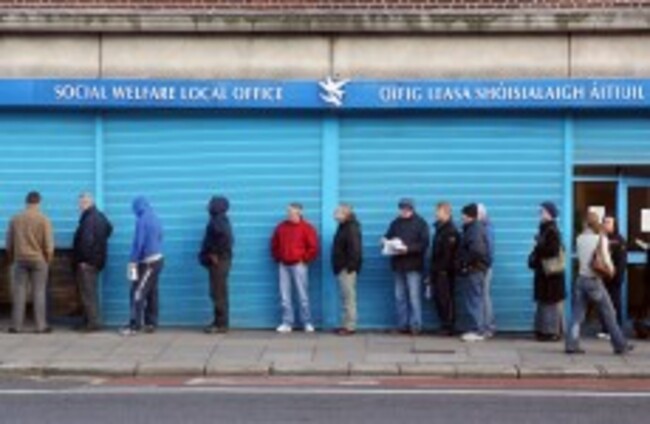
KEVIN BRADY, 51, was made redundant in November 2008, after 11 years with his last employer.
One level-eight degree and 13 certificates later, he finds himself still seeking employment, “demoralised”.
“I’ve worked in England, Canada and the US. I’ve worked with Unicef. I’ve even written a book on the history of my parish, but no one cares about your experience when you’ve been out of the system for years,” he says.
Last month, he finished a three-year community employment scheme, which he says was of “absolutely no use” to him as it didn’t match his skills.
When I was unemployed, I was at least able to apply for courses, but I wasn’t entitled to anything for as long as I was on the scheme.
The placement came with an extra €20 a week on top of his jobseeker’s benefit, but he spent close to that amount on fuel driving the eight-mile distance to work and back every day.
Confidence
Ekaterina Koneva, 32, has been unemployed since 2010.
Originally from Lithunia, she moved to Ireland eight years ago and has two FETAC qualifications, one in business and another in information studies.
Her rent allowance was cancelled last summer, following cuts to the supplement, and she now uses her son’s disability benefits to cover their rent.
Ekaterina has volunteered with her local Citizens Information Centre since 2011, but she says she lacks the experience required for the kind of administrative jobs that dominate Irish job sites.
And as a lone parent, she struggles to afford both the financial and personal cost of travelling to interviews far from home.
“It does affect my confidence, of course it does,” she says.
I’m an educated person and I want to be able to contribute to society, to feel important to other people.
Opportunities
Shirley Brown, 35, was one of hundreds of workers laid off when Dublin’s iconic Clerys department store shut its doors back in June.
She had worked in the administration department for eight years when she learned her job was gone, just hours before the store’s closure.
Unemployed for nearly four months now, she has grown used to being met by silence from potential employers, sometimes even after interviews.
You have to be motivated. I got pretty down and depressed after leaving Clerys, but my family kept me going.
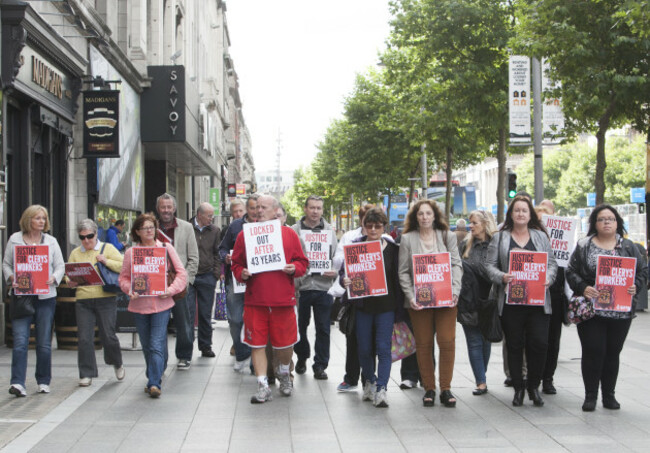
It was only when Shirley began visiting the Jobs Club in Kilbarrack, a service that provides support and training to job seekers, that she began to rebuild her confidence.
They’ve helped me with CVs and mock interviews. I’ve done public speaking there as well, which has really taken me out of my comfort zone.
She began a computer course last month and has just finished a four-day training programme at the Dublin International Aviation Training Academy, funded by the Department of Social Welfare.
New training opportunities have broadened her horizons and lifted her spirits, she says.
I thought I’d never be able to get another job. I never realised there are resources out there to help me.
For others, however, significant barriers to employment still exist.
According to the latest CSO data on equality, some 46% of unemployed people consider their age to be an issue when looking for work.
Bríd O’Brien, the head of policy at the Irish National Organisation of the Unemployed (INOU), says this accords very much with feedback she receives from older, long-term unemployed people.
“Older unemployed people are often highly skilled and educated, with good work experience. The barrier they’re running into again and again is ageism,” she says.
Static
The partial restoration of the Christmas bonus for people in receipt of long-term social welfare payments was among the headline measures of Budget 2016, announced earlier this week.
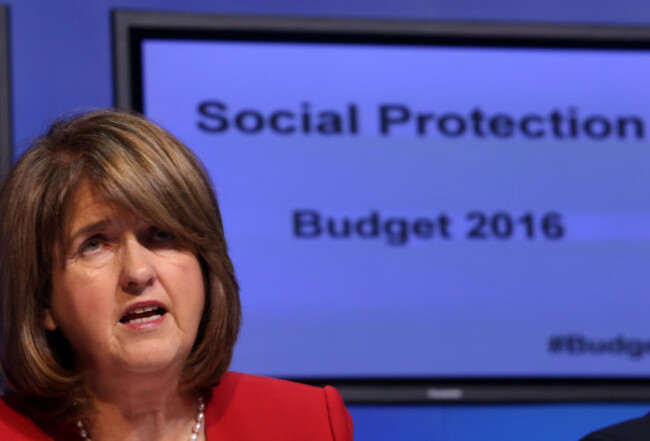
But in spite of inflation and rising living costs, there was no increase to the weekly jobseeker’s allowance, which fell from the 2009 rate of €204 to €188 during the crisis.
And consecutive cuts to rent allowance have had a particularly damaging impact on unemployed people, O’Brien says.
Many of the people we work with find it impossible to secure accommodation within the new limits.
According to the most recent CSO figures, some 36.7% of unemployed people are at risk of poverty, compared to 15.2% of the general population.
Unemployed households own an estimated 4% of the country’s wealth, despite making up about 13% of households.
The government has tried to tackle long-term unemployment through initiatives like Gateway and Tús, but too many people taking part in community employment schemes are doing jobs that don’t suit their skills, according to O’Brien.
We would be concerned that the Department of Social Protection is not putting sufficient time into ensuring the programmes people are being referred to will actually help their career prospects.
To help long-term unemployed people back into the labour market, she says, better quality training opportunities need to be put in place.

To embed this post, copy the code below on your site














have your say