Sign in. It’s quick, free and it’s up to you.
An account is an optional way to support the work we do. Find out more.
Sign in. It’s quick, free and it’s up to you.
An account is an optional way to support the work we do. Find out more.
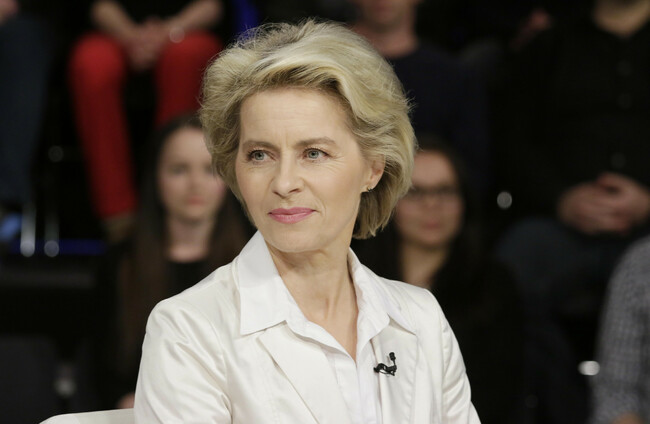
GERMANY’S URSULA VON der Leyen will seek a second term as president of the European Union’s powerful commission, she announced today.
Following five years of leading the 27-nation bloc through multiple crises, including the Covid-19 pandemic and the first two years of Russia’s war in Ukraine, the 65-year-old was put forward by her German Christian Democratic Union party.
If von der Leyen’s bid is successful, it could make her the most significant politician representing the bloc’s 450 million citizens in a generation.
So far in the role, she has showed her progressive credentials by pushing through a Green Deal that put the bloc at the forefront in the global fight against climate change and amounted to a sea change in EU policy.
However, with Europe’s political mood shifting recently to the right, von der Leyen has acknowledged that things are changing.
“The world is totally different compared to five years ago,” she said today, in an acceptance speech following her nomination.
Von der Leyen has also come in for criticism from politicians to the left and right.
She was among the most outspoken defenders of Israel since the war erupted with the 7 October Hamas attack on Israel — even as international outrage over the Israeli offensive is growing.
Her green credentials also have been dented as she has appeared to side with farmers during the past weeks of relentless farming protests throughout the bloc.
There has been no wavering though when it comes to Ukraine, however, as she has staunchly defended President Volodymyr Zelensky as his nation faces two years of Russia’s aggression.
Beyond pushing for sanctions against Russia, she has equally worked to get financial aid to Kyiv and fought to open EU membership talks with Ukraine.
Overall, it has turned the physician and mother of seven into the most prominent EU Commission president since Frenchman Jacques Delors during the 1990s.
In order for von der Leyen to remain in her post, the leaders of the 27 member states must approve her, when other top EU posts are being decided on.
After protracted haggling over such posts five years ago, von der Leyen herself came out of the blue to claim the position after receiving critical support of French President Emmanuel Macron.
With the continuing war in Ukraine and the possible election of Donald Trump as US president in November, it is likely EU leaders will unlikely to experiment too much with the helm of the Commission.
The final hurdle would be approval by the EU Parliament.

To embed this post, copy the code below on your site











have your say