Sign in. It’s quick, free and it’s up to you.
An account is an optional way to support the work we do. Find out more.
Sign in. It’s quick, free and it’s up to you.
An account is an optional way to support the work we do. Find out more.
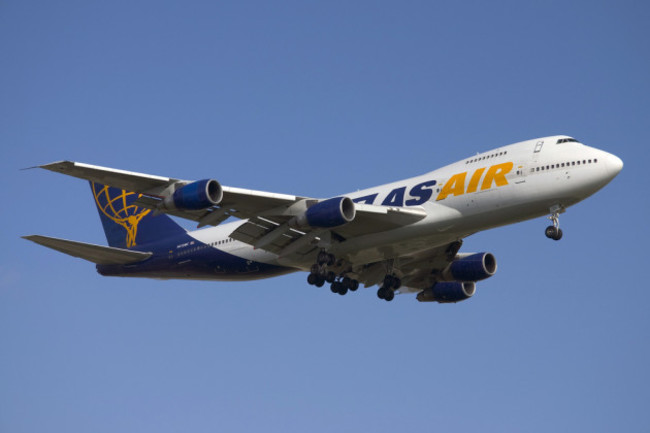
IRELAND REFUSED PERMISSION for six US airplanes carrying explosives to either land on these shores or pass through Irish airspace over the summer.
All six refusals were made on foot of advice from the Department of Foreign Affairs (DFA), according to the Department of Transport, which is charged with granting or refusing exemption applications for flights containing weapons.
220 such applications (known as ‘munitions of war exemptions’) were received by the department between the start of June and the end of August. No such weapons can be carried in Irish airspace without an exemption.
Activist group Shannonwatch, which ‘monitors the foreign military use’ of Shannon Airport, has said it believes the prevalence of weapons exemptions “breaches Irish neutrality”.
Speaking for the group, academic John Lannon said: ”We know from Freedom of Information (requests) that the Minister (for Transport, Shane Ross) personally approves these permits. We’ve been calling for a review of the system for some time.”
Lannon added that he isn’t aware of “why the refusals are happening”.
Five of the refusals were for flights originating in the US and ending in Germany, with the remaining one originating in Serbia and landing in the US.
‘Class 1 explosives’
The five flights beginning in the US (three in June, two in July) were operated by US cargo airline Atlas Air and contained ‘class 1′ explosives or cartridges (Atlas was also responsible for 127 further applications over the three months, all of which were granted).
The final refused flight, from Serbia in late August, was operated by that country’s state airline Air Serbia and contained ‘empty ammunition belts plus linking machines’. That flight was the sole application made by the airline.
An internal review of the Air Navigation (Carriage of Munitions of War, Weapons and Dangerous Goods) Order, 1973, which governs the granting of these applications is currently under way, with a view to a future public consultation on the subject.
TheJournal.ie has queried the Department of Transport as to the progress, scope and predicted completion date of this review.
The fact that the DFA was responsible for the above-mentioned refusals was revealed by Minister for Transport Shane Ross to independent TD Clare Daly following a parliamentary question on the subject.

Typically, a refused flight is told to avoid Irish airspace altogether, a Department of Transport spokesperson confirmed.
Of the 214 applications that were granted, 67 of those flights landed on Irish soil, with the vast majority of those (55) landing in Shannon
Those six applications actually represent a decline in such refusals – 10 such flights were turned away in the first three months of the year, with a further six following in April and May.
53, 81, and 86 applications were received in June, July, and August respectively, with the June figure representing the least number received by month for all of 2017 to date (March and April represent the high watermark, with 92 and 95 applications received respectively).
Garda munitions
Daly also enquired as to the reasons for the eight flights on the list for those three months that either originated or finished in Ireland.
Ross replied that those flights involved either the transport of Garda munitions to Italy, or Defence Forces weapons bound for Switzerland.
Of those eight flights six were operated by Aer Lingus, with one apiece by Ryanair and Swiss International Airlines.
The reasons for the six refusals of US flights are as yet unclear. TheJournal.ie has asked the Department of Foreign Affairs for clarification on the matter.
Such munitions exemptions apply to civil flights only, not military or State aircraft. However, this does not mean that troops or weapons of foreign militaries are not using Irish air space as many of the flights in question are contracted transports for the likes of the US Army.
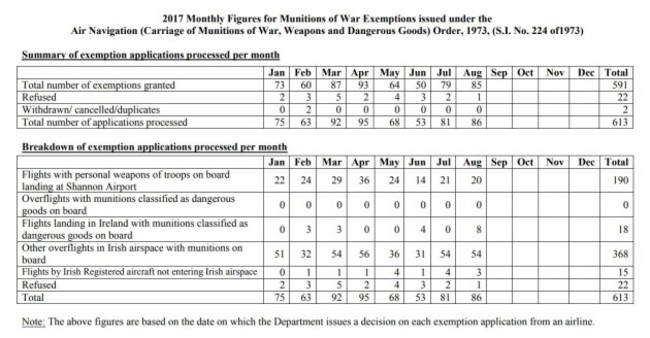
Click here to view a larger image
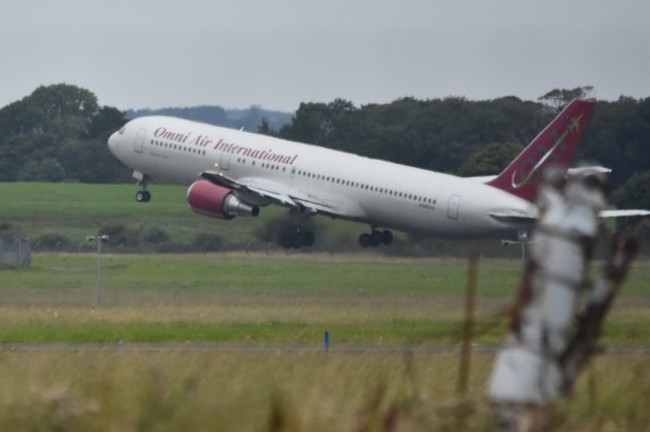
Of the 220 permit applications, 189 (fully 86%) were submitted by either Omni Air International (which routinely operates as a transport courier for troops and weapons to the Middle East from the US) or Atlas Air Inc.
“We know a few things about these exemption requests,” says Lannon. “These are aircraft operating under military contracts. Omni Air is the plane you’d regularly see at Gate 42 in Shannon.”
Now we know there’ll be an internal review first, but we don’t know how long that will be or what its scope is.
“That raises questions regarding the willingness of the government to change this act which in my opinion breaches Irish neutrality,” he added.

To embed this post, copy the code below on your site












have your say