Sign in. It’s quick, free and it’s up to you.
An account is an optional way to support the work we do. Find out more.
Sign in. It’s quick, free and it’s up to you.
An account is an optional way to support the work we do. Find out more.
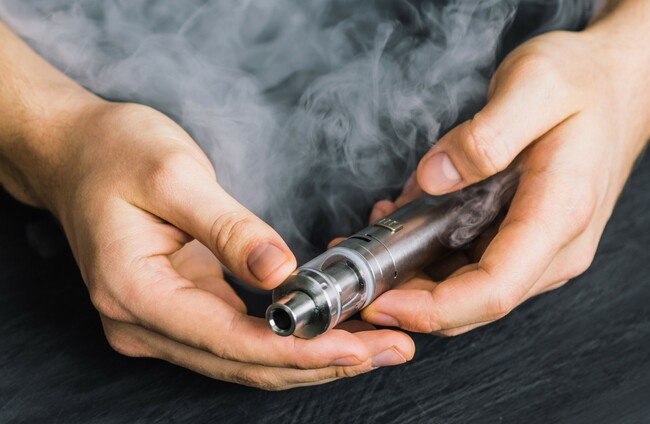
HEALTH AUTHORITIES IN the US have issued new clinical guidance for a lung injury associated with vaping and have named the mysterious illness that has now killed 26 people.
Officials are now referring to the illness as “e-cigarette or vaping product use associated lung injury” or “EVALI”, with around 1,300 people affected by the condition since March.
Almost all of those who have fallen victim to the illness have been hospitalised, with the rate of new cases showing no signs of slowing despite a series of dire public health warnings.
Earlier this week, a 17-year-old became the youngest person to die from the illness, and 80% of cases are among individuals under the age of 35.
Anne Schuchat, a senior official with the Centers for Disease Control and Prevention (CDC), said that a handful of individuals who were discharged recently have since been readmitted for clinical care.
She also said that the number of affected patients was “less than five” and that the time between the discharge and readmission of patients ranged from five to 55 days.
Cannabis compound
It is not yet clear what is responsible for the condition, with theories including a resumption of vaping, that the injury had left patients more susceptible to infectious disease, that steroid treatment had made them vulnerable to infection, or that steroid treatment was halted too quickly.
The CDC recommended that every patient should return for an outpatient follow-up within seven days.
Schuchat told reporters that nationwide research suggested products containing THC – the psychoactive compound in cannabis – and particularly those obtained off the street or from unknown sources, were linked to most of the cases and have played a major role in the outbreak.
Ned Sharpless, the acting head of the Food and Drug Administration (FDA), reported that among samples tested of products containing THC, 47% contained Vitamin E acetate, which is used as a cutting agent and is harmful when vaporised and inhaled.
But authorities cannot definitively exclude nicotine products either, because 13% of all patients reported nicotine use only.
A CDC spokeswoman later told AFP that because the information was self-reported, it was potentially unreliable.
“Specifically, patients might not always know what substances they use or might be hesitant to reveal use of substances that are not legal in their state.”
For now, investigators suspect that some portion of the cases are due to a risky practice linked to the preparation of THC, but cannot say for certain whether other cases have other causes innate to the vaping process.

To embed this post, copy the code below on your site
















have your say