Sign in. It’s quick, free and it’s up to you.
An account is an optional way to support the work we do. Find out more.
Sign in. It’s quick, free and it’s up to you.
An account is an optional way to support the work we do. Find out more.
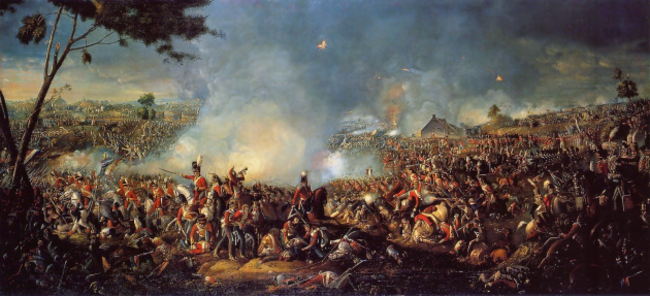
EUROPE IS TODAY remembering one of the most significant events in the recent continent’s history. But even now, European’s are squabbling over what it all means.
Royals, diplomats and about 200,000 spectators today marked the 200th anniversary of the Battle of Waterloo.
To do so, they made their way to the fields surrounding a small town just south of Brussels to the spot where 47,000 people died and Emperor Napoleon’s ill-fated drive was halted.
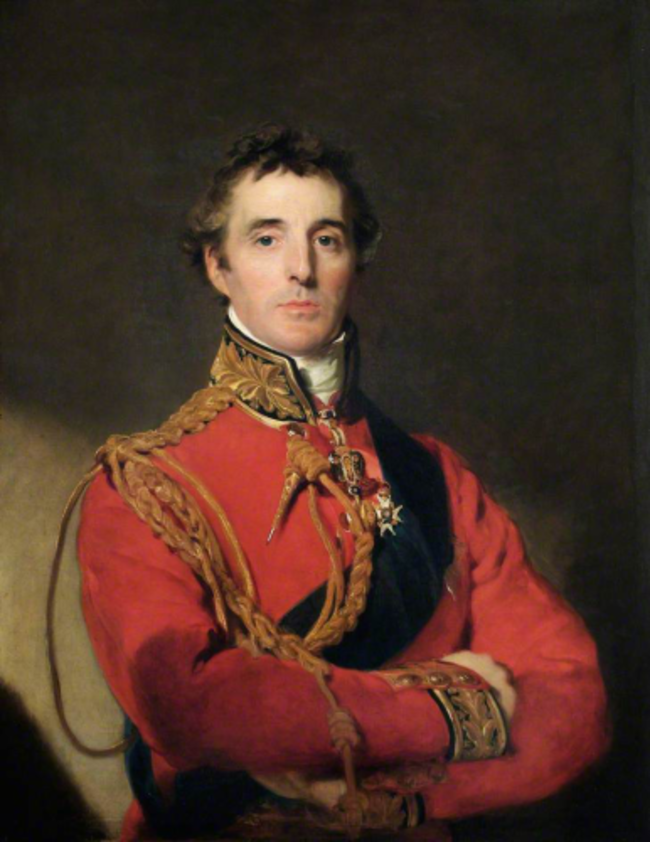
Ireland is far from isolated from the events with the victorious British, Dutch and Prussian forces being commanded by Dublin-born Arthur Wellesley, the 1st Duke of Wellington.
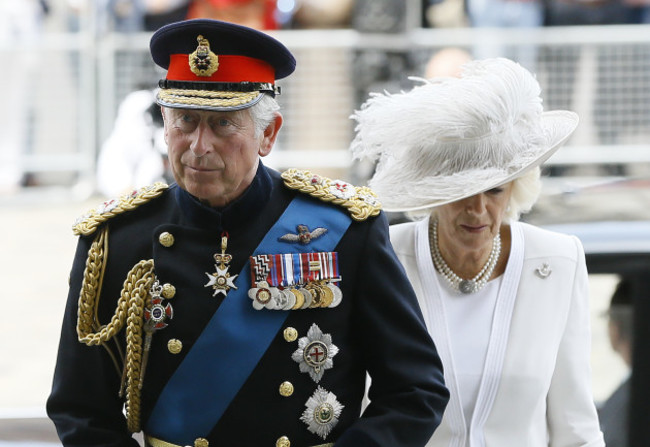
Britain’s Prince Charles is in attendance and called for unity in a “European project” as the UK prepares to vote on EU membership.
Yesterday, he unveiled a memorial at Hougoumont Farm where allied forces fought off repeated French attacks as Napoleon desperately sought to break their lines.
France and Germany sent only ambassadors to a ceremony that attracted kings and dukes from elsewhere in Europe.
This morning in France though, the battle was declared s “posthumous victory for Napoleon” by Le Parisien newspaper.

In Ireland, a remembrance ceremony was held at Glasnevin Cemetery where a number of headstone plaques were unveiled.
During the ceremony, attendants also paid their respects at the graves of a number of Irish officers who fought at Waterloo.
Last night, RTÉ broadcast a special edition of Nationwide that acknowledged the Irish contribution at Waterloo.
The programme showed that about one third of the Allied army at Waterloo was composed of British soldiers, and of the British soldiers, one third of them were Irish.
It also described how the Irish economy boomed during Britian’s involvement in the Napoleonic Wars. Cork, for example was huge logistics hub, navy base and shipment centre for the army.
The programme also looked at why Duke of Wellington, who went on to be the Prime Minister who brought in Catholic Emancipation, is not more favourably thought of in Ireland.
It claims that he never actually said the infamous quote that’s often attribution to him.
“Just because you are born in a stable doesn’t make you a horse,” weren’t his lines at all.
Junior Minister Simon Harris today opened the ’Wellington Exhibition’ in the Phoenix Park Visitor Centre to commemorate the bicentenary of the battle.
A plaque was also unveiled in the Royal Hospital Kilmainham last month to honour Sergeant James Graham described by the Duke of Wellington as ‘The bravest of the brave’ at Hougoumont Farm.
‘European hope’
Waterloo remains a sensitive subject, especially for France which now sees itself as a pillar of the EU alongside Germany, and whose relationship to the diminutive Napoleon remains ambivalent.
“History is behind us,” the French Defence Minister Jean-Yves Le Drian told BFMTV.
French President Francois Hollande, he noted, was due to attend a minor World War II today.
As for Napoleon, Le Drian said he recognised his great achievements but also “certain failures, this drive for power and extending borders which was not right.”
Belgium angered France this month by minting a special €2.5 Waterloo coin after France forced it to scrap a two-euro coin saying it would cause an “unfavourable reaction in France”.
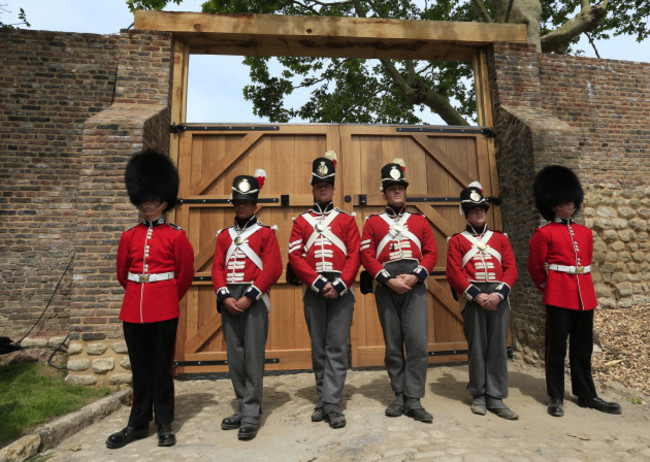
The absence of Hollande and German Chancellor Angela Merkel was cause for regret.
“It’s a shame,” Charles Bonaparte, a descendant of Napoleon’s brother Jerome, said Wednesday.
In a symbolic meeting yesterday, Charles Bonaparteshook hands with the current day Duke of Wellington, and Prince Nikolaus Bluecher von Wahlstatt, whose ancestor led the Prussians who saved the day for the allied forces.
The battle was a pivotal moment in European history, when around 93,000 French troops led by Napoleon faced off against 125,000 Allied forces commanded by the Duke of Wellington and Field Marshal Bluecher.
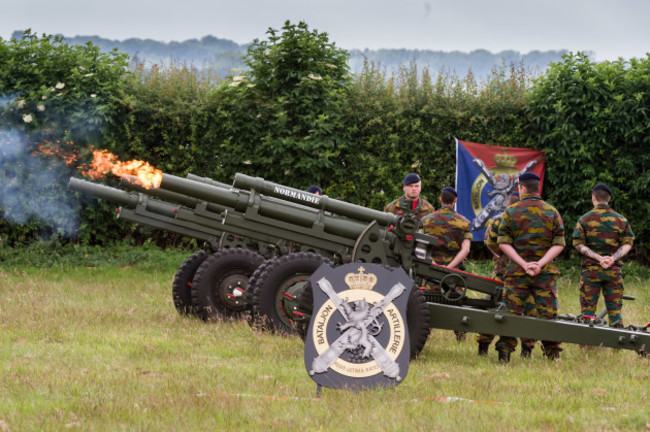
Finally defeated by an alliance of monarchies determined to end years of European war following the 1789 French Revolution, Napoleon was exiled to the island of Saint Helena in the south Atlantic Ocean, where he died in 1821.
The victors redrew the map of Europe and the continent enjoyed almost a century of relative peace until the carnage of World War I tore it apart again.
- With reporting by © – AFP 2014

To embed this post, copy the code below on your site









have your say