We need your help now

Support from readers like you keeps The Journal open.

You are visiting us because we have something you value. Independent, unbiased news that tells the truth. Advertising revenue goes some way to support our mission, but this year it has not been enough.

If you've seen value in our reporting, please contribute what you can, so we can continue to produce accurate and meaningful journalism. For everyone who needs it.

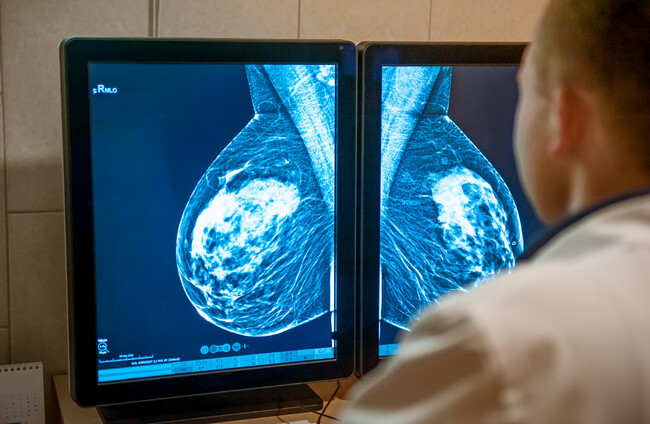
Each four-week delay in starting cancer treatment can increase mortality by 10%, research has found. Alamy Stock Photo

Almost 25% of 'urgent' patients waiting too long for breast clinic appointments

New data highlights alarming failures to meet those targets in many cancer centres, the Irish Cancer Society warns.

MANY PEOPLE REFERRED for urgent appointments in breast diseases clinics are waiting longer than they should to be seen.

New data obtained by the Irish Cancer Society shows that just 76.3% of patients got their appointment within the target of 10 working days.

The figures have been described as a ‘shocking postcode lottery’, with patients living in certain areas less likely than others to get a much-needed appointment. 

This comes as The Journal Investigates reported the detrimental physical and psychological impacts delays to cancer care are having on people across the country.

Earlier this week, our team showed that not only are hospitals failing to consistently start chemo on time, but people are waiting for diagnostic scans, surgeries and other treatments.

“Early treatment dramatically reduces your risk of dying from cancer,” Averil Power, CEO of the Irish Cancer Society said.

“A person’s chances of surviving cancer are up to four times higher when treated at Stage 1 than at Stage 4.

“Today’s figures highlight alarming failures to meet those targets in many cancer centres, due to shortages of staff, physical space and equipment.”

They also reveal a shocking postcode lottery in Irish cancer care, with where you live determining how quickly you can access lifesaving tests and treatment.

The charity is calling for an extra €20 million investment in development funding in Budget 2026.

Wait times vary substantially by hospital.

For urgent breast disease clinics, from March 2024 to February this year, Mater University Hospital had the lowest compliance. Fewer than three in 10 patients there (28.9%) got appointments within the recommended time.

Only 54.5% of patients were seen on time in St James’s Hospital in Dublin and this was just 59.8% in Letterkenny Hospital.

Patients trying to access urgent prostate rapid access clinics also faced delays during that period.

Nationally, just 74.2% were seen within the recommended 20 working days, but again this varied between hospitals.

This time, Galway University Hospital had significant delays, with just 12.7% of patients getting their prostate appointment on time.

Regional disparities were also evident in cancer treatment data reported by The Journal Investigates on Monday, with a number of hospitals continuing to drastically underperform.

‘Significant demand on existing services’

In a statement issued in response to these findings, the HSE said that access to diagnostics and capacity within assessment and treatment services were key challenges. 

The spokesperson gave a number of reasons for the cause of “significant demand on existing services, as evidenced by performance data”. 

These include “increased referrals driven by population growth, heightened awareness of symptoms and improved detection” and “increasing complexity of both diagnostic pathways and cancer care”.

“Today, over 220,000 people in Ireland are living with or after cancer, which is a 50% increase compared to a decade ago.”

To improve efficiency of services, the National Cancer Control Programme (NCCP) “is introducing more streamlined clinical pathways based on clinical evidence”.

Liam Downey, president of the Irish Institute of Radiography and Radiation Therapy (IIRRT) told The Journal Investigates earlier this week that a more streamlined service was possible by having units that are “purely scheduled care”.

The HSE spokesperson said that “a mammography-only breast route” and “a dedicated family history pathway for those at increased risk” are among the pathways being introduced.

“Infrastructure investments are ongoing to expand theatre capacity, inpatient beds, systemic therapy day wards and aseptic compounding units.”

But the HSE also said:

To sustain this progress, consistency and assurance around future funding would be helpful.

“The NCCP is actively engaging within the HSE and with the Department of Health to ensure adequate resources are in place for 2026 and beyond.”

Relying on ageing equipment

Readers of The Journal told us these delays were having drastic physical and psychological impacts on them. 

They felt forgotten, holding their breaths, unable to think about their future. 

Margaret Higgins, who resorted to getting a private scan due to the backlog, said:

“The system is so broken… If you haven’t got somebody strong to fight for you, you just get left behind.”

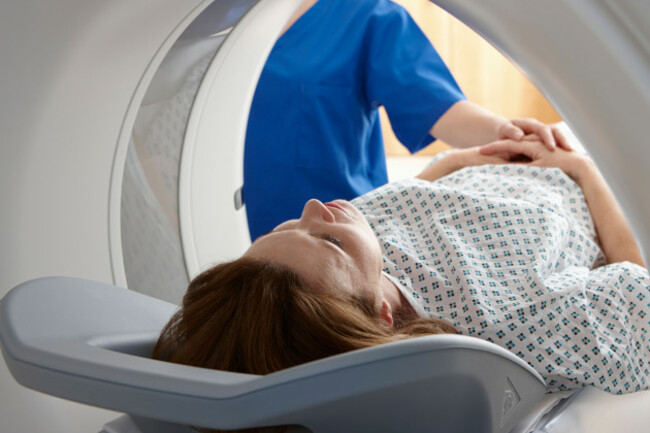
woman-in-ct-scanner The Society of Radiation Oncology says an ongoing equipment replacement programme is needed. Alamy Stock Photo Alamy Stock Photo

Commenting on the data released today, John Armstrong, president of the Irish Society of Radiation Oncology (ISRO), said that sustained investment is needed “to address the chronic staff shortages we are facing”.

He also said that ageing equipment needs to be upgraded. 

“We need an ongoing replacement programme so that every ten years we don’t find ourselves in the unacceptable situation of relying on predictably inefficient machinery.”

On this, the HSE spokesperson said that “a national radiation oncology equipment replacement programme, along with the expansion of the radiotherapy facility at the Beaumont Centre… is further enhancing radiation treatment capacity”.

When asked about delays being experience in cancer services, the Department of Health told us that “since 2017, funding of €105 million has been invested in the National Cancer Strategy, including €23 million in 2025″. They added:

“The Programme for Government commits to building on our progress in cancer control and improving the lives of people living with and beyond cancer.”

Maria Delaney is the editor of The Journal Investigates.

Our investigative unit is dedicated to lifting the lid on how Ireland works. This takes time and it takes resources. Find out how you can help: 

Readers like you are keeping these stories free for everyone...
A mix of advertising and supporting contributions helps keep paywalls away from valuable information like this article. Over 5,000 readers like you have already stepped up and support us with a monthly payment or a once-off donation.

Close
21 Comments
This is YOUR comments community. Stay civil, stay constructive, stay on topic. Please familiarise yourself with our comments policy here before taking part.
Leave a Comment
    Submit a report
    Please help us understand how this comment violates our community guidelines.
    Thank you for the feedback
    Your feedback has been sent to our team for review.

    Leave a commentcancel

     
    JournalTv
    News in 60 seconds