We need your help now

Support from readers like you keeps The Journal open.

You are visiting us because we have something you value. Independent, unbiased news that tells the truth. Advertising revenue goes some way to support our mission, but this year it has not been enough.

If you've seen value in our reporting, please contribute what you can, so we can continue to produce accurate and meaningful journalism. For everyone who needs it.

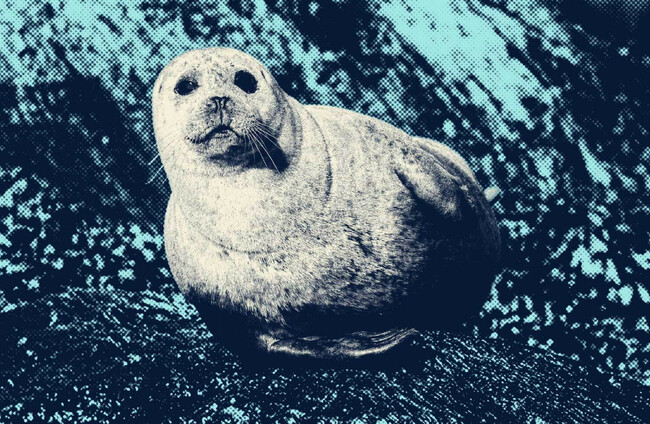
Dead seals washing up on Irish coasts more than doubles in three years

The Journal Investigates can reveal a significant spike in dead seal reports, as severe storms and human disturbance threaten the protected species.

THE NUMBER OF dead seals washing up along Irish coasts more than doubled between 2020 and 2023, The Journal Investigates can reveal.

The highest amount on record – 430 dead seals were reported to the National Parks and Wildlife Service (NPWS) in 2023, figures obtained under Access to Information on the Environment (AIE) reveal.

That’s a jump from 201 reports in 2020, with the significant spike causing concern among experts that more frequent, severe weather – as well as human disturbance – is impacting the protected species in Ireland.

While there was a dip in seal deaths recorded for 2024 (322), the numbers have been climbing significantly from 2018, according to the figures compiled by Seal Rescue Ireland (SRI).

The centre, which monitors and gathers data on deaths, say they’ve also seen a rise in emergency pup rescues during recent, extreme storms, which has caused “chaos” for the marine mammals.

“If you have repeated big storm events year after year during pupping seasons, it’s going to really start to affect populations at some point,” SRI general manager Kim Townsend-Smyth told The Journal Investigates.

“There’s going to be a point where, if you continue to lose the majority of your pups, that’s going to start to have an impact.”

The Journal / YouTube

An investigation by The Journal Investigates has found multiple factors threatening the protected species here in Ireland.

Currently, climate change and human disturbance present two of the biggest risks to colonies along our coasts.

Documents obtained by our team under AIE request also show that a small number of seals have been illegally targeted and killed over the last five years.

Separately, the NPWS has issued a number of licences to allow for the legal killing of “problem” seals.

Between 2023 and 2025, three of these permits – one per year – were granted in unknown locations, with a NPWS spokesperson only confirming these related to controlling damage to salmon stocks.

Granting of the licences followed heated disputes between government officials and fishermen over seals interfering with fish stocks.

We previously revealed how 11 special licences to shoot seals were issued by the NPWS to salmon farms between 2015 and 2020.

Internal NPWS notes reveal how in 2020, one group of fishermen demanded a cull, calling seal numbers “out of control”, resulting in substantial financial losses due to damaged catch.

However, the government department said a cull would be a “significant policy shift” which would not gain the backing of the Minister for Heritage, or the public.

One NPWS ranger told the meeting the targeting of seals would “set the Twitter machine on fire”.

A NPWS spokesperson told The Journal Investigates: “While seals are a protected species, the Department may issue licenses to cull individual problem seals, and affected persons can apply for such licences.”

Investigations like this don’t happen without your support… Impactful investigative reporting is powered by people like you.

Some seals suspected of being shot

The Journal Investigates can also reveal that between 2020 and 2025, the NPWS received some reports of deceased seals with alleged “gunshot” or “blade” wounds.

Emails and images, as well as WhatsApp messages, obtained under AIE request reveal the concerns were raised by both members of the public, and NPWS officials.

In one incident recorded in 2020, a dead seal was found tied to a mooring buoy in west Galway.

A few days later, the NPWS launched an investigation into the “strong suspicion” that a seal was shot dead close to Blackrock Castle in Cork.

However, post-mortem investigations couldn’t be carried out on the carcass as a university lab was closed, and on-site veterinary inspection was not possible.

As a result, no further evidence could be gathered on the cause of death. However, one official said they were “90%” sure the animal had been shot.

In another disturbing report, received by NPWS in 2021, a local resident discovered the fresh body of a seal pup in the Clonpriest area of East Cork.

Images show the young seal with extensive trauma to its head, with the resident stating it appeared the animal’s head flesh was “cut off with a blade of some type”.

They added: “There is No Doubt in my mind that Some Person or Persons in the East Cork area are and have been for some years past Killing Seals in the Area of Knockadoon and Ballycotton to Inch bay area of east [sic]”.

The incident was reported to the area’s District Conservation Officer.

The next month, a further three seals were found dead in the same area and reported by another individual.

An email, which included images, stated: “We have been living here since 2005 and are used to occasionally coming across a dead seal, to find three on one morning was disturbing.

They added: “The dead seals were not there on Tuesday morning when my wife walked the same route.”

A series of internal WhatsApp messages also note the concern over the illegal targeting of seals along the Galway coast last year.

One NPWS officer noted the discovery of a seal with a “likely firearm injury”.

Three old and badly decomposed seal remains were also discovered, however their cause of death couldn’t be determined.

In one message, the NPWS officer, who visited the site and took pictures, described the difficulty of “tying an illegally killed seal to an individual”.

He added: “Hopefully a pattern doesn’t develop here.”

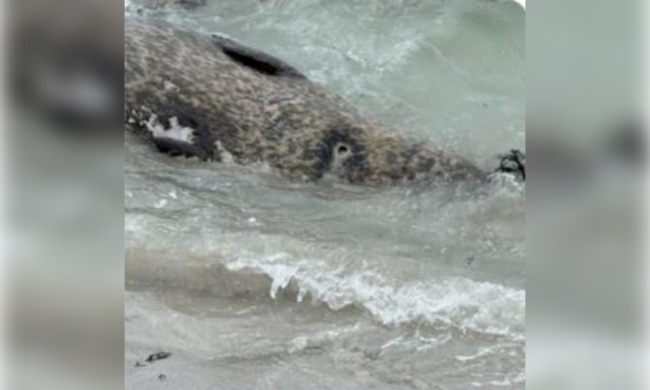
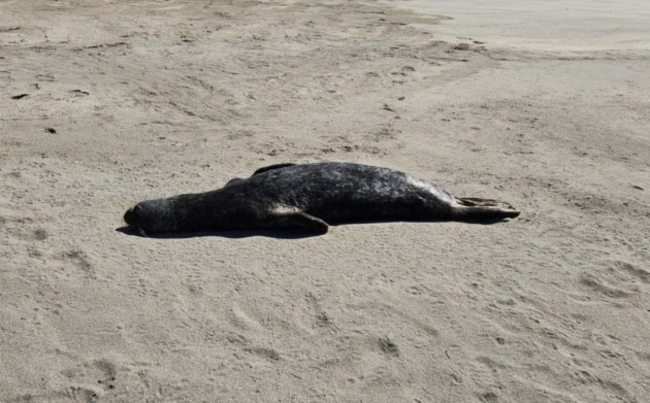
high-res-image (1) An image of a dead seal pictured on the Galway coast in August 2024 with what NPWS describe as a likely gunshot wound

Call for full post-mortems on dead seals

According to the internal documents, the number of seal deaths reported along coasts increased sharply from 2020 onward, coinciding with SRI’s launch of an online reporting system for the public.

The Co Wexford-based centre is the country’s only organisation dedicated to the rescue, rehabilitation, and release of sick, injured, and orphaned seals.

The small team handles around 172 rescues per year – a figure that fluctuates sharply in response to the nation’s wild weather and rising public awareness.

According to data collected by the centre in 2023, Wexford had the highest number of dead seals that year, with 103 reports, followed by Donegal (69).

Dublin recorded 41 deaths followed by Cork (44) and Kerry. No location data was available in the 2024 report.

The latest data showed the autumn and winter months to be the deadliest for seals with 67 reports made in October, 41 in November and 42 in January.

Ireland is home to two species of seal – the grey, as well as the harbour seal. The local population is estimated at between 7,000 and 10,000, according to the NPWS.

Although the improved mechanism for tracking and awareness may partly explain the spike, Townsend-Smyth said the lack of necropsies – full veterinary post-mortems – carried out on seals makes it hard to see the full picture.

“When we’re receiving dead seal reports, unfortunately, we can’t determine anything from a photograph,” the general manager told The Journal Investigates.

“A lot of the pictures of seals that we get reported to us are in an advanced state of decomposition as well. So we can’t really [determine] anything without a proper veterinary examination.

The lack of systematic necropsies is, in her view, a missed opportunity not only to detect intentional harm but also to study wider environmental threats.

She said: “If there was a project in Ireland where necropsies could happen on dead seals, I think that would yield a lot of really interesting information.

“Not just about potential intentional harm, but, infections out there or disease spread, or if there’s something happening pollution wise.

“I think there’s so much valuable information about the marine ecosystem that could be discovered from doing necropsies.”

Screenshot 2025-08-08 at 12.21.38 A dead seal pictured on the Blasket Islands, Co Kerry. NPWS NPWS

Asked about the lack of necropsies carried out on dead seals, a NPWS spokesperson told The Journal Investigates that it regularly assesses the seal population and is “satisfied” with numbers.

The spokesperson added that “there is no evidence that the seal population has been adversely affected”.

One thing SRI is sure of, is the impact of increasing Atlantic storms on Ireland’s seal population.

“Two years ago, we had Storm Agnes and Storm Babet back to back,” said Townsend-Smyth. “It was chaos.

“All the little white coat pups were washed off beaches and washed up somewhere else. So they were completely separated from their mums.”

Repeated storm events, SRI said, is a “big concern” with “a lot of unknowns”.

“So there’s a lot of potential there, I think, for not a very favourable future,” said Townsend-Smyth.

“You have to take each year as it goes, look at the data that you have and collaborate with other centres to try to understand trends, and see what could be coming down the line.”

The Journal Investigates

Reporter: Patricia Devlin • Editor: Maria Delaney • Video Editor: Nicky Ryan • Social Media: Cliodhna Travers • Main Image Design: Lorcan O’Reilly

Investigations like this don’t happen without your support...
Impactful investigative reporting is powered by people like you. Over 5,000 readers have already supported our mission with a monthly or one-off payment. Join them here:

Close
14 Comments
This is YOUR comments community. Stay civil, stay constructive, stay on topic. Please familiarise yourself with our comments policy here before taking part.
Leave a Comment
    Submit a report
    Please help us understand how this comment violates our community guidelines.
    Thank you for the feedback
    Your feedback has been sent to our team for review.

    Leave a commentcancel

     
    JournalTv
    News in 60 seconds