TheJournal.ie uses cookies. By continuing to browse this site you are agreeing to our use of cookies. Click here to find out more »
Dublin: 10 °C Wednesday 19 June, 2013

Explainer: What’s going on with Ireland’s septic tanks?

The government’s under pressure over its plans to enforce mandatory inspections of septic tanks. So what’s the story?

Image: eutrophication&hypoxia via Flickr

Updated, 15.07

THE THORNY TOPIC of mandatory inspections for Ireland’s septic tanks is back in the news this week, as the Government launches its final push to have the appropriate legislation pushed through the Dáil.

TDs are set to finish debating the Water Services (Amendment) Bill 2011 on Wednesday and Thursday, with the Seanad putting the finishing touches to the Bill on Thursday afternoon.

After that, it’ll be sent off to President Higgins to be signed into law – perhaps with a polite request for it to be signed before the February 3 deadline which the government claims is being enforced upon it.

So what’s the whole idea behind the proposals – and why have they proven so controversial?

A continental problem

It all stems from a set of European Union directives. A directive, put simply, is an instruction to each member state that it must enact laws to achieve a certain goal, but doesn’t prescribe how that should be done.

In this particular case, the directive ordered that governments introduce whatever laws that were necessary to ensure that the disposal of human waste did not have a harmful impact on the environment. The first of the directives was adopted in 1975.

When countries don’t abide by directives, the European Commission – which is the ‘guardian’ of the European Treaties – can then take individual member states to court for their failure to enact Irish law.

This is what triggered the current problems. In October 2009 the European Court of Justice found that Ireland had failed to meet its obligations under the various directives to enforce particular standards in the emissions of human waste.

Put simply, it was Ireland’s network of almost half a million septic tanks – and the possibility that they could be leaking toxins into the ground, and therefore into water streams.

What’s wrong with our tanks?

The frustrating thing about the current case is that there may not necessarily be anything wrong with a large number of septic tanks – the matter at hand is more about making sure they’re all in perfect working order.

Because there hasn’t been any formal register of septic tanks up until now – and no method of inspecting them to see if they’re all in sound working order – it’s impossible to know just how effective Ireland’s tanks are.

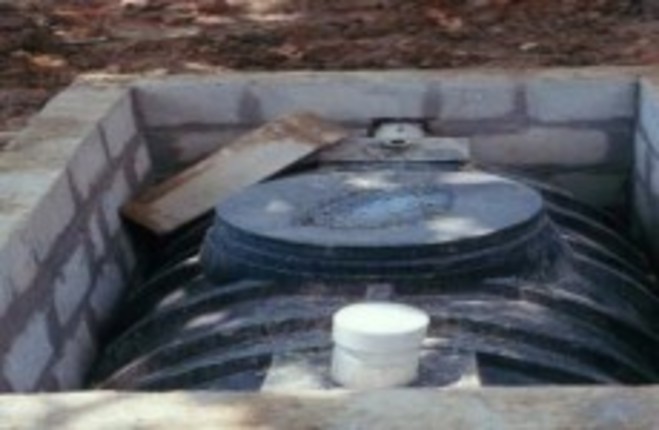
A crash course: septic tanks are large drums, of up to 2,000 gallons in capacity, which sit under most rural gardens. In cases where a house isn’t connected to an urban sewage system, toilet waste (which often forms ammonia) is flushed to this tank where a bacterial environment decomposes it.

The bacteria in the tank then breaks down the ammonia, or any other harmful material, into water or other minerals which are more easily and safely absorbed by the ground.

Or, at least, that’s the intention. Because some tanks have existed for decades without any inspection, it’s impossible to know how many tanks might be defective in some way – and are allowing harmful human waste to be pumped into the ground.

The urban-rural divide

There’s two main reasons why many politicians are objecting to these plans. The first is that they believe it’s fundamentally anti-rural.

They explain their argument as follows: during the boom years, as more and more housing estates were built in urban areas around Greater Dublin, their new residents were essentially provided with a link to urban water and sewage systems, free of charge.

Parallel to that, local authorities were given massive amounts of government funding to upgrade their waste disposal systems in order to cater for the growing numbers living on the country’s east coast and other urban areas.

But at the same time, they argue, very little was spent on similar projects in more rural areas – and there was precious little financial support for those building homes in rural areas who had to supply their own sewage disposal units.

Although the government says the mandatory inspections should only cost around €50 each, any septic tanks which fail the test would be liable for replacement – at the potential cost of thousands of euro.

There are also some question marks about the exact nature of the inspection – how invasive or thorough an inspection might be, or whether it will amount to mere ‘box-ticking’.

It’s also particularly rough on the people of Cavan, whose county council has already been voluntarily following European standards for a few years already – meaning newer householders will still be paying for inspections, even though they’re virtually guaranteed to pass them.

Fines, fines everywhere

The other resistance – which is a more political one – concerns the fines that Ireland is likely to face for not following the directive more quickly. The government says the legislation must be enacted before February 3 if Ireland is to avoid fines.

The logic of environment minister Phil Hogan, whose job it is to implement this new ruling, is that February 3 is the deadline by which Ireland must submit a response to the European Court of Justice defending itself against any fines from the ECJ.

That’ll be the last chance for Ireland to assure the court that it’s following the directive, Hogan says – so if the legislation isn’t in place before then, the court proceedings will go ahead without Ireland having a chance to defend itself.

Those fines start off with a lump sum of €2.7 million, with a penalty of €26,173 for every day afterward that Ireland hasn’t fallen in line.

The European Commission has told us – and the opposition parties – that it isn’t quite so straightforward, however. Although Ireland must have its response sent to the ECJ by February 3, the ruling in the matter isn’t expected until at least the summer – and probably not until autumn.

Opposition parties argue that Ireland can’t possibly face fines until the ruling is issued by the ECJ – and that the government is therefore trying to rush the bill through the Oireachtas quicker than it needs to.

This came to a head last week, when the opposition members of the Oireachtas Environment committee tried to stop the Bill from proceeding until they heard expert input from the likes of An Taisce and the Environmental Protection Agency.

They were foiled by the government side, however, who overruled the proposals and kept the bill on its current path.

Read: Government strikes down bid to halt septic tank bill

Read: State won’t face septic tank fines in February despite government claims

Read: Hogan says Fianna Fáil is frightening rural Ireland over septic tank charges

  • Share on Facebook
  • Email this article
  •  

Read next:

Comments (35 Comments)

  • It will more or likely be the same person who came to your property to check your septic tank was been installed and working correctly with the conditions laid down by your local council
    It will I am sure involve a certain amount of box ticking and looking down pipes , toilet flushing and that kinda thing and of course the handing over of money

    Reply
  • I smell a €100 septic tank tax in the pipeline!

    Reply
  • There’s also the point, which you should include, and which rural people are quite angry about, is that what this inspection will entail has not been made clear at all – i.e. will it be basically a survey, amounting to a box-ticking exercise, or will it be a detailed, sampling and risk assessment.

    Reply
  • What a pile of shite!!!

    Reply
  • Don’t register .Don’t pay ..

    Reply
  • what i don’t get is why they should be allowed charge us for us letting them inspect us and then them screw us by saying it doesn’t work
    and what qualifications will the inspectors have?

    Reply
  • I’ve always said that if Irish politicians could get away with it, they would tax the crap out of you! Gives a whole new meaning to the saying “where there’s muck there’s brass” or in this case a TAX! Wonder if they’ll include the Dail and the Seanad in their checks? Now there’s two big septic tanks that are full to brim with toxic waste, all manner of parasites and enough bullshit to cause an environmental disaster!

    Reply
  • I have had a septic tank for thirty years as it was a condition of planning. I have a substantial percolation area and the design was supplied to the Council before they signed off on the entire development i.e. one house.
    In many respects I have little difficulty in paying fifty euro for an inspection to cover the cost of compliance with EU environmental protection rules and regulations.
    However, should my system not reach whatever standard Is required , I do expect that the costs will be borne by general taxation as all of our urban and town dwelling neighbours receive such a service/benefit without specific charge.
    Dublin City has been dumping its waste on nearby rural Counties for years…………is it now time for that process to be reversed???????.

    Reply
    • unfortunately this too is incorrect. Urban dwellers do pay a specific charge through s.48 levies built into the price of a house. Most new build one-offs do not pay stamp duty and benefit from favourable capital gains taxation etc. The vast bulk of commercial rates/water charges are collected in towns. In general the subsidisation is largely from urban to rural – a rural dwelling costs between 3&5 times more for the state to service than an urban dwelling.

      Besides this divisive argument is self defeating rural Ireland depends on towns and cities and visa versa.

      Reply
  • Ok so if your tank fails surley in most cases the local council will have signed them off and in that case should meet the full cost of up grading it as it is their fault it doesn’t comply in the first place. At the very least government should give a grant to up grade eg 99.9%. Let the EU fine us it’ll be their money we pay them back with and they shouldn’t be surprised when we default on loan!!

    Reply
  • Explainer: Money racket.

    Reply
  • People – Please read:

    http://curia.europa.eu/juris/document/document.jsf?text=&docid=73369&pageIndex=0&doclang=en&mode=req&dir=&occ=first&part=1&cid=466641

    The European Court of Justice has ruled against Ireland in relation to on-site wastewater
    treatment systems (ref. case C-188/08). The Court found that, by failing to adopt the
    necessary legislation to comply with Articles 4 and 8 of Council Directive 75/442/EEC, as
    amended, as regards domestic waste waters disposed of in the countryside through septic
    tanks and other individual waste water treatment systems, Ireland has failed to fulfill its
    obligations under that Directive.

    Reply
  • Modern septic tanks are bought off the shelf, and if correctly fitted work perfectly. Fifty euro is therefore a resonable payment as a surveyor could inspect several of these in a day (so why is the inspection necessary?) but it is an inadequate amount for an older property, where the temptation will be to condemn the installation at the house gate, to avoid losing money!

    Add to this that many old cottages have the older type of septic tank built in brick or block, which are virtually guaranteed to leak a little after a few years (with no measurable effect on the environment), while many of these older properties house the less well off rural dwellers, who will therefore be faced with unpayable bills of many thousands of euro. How can this be just?

    I would have thought that the government could have worked out something less obviously desperate than this measure, while still complying with what is overall a sensible european requirement.

    Reply
    • the key phrase is ‘if correctly fitted’ and you would need to add ‘if correctly sited’. The problem is that the Site Assessment / PWWTP installation industry was run like an unregulated cowboy industry for decades. I would hazard that in the ‘at risk’ areas a very significant proportion/if not a majority of all systems would be non compliant with Water Framework Directive standards

      Reply
  • Why do rural house owners think they should have equal right to “urban” dwellers”?

    By living in cities, town and even villages, those dwellers are making it much easier, efficient and environmentally sound not just to treat waste waste, but to provide all other public services. One off isolated houses are miles off on all 3 of those counts. If we want to have one off houses away from public services, then we should individually have to pay the price to support that decision, and not be subsidised by a different part of society. The taxpayers should not have to subsidise lifestyle choices, and that’s exactly what one off houses are in the majority of cases.

    As a rural one off house dweller myself the focus on this crap drives me mad. Rural people haven’t bloody clue about the real issues that really effect their communities. How will the local economy work and develop? How can we create local jobs? How we can we provide local services in as efficient a manner as possible? How can we battle rural isolation and youth emigration? But no, instead it’s fools like these, mainly involved in farming organisations, getting exercised about a once a decade charge of 100 quid, and bitching that they should be allowed drink and drive to their hearts content.

    I’d actually love to get involved with a rural political party that would champion some of the former issues in the above paragraph, but sadly too many rural dwellers are from the Healy Rae school of social and political thinking (if any substantial thought even goes into it), and i’d have no doubt such an party would by hijacked and back talking about septic tanks and being allowed have a few pints and still drive home. Rural people are killing their own communities by focusing and pathetic little issues like this at the expense of the real problems in rural society.

    Reply
  • Eileen do you have a septic tank?

    Reply
  • David 24/01/12 #

    It’s funny how the usual whinging moaners about the household charge don’t seem to care about the septic tank charge. They must all be urban dwellers who have no concern for their rural counterparts. Typical

    Reply
  • Ive heard it all now ,taxed 2 take a crap what next,oz here i come!!!!!

    Reply

Add New Comment