TheJournal.ie uses cookies. By continuing to browse this site you are agreeing to our use of cookies. Click here to find out more »
Dublin: 17 °C Wednesday 19 June, 2013

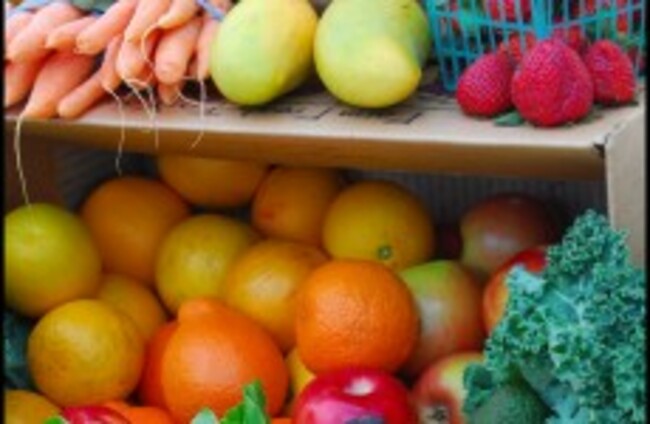
Poll: Do you buy organic food?

Are you concious of what you put in your basket or trolley? And if you buy organic, why?

GRACE MAHER, SPOKESPERSON for the Irish Organic Farmers and Growers Association wrote for TheJournal.ie today about who’s buying organic food and what ‘organic’ means.

Maher said that it seems a lot of people in Ireland purchase and eat organic food, and also referenced a study released last week which indicated that organic food is no healthier than non-organic food.

The most consistent reason cited by people for buying organic food is that it’s free from pesticides. Organic food is also free from GM ingredients and strict animal welfare standards are observed.

Do you buy organic food? Tell us what you buy and why in the comments section below.


Poll Results:


Column: It’s not just sandal wearing hippies who grow and eat organic food>

  • Share on Facebook
  • Email this article
  •  

Read next:

Comments (81 Comments)

  • If i can yes but mostly not because of price.

    Reply
  • These days I’m just grateful to be able to afford any food.

    Reply
  • would love to buy organic but its too expensive

    Reply
  • I would like to buy more organic – but to be honest I don’t trust how it’s regulated. Labelling and the legalities surrounding it don’t encourage me to do so. ‘Free range’ means if the hens are left outside for an hour a day – it’s considered ‘free range’ . MAybe if there was more information out there as to what constitutes ‘organic’ and what justifies the price difference I might reconsider

    Reply
    • I get my eggs from my own hens, which taste delicious and are of course fresh. The , so called, free range or organic eggs don’t taste anywhere near the same which makes me wonder how free range they are.

      If we could buy our produce from farmers locally, I believe it would be better for our health, our community life, and our local economy. I can’t see the benefit in buying organic food that has been transported 100s of miles.

      Reply
    • Joe, you’re right. We cut out the middlemen by buying directly from the producers. It makes it more affordable too.

      Reply
    • I buy my eggs on the black market. They are produced by local people (or at least by hens owned by local people!) who have a few hens and a surplus, which a local shop sells for them in a very casual way. They are just on the counter in a basket, sometimes there are none, sometimes quite a few, sometimes some duck eggs or goose eggs too. You bring your own box or are very careful with loose eggs in a bag.

      The people who own the hens are not commercial producers and could never hope to comply with all the regulations that would entail. The shop just does them a favour. We are all breaking the law. They are lovely eggs.

      Reply
  • We grow quite a bit of our own food on an allotment, which is very enjoyable and we grow organically.

    We have 1000 sq ft of ground to use but you would be surprised how much food you can grow on a smaller piece of ground…. ie your own gården.

    I think Growing as much/some of your own organic food and showing your children how to do the same is the best way forward.

    Reply
  • I buy what I can’t grow myself. However if you see what is acceptable for the term ‘Organic’, or ‘Free Range’ for that matter, you wouldn’t bother. Cynical, but true.

    Reply
  • I don’t buy organic in general because of the price. The only food I am very fussy about is eggs – never ever buy battery eggs.

    Reply
  • At least I know my hens are definitely free range as they wander around all over the fields, garden and the long acre, but I could not claim that the eggs they produce are wholly organic as the grains we buy to feed them, and the layers pellets do not claim to be organically grown.

    However, the eggs they produce certainly taste much better than any shop bought so called free range.

    Reply
    • Same as you Ally, my own hens produce amazing eggs but they are not organic. The layers pellets are not organic, the “spent” veg I throw them from the garden is not organic and the grass they graze is not organic. The term “Organic” can be misused . Friends of mine reckon my fruit/veg is organic simply because I grow it at home………………It’s not but it’s still fresh and delicious!!!

      Reply
  • Paid 2.50 euro for an organic avocado. I saw avocados in LIdl for about 80 cents. Hard to see the justification.

    I am also curious about some organic foods. For example my wife has a farm in Thailand where we grow bananas. They are hardy plants and never need spraying so the bananas are organic by default. Why then are bananas in supermarkets sold as normal and organic ?

    Reply
  • Are cheesy poofs organic?

    Reply
  • To those querying standards for free range eggs, there are clear definitions, which include;

    *The range area (open air run) provided for hens must be accessible to the hens continuously during daytime.
    *Any other fencing or restrictions outside the unit must not inhibit the hens‟ ability to access the range area.
    *Hens may be confined to their unit for a limited period only during early morning hours to enable
    good husbandry and farming practice to be maintained.

    http://animalhealth.defra.gov.uk/about/publications/forms/EMR1.PDF

    Reply
  • I do because I can afford it and my local market has a great stall. I’ve done a comparison of the stall V normal supermarket veg V supermarket organic and I found the normal veg was obviously cheaper but as for organic the stall was cheaper. So I say try your local market for veg and other shopping youd be amazed how reasonably priced things are.

    Reply
  • We get a box of organic veg every week from a local farm in Carlow and buy organic meat at the Carlow Farmer’s Market. Not only is it better for us and the land, it tastes better too.

    Reply
  • Where can you buy organic water….;-)

    Reply
  • Well I try to as it is just healthier and would exclusively buy it but it is just very expensive and I can not afford it ;-(

    Reply
  • One thing that is often forgotten when talking about organic food, locally sourced food and so on is that research that originates from the USA is based on a very, very different food market than ours. It’s really not even like comparing apples and oranges, more like comparing apples and turnips.

    When we buy ordinary meat in the supermarket, we are buying a product that would be sold at a significant premium there – grass fed and free from hormonal growth promoters. In fact ‘grass fed’ has no legal definition in the USA and can just mean that at some point in their life the animals ate grass for a while, not that for most of their lives they were in fields.

    Ever wondered why steaks in the USA as so humungous? There is a simple answer. Unless the meat is also organic, they will almost certainly have had the ‘benefit’ of synthetic hormonal growth promoters, which none of our meat has. Hence our relatively puny steaks. Such growth promoters are used almost universally by US producers of beef, lamb, pork, milk and dairy products, poultry and eggs.

    Meat and veg are, by US definitions, locally produced pretty much where ever in Ireland they comes from, because local has a very different meaning there – it can mean produced within a day’s drive of where it is sold or within the same state or within 200 miles. Much of this locally produced produce comes from massive industrial farms of thousands of acres, not small farms where the farmer actually knows his stock individually – as is the case with most Irish farms. A small farm in the USA is less than 180 acres – here the person who owned that much land would be known as a ‘strong farmer’.

    Organic is also differently defined – in the USA food can be labeled as certified organic if it contains 95% organic ingredients. Organic meat may come from animals that never saw grass, but were fed their entire life in feedlots on organic meal.

    I don’t know whether organic food is better for you or not, but I do know that the food we are used to in Ireland whether organic or not is a very high quality compared to what is eaten in other parts of the world, and we don’t really appreciate that half enough.

    Reply
  • I buy the carrots because the other ones(poisoned) would go limp and rot in a couple of days while the organic still have a hardon after two weeks !!

    Reply
  • the organic food “free from pesticides” is incorrect and misleading….see recent Advertising Standards Authority of Ireland ruling on this claim…..http://www.asai.ie/complaint_view.asp?CID=984&BID=48
    it states: “since a form of pesticide was used in organic farming a claim that all pesticides were withheld from organic food or farming was likely to mislead.”

    Reply
  • Organic food is dearer unfortunately but I try to buy as much as I can afford…..which is sadly very little….

    Reply
  • I buy Organic Food because I believe that I am investing in my own well-being and the well-being of my family. Better invest this way than spend money on doctors and prescriptions. More important still, hopefully staying off hospital trolleys and avoiding bug-ridden hospitals. Purchasing Irish grown produce is an investment in Irish jobs and a better economy for my grandchildren. Organic production leads to a cleaner environment for all of us. “Live simply, that others may simply live”

    Reply
  • Rather lazy reporting by The Journal – that’s not what the report said.

    To quote directly from the report, they said

    “The published literature lacks strong evidence that organic foods are significantly more nutritious than conventional foods.”

    They could have equally said that the published literature lacks strong evidence that chocolate tastes better than charcoal. Absence of evidence is not the evidence of absence.

    Another direct quote from the report… “Consumption of organic foods may reduce exposure to pesticide residues and antibiotic-resistant bacteria.”

    What interesting about this story is how much it’s been twisted by writers too lazy to read the actual report. Here’s one writer that is not so lazy.
    http://mariamaestevens.com/2012/09/16/organic-foods-not-healthier-than-conventional-lets-take-a-look-at-this-shall-we/

    Reply
    • Maria Mae Stevens is an organic food promoter. Hardly unbiased. Her qualifications are in philosophy and sports not nutrition. I like her article but its a bit subjective in it’s conclusion. BTW I’m pro-organic food.

      Reply
    • I never said she was unbiased! I just said that she was reporting accurately the conclusions of the research.

      Everyone has a bias, and it’s only the people that try to hide their bias that you need to worry about.

      Feel free to google the links between the authors of the research paper and the large pesticide companies.

      e.g from http://www.naturalnews.com/037208_organic_foods_study_Stanford_Cargill.html
      Stanford University’s Food Security and the Environment program, which was responsible for producing the study, exists primarily because of large cash infusions made to it by Cargill. According to Cargill’s own website (http://www.cargill.com), the agri-giant has established a 25-year partnership with Stanford to conduct “research, teaching, and outreach” as part of the program.

      An announcement made last November also reveals that Cargill has awarded Stanford several large cash infusions totaling $5 million (http://foodsecurity.stanford.edu). This money has been specifically earmarked for fostering “long-term solutions for issues of food security, food and diet diversification, food subsidies, and food safety,” among other purposes. As can be expected, part of this effort includes deliberately conducting junk studies like the anti-organic study that advance the corporate food agenda.

      And just because that text is from ‘naturalnews.com’, presumably a group of sandal wearing leaf chomping hippies, doesn’t make it any less true. If there are conflicting claims to certainty, particularly in science new, best look at the motivations of the claimants.

      Reply
  • Anyone getting excited abt using GM SEEDS & CROPS should look åt the Company MONSANTO and research them.

    GM is not the way forward nor is having seed supply contrld by a corporate entity.

    Reply
  • No, because it makes no difference in terms of health & nutrition, so it’s not worth the price difference.

    Reply
    • I too question the health benefits of organic vegetables ( once you prep non organic veg properly). But organic veg tastes waaay nicer. I pay more for taste and ethically produced food. Some of people I know who complain about the price of organic food think nothing of buying a big mac meal for €7-8.

      Reply
  • I don’t particularly think all organic food is too expensive, I buy eggs from a neighbour with a field of roaming hens @ the same price il buy regular eggs in the shop, but the term organic is used very loosely by a lot of producers. They might be organic if the cage is bigger by a couple of square centimeters.

    Reply
  • @ Graham g. We grow potatoes, peas, carrots, cabbage, cauliflower, brsl sorts, broccoli, beetroot, onion, turnip, parsnip, lettuce, leeks

    Reply
  • Unless they have found a way of growing food in mid air isn’t all food organic ?

    Reply
  • GM all the way. Genetically modify plants in order for them to be pesticide and disease resistant.

    Reply
  • Of course I do. There is no such thing as inorganic food. All food is organic. We cannot eat inorganic stuff or we would die. Stupid question.

    Reply
  • I don’t buy any organic foods personally because of 2 reasons. 1) The price 2) It’s the same thing at the end of the day. A carrot that is organic and that is not-organic is still a carrot.

    Reply
  • “If you think organic food is expensive, have you priced cancer lately”? -Joel Salatin

    Reply
    • Lots of people who have strict diet regimes and exercise still succomb to a wide range of illnesses.

      Reply
    • @Joe Walshe, I never said that people who have strict diet regimes and exercise would NOT succomb to a wide range of illnesses. But by choosing organic, people would simply be avoiding numerous additives and harmful chemicals that would only add to their potential health problems.

      An organic diet is not a bulletproof vest, but it is the better option.

      Reply
    • Sounds as if you have conclusive evidence there , Joe.

      Reply
    • Anthony, I’ve worked as a horticulturist in organic and non-organic traditional crop production, so call it experience. If you want conclusive evidence/reports/studies go Google.

      People will believe what they want to believe. Its not my job to convince people.

      Reply
    • Surely avoiding chemicals and toxins our food is pumped with these days can only be good for your health. It won’t save or cure you, but it may prevent something nasty appearing in the first place if your system reacts badly to being clogged with chemicals.

      Reply
    • So have I Joe, all my life in fact, add to that a BSc in Chemistry. But none of that gives me the authority to make blanket statements either for or against the consumption of organic produce.I can equally dig up scientific studies refuting many of the claims made against pesticides. All I’m saying is we cannot make blanket statements believing our view to be the correct one.

      Reply
    • Very true Anthony, never intended as a blanket statement, i would simply call it my opinion from working in the industry. In regards to the “organic is the better option” comment, call it an educated guess.

      Again, every few months a new study comes out refuting the conclusions of the previous/or another study, so i’ll take the safe option and avoid non-organic foods and accumulative toxicity. Each to their own.

      Reply
    • @ Joe, if you read this ………….http://www.fortfreedom.org/s42.htm.

      You will see one of the reasons why I continue to question (not blankly discredit) the purist organic approach to growing food. I know it’s only one document and I presume it can be counterclaimed but just to let you know why I have an open mind.

      Reply
    • Sorry, remove the full stop at the end of the link.

      Reply
    • Thanks for the link Anthony. On the phone at the min, but I’ll be sure to check it out.

      Reply
  • Daniel R 17/09/12 #

    To clear the debatable issue on weather or not organic produce us more nutritious- vitamin and mineral content have decrease by over 60% since farmers started using pesticides after world war 2. The chemical manufacturers relishes that their industry would go bust if they didn’t find a new place in the market, so they targeted farmers promising larger yields, which naturally enough happened. What they didn’t know was the pesticides did 2 things.
    1. It had collateral damage effect by killing the bacteria in the soul that make
    the vitamins for the plants, just like the bacteria in our gut manufactures vitamin K.
    2. Farmers began to use 3 minerals- nitrogen, phosphorus and potassium, instead of the approximately 52 minerals required for plants to be healthy. This made

    Reply
    • Daniel R 17/09/12 #

      This made plants more vulnerable to pests, which defeated the l purpose of the pesticides. But if the farmer stops using the pesticides, the situation becomes 10 times worse. It’s like washing your face with clearasil, yes it’ll get rid of the oil but you will produce more oil and you’ll have to use
      larger and larger quantities to get the same effect, making your skin drier and oilier in the process. People should try buy organic when finances make it possible, Dunnes do a 2 for €3 offer, it’s an investment in your health and it makes a huge difference to the environment. You have 3 votes every day- breakfast lunch and dinner. Having said that switching a dead biscuit for a living nutrient rich apple is huge leap out of your old ways.

      Reply
  • What you get with certified organic food is assurance that the growers are not using the huge amount of chemicals that with no doubt whatsoever contribute to the destruction and degradation of our flora and fauna – one example would be that bees are becoming critically endangered and there is much evidence to link this to pesticide use – they pollinate our crops – if they keep dying we are screwed. Certified organic food also ensures certain welfare standards for animals – if you think it is OK to keep a smart, sentient being like a pig in a small confined indoor space all its life, then I have nothing to say to you except I pity your pets. There is also the question of the hormones used in chemical farming as a matter of course to boost growth – personally I would not like to be feeding female hormones in meat to my son. And what about the anti-biotics routinely given to our farm animals whether they are ill or not – that low dose that guarantees bacteria will mutate and become resistant – a real danger for the human species. Add to this the destructive nature of modern Irish farmers with nitrates and slurry and the run off into our water systems. It is just disgusting. Organic farming should be called farming and chemical and cruel farming should be called what it is. It is totally a moral issue. You may think organic food is too expensive, but people used to spend a much larger amount of their income on food – quality food – than we do now – if you want to buy a whole chicken for a fiver, then you know you are going to get something crap that has had a horrible life just so you can eat a bit and possibly even throw out half of it… Sad.

    Reply
  • @ Katie Does. Regarding meat in USA. It depends on where you purchase your meat. It is possible to buy non organic hormone free meat. It’s not available in the likes of Wal-Mart but in smaller supermarkets it’s readily available. You just have to educate yourself a little as to what you are purchasing and know what labeling to look out for.

    Reply
  • It is to expensive to buy unless u live on a farm or grow it ur self which is also expensive so basically so it’s expensive ……………………sur it will probably be the next thing taxed 3% of every piece of veg grown cause they will also tax the rain that covers it and so on

    Reply
  • Indian parliamentary report slams GM crops:
    http://t.co/gcVFzEMo

    One man, One cow, One planet:
    A documentary on an alternative to GM:
    http://www.youtube.com/watch?v=qbqYma9_vYc&feature=youtube_gdata_player

    Arpad Pusztai
    Biological divide
    The scientist at the centre of a storm over GM foods 10 years ago tells James Randerson he is unrepentant:
    http://m.guardian.co.uk/education/2008/jan/15/academicexperts.highereducationprofile?cat=education&type=article

    Reply
  • It has just occurred that orgasmic vegetables are widely available to women but men must make do with the hand full!! Either that or change sides!!

    Reply

Add New Comment