Welcome to our Public Beta Site - What does this mean?
Dublin: 12 °C Thursday 24 May, 2012

Poll: Should third-level tuition fees be reintroduced?

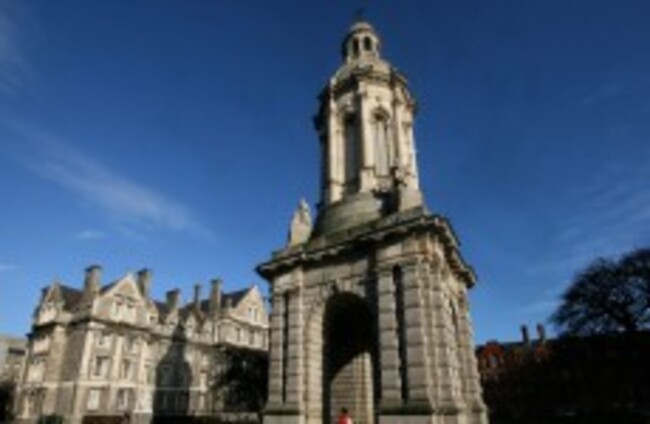
The campus of Trinity College in Dublin
Image: Zadok the Priest via Flickr

LEADING ACADEMICS HAVE warned that Ireland needs to start charging college fees again, or face a catastrophic decline in higher education standards.

The provost of Trinity, Paddy Prendergast, yesterday told the Irish Daily Mail that the college has only two-thirds of the budget enjoyed by its equivalents in the UK, and third-level institutions would enter a “speedy and inexorable decline” without a cash injection from fees. UCD president Hugh Brady said Irish colleges “cannot possibly compete” with British institutions, which charge students up to €10,000 a year.

Their comments came after three Irish universities slipped significantly in new world rankings released yesterday.

Education minister Ruairí Quinn recently ruled out the idea of a government-led student loan scheme as a way of funding universities – leading to widespread speculation that fees could be on the way back in. Quinn has insisted third-level fees are “not desirable” as they would introduce a “barrier” to third-level education, and even signed a pre-election pledge not to increase them.

However, some have suggested that the college registration payment – which has been steadily increasing and this year rose from €1,500 to €2,000 – is already becoming a student fee by another name.

So what do you think? Should third-level tuition fees be reintroduced?


Poll Results:


Read Next:

Comments (52 Comments)

  • Michael Cuthbert 06/09/11 #
    Report this comment

    What’s in a name? There are already substantial fees and other costs going to 3rd level. England’s messy solution is the Student Loans Co. and very high tuition fees. Australia has a graduate tax, which, presumably, creates less obstacles for lower income families. Guess that might work if half the graduates don’t emigrate…

    Reply
  • Byron Smith 06/09/11 #
    Report this comment

    If college fees are reintroduced all grants and wage supplements should be pulled from relevant institutions, similar to private colleges, its unfair to double tax people… maybe colleges should just restructure what they have, and reduce wages like every other organisation unless they want to be exposed to traditional supply and demand, in fact, if colleges did ‘privatise’, the state would find it cheaper to help those who couldn’t pay fees of upto 12k a year, than give all the current higher education funding.

    Reply
  • Adam Magari 06/09/11 #
    Report this comment

    Er, how’s the money they get currently spent? Salaries, overheads, etc. Not sure how many taxpayers will sign up to more fees if salaries and so on are up in the moon. It is not as if third level has delivered the big economic boom that governments have been promising for years. If the ESB is sloshing in gravy, to quote Brendan Ogle, third level has its own gravy train judging by some of the salary figures kicked about recently.

    Reply
    • fleetingwhim 06/09/11 #
      Report this comment

      It’s hardly surprising that most of the third level budget is spent on salaries – what do universities do only teach and do research!

  • Dermot D 06/09/11 #
    Report this comment

    The concept of free fees is all well and good but the reality is our universities are underfunded. This money has to come from somewhere. I don’t see any alternatives to fees. I understand why people think it should be a means tested system but I feel uncomfortable with the idea of means testing adults based on their parents’ income. I had a friend in college who had wealthy parents but they wouldn’t pay his registration fee or give him any money at all. So he had to work to pay for everything. How does means testing deal with those sort of instances? Also, free fees has had little effect in encouraging those from disadvantaged backgrounds from going on to third level. That issue needs to be dealt with in terms of early education all the way up. Fees aren’t the issue.

    A loan system makes sense but it doesn’t give us the funds we need now, so I doubt it would be a runner. Even though it may be unpalatable for many, reintroducing fees seems like a necessary evil.

    Reply
    • Report this comment

      Thats not true I’m from crumlin it went from 3 people from my year 1993 going to college to most of my nephews class of 35 going to college this year in the same school that would not have happened if not for free fees.

    • Nick Caffrey 06/09/11 #
      Report this comment

      That’s all very fine Patricia, but what use is it for people from less advantaged backgrounds to go to a university that has no standing in the world because it is forced to pay its academics a wage that is below that of the better universities? Surely you are not so naive to think that in the 21st century, academics are going to teach for the love of it?

    • Dermot D 06/09/11 #
      Report this comment

      Patricia I have no doubt what you’re saying is true but you’re school maybe an exception. The statistics show those from the lowest socio economic groups are still far less likely to go third level (especially universities). There was an interesting article in the Irish Times last year which addressed the issue http://www.irishtimes.com/newspaper/education/2010/1109/1224282950460.html

    • Byron Smith 06/09/11 #
      Report this comment

      Nick, it is totally unfair to argue that league tables have that much affect on things like employment of people in decent jobs, if that were the case, by your logic, people in America who attend non listed techs would be unable to get a job, as would people in Irish ITs… the fact of the matter is courses which are not relevant should be ditched other courses sponsored to some extent or universities set out on their own… if our colleges are degrading, it could just be internal factors like bad management, poor staff training, etc, because I am sure UCC have had similar cuts and yet climbed the league…

    • fleetingwhim 06/09/11 #
      Report this comment

      ‘free fees has had little effect in encouraging those from disadvantaged backgrounds from going on to third level’ – that is just factually wrong, Dermot

      Since free fees were introduced there has been a substantial increase in both the numbers and proportions of people from lower socioeconomic backgrounds going to third level.

      First off,
      ‘The proportion of school leavers progressing to full-time third-level education has risen from an estimated 44 per cent in 1998 to 54 per cent in 2003 (Fitzpatrick Associates and O’Connell, 2005)’
      and…
      ‘The number of full-time students in third level increased from 86,624 to 115,696 from the period 1994 to 2000, and reaching 136,719 by 2006 (data provided by the Department of Education and Science).’

      ‘According to studies by the Higher Education Authority (HEA) between 1980 and 1992 [prior to the introduction of free fees], the children of all but three social groups out of 11 improved their participation rate in college. The three social groups were the Lower Professional, Salaried Employees, Intermediate Non-Manual workers – all low-to-middle-income PAYE workers. The participation rate of children from the three social groups concerned not only did not improve but worsened from the years 1986 to 1992.

      … Then, free fees were introduced for the 1995-6 academic year….

      ‘According to the study of entrants in 1998 by the HEA ‘Who went to College in 1998′, that trend was reversed and their participation increased further in the years that followed.

      According to the HEA in its most recent study of all entrants to third level ‘Who Went to College in 2004′ groups that increased participation rates between 1998 and 2004 included “the Skilled Manual Group almost doubling to a range of 50-60% compared to 32% in 1998. The Semi and Unskilled Socio-Economic Group has improved from 23% to between 33-40% over the same period (Table 3.8).”

      (Who Went to College in 2004? A National Survey of New Entrants to Higher Education
      By Philip O’Connell (ESRI), David Clancy (Fitzpatrick Associates) and Selina McCoy (ESRI). Published by The Higher Education Authority.)

      see: http://www.irisheconomy.ie/index.php/2010/05/23/kevin-denny-the-effect-of-abolishing-university-fees/

    • Dermot D 06/09/11 #
      Report this comment

      @fleetingwhim

      Kevin Denny’s paper which you give the link to, states that free fees did not benefit people from lower socio economic backgrounds. That’s exactly what I said! Why are you saying that my statement is factually incorrect if you are linking to an article which emphasises the point that I made?

    • Michael Cuthbert 07/09/11 #
      Report this comment

      Why use the term “free fees”? There’s either free tuition or paid tuition. Fees are a cost. The reality is there are fees. They’re called registration fees, but they are already quite high and only part of the costs of going to 3rd level. Student loans would, in fact, provide ready funding to 3rd level institutions, so long as the funding of the loans doesn’t come from the State. The main drawback with the Australian graduate tax (apart from the risk of mass emigration) is that current levels of state funding will have continue until the tax begins to yield sufficient returns…

  • Helen Downey 06/09/11 #
    Report this comment

    Honestly I think re-introducing fees is a very bad idea. People go on and on about how they want a broad spectrum of society to be able to access third level education, and re-introducing fees will actively prevent that. Only those with money will be able to afford the fees, therefore only those with money will be able to go to college.
    I got my college registration pack in the post yesterday, and on the letter there was a warning that IF the Government decided to change things up I would be liable to pay as an incoming student from this year. So basically I start college this year, grand. I am persuing something I want to do, and hoping to make a good career out of. Then next year the Government re-introduce fees and I end up unable to go into second year as I cannot afford to. That’s great isn’t it. SERIOUS RETHINK NEEDED I think

    Reply
    • David Conroy 06/09/11 #
      Report this comment

      Free fees have not benefited the less well-off at all, but a means-tested system, although imperfect, will ensure funding for those who need it, while receiving funding from those who can afford it. ?The former president of DCU suggested the Harvard system, or something similar, and I would agree.

    • Helen Downey 06/09/11 #
      Report this comment

      You say free fees have not benefited the less well off at all. I beg to differ. I AM the less well off. Free fees mean I can go to college, study, get a qualification and please God a good job. Without free fees I would more than likely end up languishing on the dole for a good portion of my life, being called one of those spongers who isn’t interested, when I am more than interested but the lack of free fees would have been a big barrier for me. Means testing might work to some degree, but there are serious flaws in the means testing that is out there now, such as for grants. Anyone under 23 years old is considered dependent on their parents income, even if they have not lived at home for several years. They are expected to give details of said income, and may lose out on grants because of it. I hardly consider this a fair system and believe it is preventing some who would otherwise attend college from doing so. I think you have a very strange view if you think that Nobody has benefited from the Free fees.

    • Helen Downey 06/09/11 #
      Report this comment

      So you say free fees have not benefited the less well off at all. I beg to differ. I AM the less well off. Free fees mean I can go to college, study, get a qualification and please God a good job. Without free fees I would more than likely end up languishing on the dole for a good portion of my life, being called one of those spongers who isn’t interested, when I am more than interested but the lack of free fees would have been a big barrier for me. Means testing might work to some degree, but there are serious flaws in the means testing that is out there now, such as for grants. Anyone under 23 years old is considered dependent on their parents income, even if they have not lived at home for several years. They are expected to give details of said income, and may lose out on grants because of it. I hardly consider this a fair system and believe it is preventing some who would otherwise attend college from doing so. I think you have a very strange view if you think that Nobody has benefited from the Free fees.

    • David Conroy 06/09/11 #
      Report this comment

      Helen, at no point did I say that [N]obody has benefited from free fees. Perhaps I should have stated that they have not benefited the less well-off as a properly assessed means-tested system would.

      As for the “old” grant system, it worked for me, inconvenient as it was to apply. Flaws in the grant system (including the living away issue you flagged) do not mean we should scrap it. It means there are flaws that need fixing.

      Apart from that, fees are sadly and simply a necessary means of funding third level.

    • Nick Caffrey 06/09/11 #
      Report this comment

      Helen, read my post to Patricia above. A university is only of use to a student if it has standing in the global rankings. As it is, companies are complaining that the standard of math and science in Irish schools is inadequate for the ‘knowledge economy’.
      Professors in universities complain that many of the students coming in to college are not capable of analytic thinking and are incapable of writing an essay in standard English.
      If we now cut funding to the universities but continue to insist that they take all comers, regardless of educational standard or economic level, you destroy the university. What use is it then to you when you graduate, if your CV states that you graduated from a college that is regarded as sub-standard?
      WE ARE LIVING IN A BANKRUPT STATE. Something has to give.

    • Helen Downey 06/09/11 #
      Report this comment

      @David. I do agree. There are flaws that need fixing. I am not saying that a means tested fees scheme is the completely wrong thing to do – I certainly feel that if you have the money to pay the fees, then you should pay them. Why should the Government have to pay for everybody, just for these people to complain about Government spending. But what worries me is that things the Government control have a habit of breaking down (such as the Back to School Clothing and Footwear the Government took over this year!) and causing the less well off to suffer. This needs to be addressed first and foremost before we can look into alternative funding for colleges.

      @Nick. I completely agree that the standard of the three R’s in this country is generally appaling. The level of competency in basic English language, and simple mathematical equations is a farce (and I am not going to pretend to be perfect. My maths could be 100 times better, and thanks to years of txt spk I am having to re-learn some spelling, grammar and punctuation I learned years ago). Children should be taught well from a young age, and we should have to prove certain competancy before going on to third level, but this is down to a lack of resources and educational supports at Junior and Secondary levels. Means testing or otherwise is not going to change English and Math levels in colleges.

      I do however agree, what is the point of trudging through 4 years of college for a degree that most employers are going to consider worthless, because they see the college as worthless.

      I think the Government shouldn’t just jump into introducing fees though and damn the consequences. This area should be looked into properly to set the best system in place to support all of Irelands future college hopefulls.

  • Barry O Brien 06/09/11 #
    Report this comment

    We are told everyone has the right to education but when they keep increasing fees it stops that!

    Reply
    • Colm Cunningham 06/09/11 #
      Report this comment

      What happens in families like mine. My dad has to pay registration fees for me, my sister and brother. He doesnt make massive amounts as his business is being undercut by a state company. This is very unfair as a person with 1 student is treated the same as a gaurdian of 3.

    • David Conroy 06/09/11 #
      Report this comment

      Registration fees at the current level are the worst of all worlds., and make a nonsense out of the notion of free fees.

  • Mark Downes 06/09/11 #
    Report this comment

    The reality is, nothing is really free. Providing a third level education to somebody costs a lot of money and if the beneficiary of the education doesn’t pay, then taxpayers who may or may not have had the same opportunity will have to pick up the tab. When you consider that the majority of third level applicants come from, and are destined for, middle class backgrounds, that’s inherently unfair. The nation’s prosperity, of course, relies on a well-educated workforce, so we need to make it possible for as many as possible who have the ability, to go to college. This doesn’t mean it should be free, or at least not for the majority. Recipients of a college education are on average more employable, earn more and have more desirable jobs for the whole of their working lives than those who don’t go to college. It’s unreasonable of them to expect this expensively provided benefit for free. It should be, and always was (even before ‘free’ fees) highly subsidised by the state, but it should be contributed to, through fees/loans/graduate tax, by the recipient.

    Reply
  • Stephen Watson 06/09/11 #
    Report this comment

    F#@K Means testing. I worked my ass off to put myself through college for 5 year, including 2 spent abroad as my Schools education system wasn’t up to scratch, resulting in fairly poor LC results by all. My parents make a good wage, but they also have a mortgage and bills to pay. Just because they were above the means testing cut meant that I have never received a single cent, in the form of grants nor money from my parents.

    It sickens me to see the majority of my old college pals spending their grants on holidays to the continent where they already own houses and what not. The system is ultimately screwed.

    There shouldn’t be any acceptions. To top it off, I’m not entitled to a cent ont he dole, bearing in mind I’m 22. Lucky for me I put my head down and busted my arse to get a grdauate placement without the help of anyone from anywhere.

    What angers me the most is the fact that the majority who vote in this are already taking some of our taxes in the form of grants and what have you, WARPED WARPED view people.

    Apologies for the average grammar, I’m just a bit angry.

    Reply
    • Diego Attley 06/09/11 #
      Report this comment

      Yea but I think from your post you live at home with your parents, I don’t. How am I meant to go full time to college and work to put a roof over my head and pay fees?

    • Rachael Goggins 06/09/11 #
      Report this comment

      Couldnt agree with you more! Payed my way through college for 4 years and at one stage I was surviving on â

  • Evan O'Q 06/09/11 #
    Report this comment

    If fee’s were introduced tomorrow I would have to drop out of college, or get them payed by the government through a grant anyway (so it really wouldn’t make a difference).

    Message to the government from students: Pay the fee’s or pay all of our doles.

    These increases in tuition fee’s are destroying peoples right to an education, do we really want to go back to the days when universities were only for the wealthy and elite classes?

    Reply
  • Ernie Ball 06/09/11 #
    Report this comment

    Am I the only one to notice that the pie chart doesn’t add up?

    Reply
    • Brian B-Rye 06/09/11 #
      Report this comment

      They actually rarely do!!

    • Brian Ó Dálaigh 06/09/11 #
      Report this comment

      Probably due to rounding down/up of figures. There are a multitude of options. If each option has an additional 0.4% or some other figure below 0.5% (currently it shows 24.13% rounded to 2 decimal places for No, but that is only displayed as 24%, rounded to zero decimal places) I would be pretty confident it would actually add up. Though fair play to you for bothering to add up the figures on the pie chart. What possessed you? :)

  • Avril Clarke 06/09/11 #
    Report this comment

    I should be starting a Level 8 Social Science course this year. It costs €6,000 altogether. I dropped out of a Level 8 previously where I had got a grant, so even though I would be eligible for one, I can’t get one. I’ve done a Level 5 and Level 6 (almost all distinctions-many of my tutors asked why I wasn’t in university), thanks to BTEA. And now, I feel I can’t ever go back to college. I have been living independently from my parents for 3 years now, and they’d love to give me the money if they had it.

    I have a brother who will be doing the Leaving Cert this year, and even though he’s already picked out what he wants to do, my parents simply won’t be able to put him through college, unless he gets a job. We live in a small village, there are no jobs. In the nearest town, no jobs!! That’s why, instead of college this year, I’m moving to Dublin to hopefully get a job to raise €6,000 so I can finally go back to college. How would fees help someone like me, or my brother, or my other friends who want to go to college, but simply can’t afford it? Not one bit.

    Reply
    • Marguerite Hoiby 06/09/11 #
      Report this comment

      Good luck to you & to your brother with your future studies.
      I always worked fulltime and studied part time whether as a hospital trained nurse (Ireland) or university studies (Australia). I believe when you have to put in a bigger effort to get there, just to even make it to university after working all day, you work harder and the results you get speak for themself.
      I studied in uni here in Oz by the HECS (Higher Education Contribution System) system which back then was v ery fair, you could pay up front and get 25% discount on fees or defer them and when your income reached a certain level each year the money was deducted each fortnight from your pay via tax system, so it was pretty painless.
      Today, HECS fees are in the thousands of dollars back when I studied they were in the hundreds of dollars, per subject.
      HECS could work in Ireland but only if graduates get jobs when they qualify, otherwise how does the government get the money for fees back??

    • jchizle 07/09/11 #
      Report this comment

      If you didn’t complete the course you should be able to resume the grant after you complete the year you dropped out of.

    • Avril Clarke 07/09/11 #
      Report this comment

      @jchizle- I know, but I can’t get the second year grant until I get into first year, which is my current financial battle!

  • Liam Redmond 06/09/11 #
    Report this comment

    If fees get reintroduced, I would have to leave college.

    I go to DCU, but I’m from Wicklow Town. If I were to travel, I would have to leave Wicklow at 6:30 to be in for a lecture at 9:00am. Therefore, I need accomodation, which roughly works out at €5000. Then on top of that there is living expenses.

    Then registration fees, plus the imposing fees. Oh, and did I mention that I am not entitled to a grant because even though my mother lost her job this year, my grant for next year will be decided on what my parents and myself earn this year. I never knew my education could be restricted because my parents worked hard out of love for me.

    Reply
    • Nick Caffrey 06/09/11 #
      Report this comment

      Liam, I can see your point. But, using emotive and illogical comments like “I never knew my education could be restricted because my parents worked hard out of love for me.” doesn’t help the argument. Your education is being restricted because the government doesn’t have the money to subsidise every 350 point student in the country. (No, I’m not suggesting you are one.) There are only two ways go go: 1. restrict entry to the highest point earners to lessen the amount of people going to college, or 2. Charge enough to make the universities self-financing.
      The first disadvantages those who don’t get to go to an academically strong school, the second disadvantages those who don’t have the money, regardless of academic prowess. You can talk about a middle way; means tested subsidies, etc., but when all comes to all, one of these two bitter pils will have to be swallowed. Because having (highly paid) peer-respected acadamics is the only way to have universities that are worth going to.

  • Brian B-Rye 06/09/11 #
    Report this comment

    Ah now in fairness, people who can afford to pay 10 grand a year or more to send their children to private schools should not be entitled to free college education. (I use the term ‘free’ loosely by the way).

    If they don’t introduce fee’s for people who can genuinely afford it, it’ll only mean they increase the “registration fee” again for everyone and also cut the maintenance grant.

    Reply
    • Diego Attley 06/09/11 #
      Report this comment

      Maintenance grant was cut last year (lowered parents income cut off rates) and now they pushed the distance cut off rates further out for this year.

  • Report this comment

    If fees are re-introduced, then plenty of middle class people will not be able to go to college, because they won’t be eligible for grants either (due to being “middle class”). I’ll have to drop out of college, and there’s no two-ways about it – the first person in my family not to go to some form of third level college. I don’t have any fall back plan, and my only real talent lies in academics. There’s no way in hell I’ll make a good carpenter or plumber.

    Student loans are off the table, so what is it going to be now? Are we going to have to pay upfront? We are already paying €2,000. How on earth can we afford to pay an extra €6k to €8k?

    People here are really making the assumption than parents will gladly cough up the bill for their 18 or 19 year old children, who are legally adults. I’ve had this conversation with a number of my friends, who like me are starting college next year, and the consensus us that a substantial minority of parents will not – because they simply can’t.

    I’m not an expert on higher education – I don’t have any solutions to offer. That said, we’re barking up the wrong tree here. Back in the old days, where higher education was privileged, and only the rich could avail of it, families planned their finances in advance. They made sure that they put money aside for their kids. This sort of will-we-won’t-we BS that’s coming out of government means that it is going to be sprung on us unawares.

    If the government gave us a timeline far enough in the future, say fees were to be introduced for the academic year of 2016… With such a target that is far enough away to plan for, yet close enough to merit prompt actions, families would feel much more secure. They’d know what is coming down the line.

    Reply
    • Report this comment

      The fact simply is that families with a tradition of sending their children to college, like my own, will not be able to. Money usually saved to spend on higher education has been spent on other things, like the mortgage. Essentially, the shambolic flip-flops of the various education ministers over the last three years has left us with a false sense of security, and to what avail?

  • Don Booker 06/09/11 #
    Report this comment

    Most definitely it should be re-introduced for those who can afford it.

    Reply
  • Report this comment

    The level of hypocrisy here is unsurprising. Blaming students for falling rankings and lower budgets while senior academics are paid ~50% more here than in the UK is self-serving and self-indulgent. 75 – 80% of higher education budgets are spent on salary.

    The UK’s new funding model has drastically and negatively affected equity of access and is slowly reducing the student cohort back to its 1960s stereotype of only those privileged enough to afford higher education can gain equal access to high-paid employment after higher education.

    The President of NUI Maynooth, Philip Nolan has co-authored an opposing view that in fact enlarging class sizes while not increasing tuition fees is the most economically viable means of surviving financial challenges in recessionary times. This has little or no effect on quality. (Hauptman and Nolan, ‘Assessing the effects of four budget-balancing strategies in higher education’ in Higher Education Management and Policy, 23 (2011)).

    Perhaps the Journal, and other mainstream media would consider drawing attention to other solutions rather than focussing solely on the most exploitative and societally damaging option – i.e. fees.

    Reply
    • Nick Caffrey 06/09/11 #
      Report this comment

      Aengus: Students are not to blame for falling rankings and lower budgets. That would be an absurd assertion. The attested fact that students are failing miserably in numeracy and literacy is a fact of life due in great part to poor teaching practices, lack of in service (re-)training, parental non-involvement in children’s early skills, and the evisceration of disciplinary code in schools.
      Lower budgets are due to the country’s fiscal bankruptcly.
      If an academic is to be attracted to Ireland, an academic backwater in the real world, s/he had better be offered something to make it worthwhile. If not money what would you suggest?
      Enlarging class sizes has no effect on the quality of what? The Hauptman and Nolan paper naturally supports the government position. Like they’re going to diss their paymasters? Get real.

    • Dermot D 06/09/11 #
      Report this comment

      Aengus… class sizes in Irish universities are already at a ridiculous level. I did Arts in UCD for my undergrad and for one of my subjects there were over 700 people in the class in first year. In fact, there were lectures where students had to sit on the steps of theatre L because there weren’t enough seats for them. We can’t keep increasing class sizes.

  • John Ó'Ríordán 06/09/11 #
    Report this comment

    I couldn’t have gone to college if there were fees. I’d rather go to a slightly sub standard college for free than not go to college at all.

    Reply
  • Saffron Marriott 06/09/11 #
    Report this comment

    Well said Aengus

    Reply
  • Tara 06/09/11 #
    Report this comment

    I thought we were paying fees????how about the 2K registration fee?everyone can afford to pay that I suppose?it’s only 2K.oh,and let’s not forget UCD trying to force new students into buying the compulsory laptop from UCD…yeah.and of course the books.another joke.there is no place in UCD for the less well off….

    Reply
  • Oil Foster 06/09/11 #
    Report this comment

    The colleges should be made to save money in return for more funding. How much "fees" go straight into the lecturers bank accounts?

    Reply
  • fleetingwhim 06/09/11 #
    Report this comment

    @ Dermot Dee the piece I quoted is from the comments on that article, not the article itself, which only considers access to universities rather than third level as a whole.

    I note you have not responded to any of my substantive points, such as proof from the government’s own statistcs that free fees HAVE actually increased access to 3rd level. Is there some reason why only the university figures are worth considering when such a large proportion of 3rd level is ITs?

    Reply
  • Report this comment

    Reintroduced??? What a joke! We are paying plenty for 3rd level education no matter what they choose to call the fees!

    Reply
  • Manus Lenihan 07/09/11 #
    Report this comment

    If a lecturer hates their subject so much they need to be paid hundreds of thousands just to keep them, I’d rather be taught by someone else. Yes, someone who’ll do it for the love, plus a reasonable salary, 30-50,000.

    Working- and middle-class people are under attack across the board– to make us more “competitive”, ie. easier to exploit and underpay. They’re cutting schools and hospitals to bail out super-rich financial speculators. People who took out mortgages to pay for homes, meanwhile, are under huge pressure from the banks. The richest 300 people in Ireland got €6.7 billion wealthier in 2010. That’s more than was cut in the 2011 budget.
    And the crisis deepens year by year as money flies out of people’s pockets.
    Fees are just another aspect of this attack on society by the rich. Whether it’s a good idea or a bad idea doesn’t matter as long as it saves money without upsetting the millionaires. That’s the logic underlying many of the points made above. I refuse to cooperate with this insane logic.

    Reply

Add New Comment