We need your help now

Support from readers like you keeps The Journal open.

You are visiting us because we have something you value. Independent, unbiased news that tells the truth. Advertising revenue goes some way to support our mission, but this year it has not been enough.

If you've seen value in our reporting, please contribute what you can, so we can continue to produce accurate and meaningful journalism. For everyone who needs it.

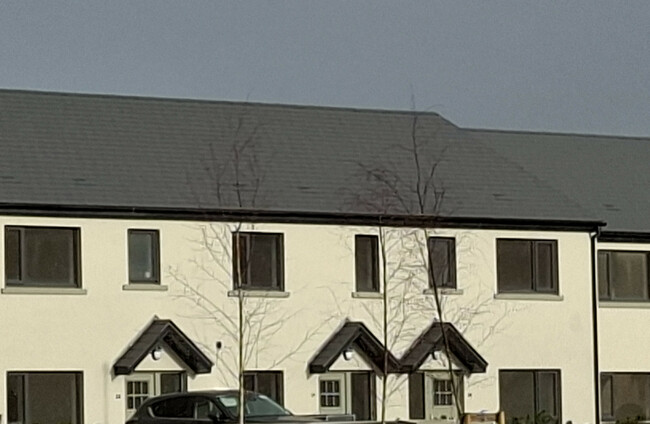
Irish language and Gaeltacht groups have said housing is vital to maintain the Irish speaking communities Concubhar Ó Liatháin

Building 300-400 houses yearly would help alleviate Gaeltacht housing crisis - campaigner

Oireachtas members were given an insight into the numbers of houses needed in Gaeltacht at a briefing in the Dáil yesterday

(Seo alt ónár bhfoireann Gaeltachta. Is féidir an bunleagan as Gaeilge a léamh anseo.)

BUILDING BETWEEN 300 and 400 houses in the Gaeltacht each year would go a long way towards solving the housing crisis in communities where Irish is still spoken as a community language, Gaeltacht activist Donncha Ó hÉallaithe revealed at Leinster House yesterday.

Ó hÉallaithe was speaking to TDs and Senators who attended an information session hosted by Sinn Féin ahead of last night’s Dáil debate on a resolution proposed by the party and passed in the Dáil later last night.

“I would think it would be around 300 to 400 per year, that around that amount would be provided every year if it were possible, between all the Gaeltacht regions.

“That would make a huge difference, you would then be able to keep Irish-speaking people in the Gaeltacht living in those houses.”

He gave that estimate in response to a question from The Journal asking whether any calculations had been made of the number of houses needed in the Gaeltacht to tackle the alleged housing crisis.

On this site a few weeks ago, it was reported that up to 12,000 houses were needed to reach the European Union minimum standard in Gaeltacht areas, that is, one house for every two people aged 18-44 living in the Gaeltacht who are homeless. This information was available on the Onemillionhomes.ie website based on an analysis of figures from the Central Statistics Office. There are no other published figures anywhere on the number of houses needed in the Gaeltacht.

Ó hÉallaithe also had many suggestions on how existing legislation and schemes could be used to increase the number of houses currently being built in the Gaeltacht and he suggested that Housing Minister James Browne amend a number of existing schemes to provide additional support to Gaeltacht communities.

He recalled that many schemes previously run by the Department of the Gaeltacht were closed around 2009/10 when the banking system collapsed and have not been brought back since.

“They don’t need to bring back the scheme as it was – the excuse the Department of the Gaeltacht has used for not bringing them back is that the Housing Department is paying higher grants than the Department of the Gaeltacht was paying 20 years ago – of course that was 20 years ago.”

He suggested that the Department use its own funding – or seek additional funding – to provide additional support for Gaeltacht families to build houses or bring derelict houses back into use as homes.

“This would give an advantage to people with Irish who want to build or renovate a house,” he said, and gave as an example the additional support being given for bringing derelict houses on islands back into use as homes.”

20260303_141508 Earlier Donncha Ó hÉallaithe, seen here on left holding the 'Bánú' banner, participated in a Gaeltacht housing protest outside the gates of Leinster House.

He also mentioned the houses being built by local authorities on serviced sites but expressed his concerns about this. Namely, areas such as Cois Fharraige in Connemara, an area stretching from An Spidéal to An Cheathrú Rua and where communities such as Indreabhán, An Tulach, Baile na hAbhann are located.

Although this area has supermarkets, a church, three primary and secondary schools, a radio station and a television station and an airport, it is not considered a village and therefore the regulations do not allow houses to be built on serviced sites as in other areas. He said that there were communities in other areas without the same facilities but which are considered villages.

He suggested that small settlements of houses be built on serviced sites throughout the Gaeltacht and that the County Councils were not interested in such small developments because the local authorities wanted to build high-density housing developments.

The County Council is responsible for building housing but if the County Council is not willing to do that, someone else has to do it or all the language planning has been thrown out of whack.

“At one time it was difficult to keep people in the Gaeltacht because life was not great there,” he said. “It’s great that we’ve come to the point where people, at the age of my kids who are in their 20s, want to live in the Gaeltacht, want to be able to build a house in the Gaeltacht, want to raise children with Irish in the Gaeltacht, it’s great that we’ve come to that point.

“But there’s this barrier, the housing barrier, that’s interfering with that.”

ere was a “simple solution”. “The solution is for the Department of the Gaeltacht and the Department of Housing to come together, come up with some plan so that we can use Údarás na Gaeltachta.”

He referred to the expertise of Údarás na Gaeltachta in relation to sewerage matters and that this could be used to address one of the major obstacles to housing in the Gaeltacht, the weakness or lack of a sewerage system.

Údarás na Gaeltachta is capable of providing a sewerage system for industrial estates to the high standards of the EPA, without any difficulty, I have not heard anyone complaining – they have that skill, what they do not have is the money to do that, or the permission to do that for housing.

The Journal’s Gaeltacht initiative is supported by the Local Democracy Reporting Scheme 

Readers like you are keeping these stories free for everyone...
A mix of advertising and supporting contributions helps keep paywalls away from valuable information like this article. Over 5,000 readers like you have already stepped up and support us with a monthly payment or a once-off donation.

Close
Comments
This is YOUR comments community. Stay civil, stay constructive, stay on topic. Please familiarise yourself with our comments policy here before taking part.
Leave a Comment
    Submit a report
    Please help us understand how this comment violates our community guidelines.
    Thank you for the feedback
    Your feedback has been sent to our team for review.

    Leave a commentcancel

     
    JournalTv
    News in 60 seconds