TheJournal.ie uses cookies. By continuing to browse this site you are agreeing to our use of cookies. Click here to find out more »
Dublin: 7 °C Thursday 23 May, 2013

Source of contaminated beef burgers identified, says ABP

The company said it believed it had “established the source of the contaminated material to one of these two suppliers” following yesterday evening’s Department of Agriculture results,

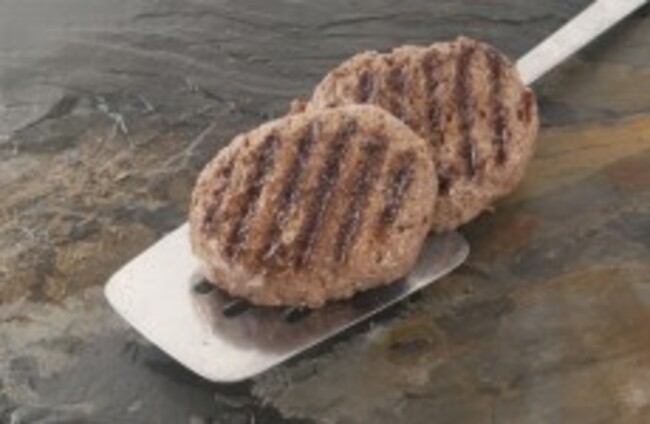
Image: SStiling via Shutterstock

A SINGLE SOURCE has been identified as responsible for providing meat for beef burgers that contained horse and pig DNA, according to ABP Food Group.

To date, ABP Food Group investigations have centred around two third party Continental suppliers. 
The company said that, following receipt of yesterday evening’s Department of Agriculture results, it believed it had “established the source of the contaminated material to one of these two suppliers”.

Yesterday, the Department of Agriculture said that preliminary laboratory results indicated that nine out of 13 finished burgers produced at the Silvercrest plant between 3 14 January contained horse DNA.

Seven samples of raw ingredients were also tested – just one produced positive results and came from another EU state. All burger ingredients sourced from Irish suppliers were negative.

ABP said that, as horse DNA had been found in certain finished products tested this week, the company had decided “the responsible course of action is to temporarily suspend all production at the Silvercrest plant in County Monaghan with immediate effect”. This week’s production ha,s therefore, not been released from the plant.

Silvercrest Foods in Monaghan and Dalepak Hambleton in the UK, along with Liffey Meats in Cavan, are owned by the ABP Food Group.

ABP said that while it was temporarily closing down the entire plant for purposes of “expediency”, it wanted to reiterate that all BurgerKing products produced by ABP were stored separately and manufactured on an independent line. “There is no evidence of any contamination of raw material used for the manufacture of any BurgerKing products,” it said in a statement.

The statement continued:

We anticipate that the facility will be closed for several days to complete the sanitation process. During this time, all staff will continue to be paid, and we will be working with the relevant authorities, management and supervisory team to complete our investigation. 

We will continue to communicate with our customers and suppliers over the coming days.

Speaking on RTÉ’s Morning Ireland programme today, Minister for Agriculture, Food and the Marine Simon Coveney said his Department was taking the issue “very seriously” – and vowed a thorough investigation with transparent results.

Read: “Oh Hell No!” Irish horse burgers: How the world reacted
Read: Company behind the horse burgers scandal apologises

Read next:

Comments (51 Comments)

  • Has anyone ever tested a hot dog or kebab meat to see what the hell is in them?

    Reply
  • John 18/01/13 #

    Open question – while it is terrible that we don’t know what we are eating in these processed foods, what is wrong with eating horse meat?
    Would people object to eating horse burgers if they were told that that is what they were eating?

    Reply
  • I have to say that I’ve been impressed with ABP’s response to the findings. No hand-waving or smokescreens… shut down the production, root out the source and deal with the problem. Well done.

    The ultimate source of the meat should be held accountable.

    Reply
    • tom 18/01/13 #

      Im sure all their customers who took the stock off the shelves and returned it for credit haven’t placed any new orders and won’t until its fully cleared up.

      Reply
    • I’m not . Their quality control failed completely. ABP like everybody else now is talking in jargon now. No plain English statement offered as to what the ingredient is, what it is used for and why it wasn’t tested.

      Reply
  • Monaghan and Cyyyyyavan. Just had to say it and get it out of my system!

    Reply
  • Strange that pig DNA isn’t much in related articles now. Have they forgotten about it or is it on purpose that there’s no concentration on the subject because of its hyper sensitivity!

    Reply
  • tom 18/01/13 #

    So have they discover where the horses came from or are we going to continue with words like DNA & wrongly labeled.
    I still don’t know how they can claim the food was safe if they cant identify if the horses used where found dead on the side of the road and just dumping into a big mincer then mixed with beef. Obviously the pigs fell in by mistake.

    Reply
    • If the source was a mainland Europe slaughter and processing factory it is entirely possible that there may have been accidental cross contamination. So long as the food safety and hygiene standards were up to the mark there will be no threat to humans. Horse meat is a normal part of the food chain in many European countries.

      Reply
    • tom 18/01/13 #

      One burger had nearly 1/3 made up from horse thats not cross contamination thats deliberate.

      Reply
    • Totally agree Tom – It’s time for some plain English talking from the ABP, the FSAI and the Minister. Less of the jargon.

      The other thing is – was there a tip off? Why would FSAI test for DNA of horses and pigs and not, say, lamb? Or was it that DNA was found, they identified it and then included that in the next test?

      Reply
  • Just throwing this out there, would it be in another country’s interest to compromise the integrity of Irelands beef products by intentionally contaminating ingredients being provided by them to Irish meat producing companies. This may sound overly alarmist but keep in mind that in the hard nosed business that food markets have become the slightest doubt about the quality of a food supply will very quickly encourage consumers from one brand to another. The supplier of the contaminated product should be prosecuted and certification and labeling should be addressed.
    Hopefully if anything this will encourage people who want to eat burgers to make their own with pure beef from their local butcher and avoid all the s**** fillers etc that food factories add to cheap ‘meat’ products.

    Reply
  • Despite what people think it is not uncommon for this to happen. Although at 29% content of horse meat it is more than likely someone new about this in ABP, however lets just say they didnt. If the meat was from an imported source even from an other EU member state it is quite likely at a 20%-30% price difference someone along the line was selling horse meat as beef meat (even mixed in the same boxes). It may have had all the relevant certificates and assurances from that member state (not difficult to get these by other means other than officially it is only paper after all). I know of a specific case of a producer of Duck Pate in Eastern Europe who was selling his product into Spain at 10-15% lower than locally produced Spanish product. The local producer in Spain paid to have their competitors product tested and what do you know all the product was actually Chicken DNA (at least 50% cheaper than duck liver at origin). The producer in Eastern Europe was actually not at fault having imported the duck livers from an Italian producer (trading company). When they investigated the supposed production plant told them that the certificates never existed and they had never supplied the trader in the first place. Now the Duck Liver producer is trying to claim his losses which will go into the millions. How many years was this going on, 3 years????? nobody knew…..

    Until the EU introduces online health certificates and traceability of products so a final producer like ABP can check all the way down the line that the product they bought (imported) was actually what it said it is then this will happen again and again. The original certificate should be issued on monetary paper with the correct safeguards to avoid forgery. This is what the Russians demand for imports to their country.

    Where there is a buck to be made and it is easy to abuse the system you can bet it is being done. This goes for food and every other product we consume. I dont know why everyone is so surprised.

    Reply
  • What a waste of food, if nobodys going to eat it here why not give it all to a charity for starving people abroad!! I wonder how many tonnes of meat was scrapped from the shelves!?

    Reply
    • I’m a student, I’m quite poor, I’ll eat some…. :-)

      Reply
    • My concern would be that the meat is still untraceable. We don’t know where the horse/pig came from, only the beef. So we don’t have any assurances that the meat is safe.

      That it is horse/pig meat is the least of the worries. It could be diseased meat. It could be dangerous. Without knowing that, it would be super irresponsible to allow anyone to eat it.

      Reply
  • The source of the problem was not in Ireland.Why is that? Why dont we make the whole burger here?.Is this not an opportunity for someone??

    Reply
  • THE COMPANY says the source has been identified?

    Where are the FSAI and Department of Agriculture? Should they not tell us what is happening? Typical of Coveney’s unimpressive performance so far.

    Given ABP’s history, anything they say should be treated with caution.

    Reply
  • It’s no wonder I was riding faster on my bike lately

    Reply
  • 18/01/13 #

    “We anticipate that the facility will be closed for several days to complete the sanitation process”

    The sanitation process to include removing the carcases of 87 horses…….

    Reply
  • Beef or Salmon – Coveney is a lame Duck.

    Reply
  • Damocles 18/01/13 #

    Which other state is it?

    Reply
  • Any truth that the identified source connected with those burgers came from Beef or Salmon

    Reply

Add New Comment