TheJournal.ie uses cookies. By continuing to browse this site you are agreeing to our use of cookies. Click here to find out more »
Dublin: 8 °C Thursday 23 May, 2013

The ocean floor pics that show how the Titanic sank

New images show how the exact break-up of the Titanic might now be understood – and whether the ship had a fatal design flaw.

AN EXPEDITION TEAM which scanned the floor of the ocean where the Titanic sunk in 1912 have discovered more information about how the ship sunk to the bottom.

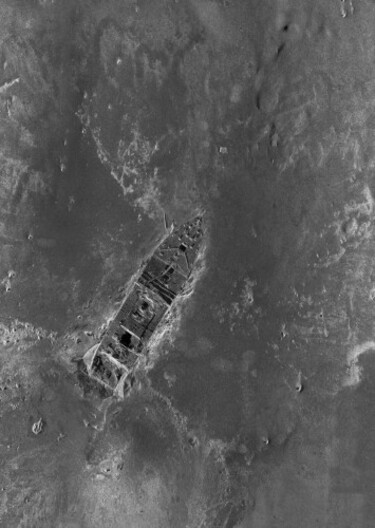
A series of photographs stitched together on a computer have provided a detailed photo mosaic of the debris left by the ship – and of the marks left on the ocean floor by the landing parts of the liner.

An article from Associated Press yesterday explained how the photos showed that “the stern rotated like a helicopter blade as the ship sank, rather than plunging down”. This is the first time that the extensive Titanic sinking site has been fully mapped and researchers hope it means that they will discover if there was a major flaw in its design by uncovering how exactly it broke apart and descended to the ocean floor.

We have obtained these photographs from AP today which map the site:

The ocean floor pics that show how the Titanic sank
1 / 4
  • Titanic Map

    This composite image, released by RMS Titanic Inc., and made from sonar and more than 100,000 photos taken in 2010 from by unmanned, underwater robots, shows a portion of a comprehensive map of the 3-by-5-mile debris field surrounding the bow and stern of the Titanic on the bottom of the North Atlantic Ocean. The luxury passenger liner sank about 375 miles south of Newfoundland, Canada, after striking an iceberg on its maiden voyage from England to New York on April 15, 1912, killing 1,517 people. (AP Photo/RMS Titanic Inc.)
  • Titanic Map

    This image shows the extensive area over which debris from the ship was scattered. (AP Photo/RMS Titanic Inc.)
  • Titanic Map

    This composite image, released by RMS Titanic Inc., and made from sonar and more than 100,000 photos taken in 2010 from by unmanned, underwater robots, shows a small portion of a comprehensive map of the 3-by-5-mile debris field surrounding the bow of the Titanic on the bottom of the North Atlantic Ocean. The luxury passenger liner sank about 375 miles south of Newfoundland, Canada, after striking an iceberg on its maiden voyage from England to New York on April 15, 1912, killing more than 1,500 people. (AP Photo/RMS Titanic Inc.)
  • Titanic Map

    This composite image shows zig-zag marks on the ocean floor which indicate how the debris settled as if the ship had spun down through the water rather than descending in a straight line as was previously thought. (AP Photo/RMS Titanic Inc.)

Researchers finish first complete map of Titanic debris site>
Archives show human tragedy and truth behind Titanic sinking>
Letter in a bottle from Irish Titanic victim goes on display>

Read next:

Comments (25 Comments)

  • That is pretty cool

    Reply
  • Amazing pics.

    Reply
  • The supreme irony is that she’s in a far better state than almost any other White Star ship, bar Titanic’s own tender, Nomadic, which is finally undergoing restoration in Belfast, and is the last surviving White Star vessel.

    The operable word when it came to the Olympics, was “never”.

    Olympic, the first one built, and smallest of the three (when built) lent her name to the “Olympic Class”, and served before and after Titanic, throughout the Great War, even surviving the Great Depression, until she was ultimately done in, after White Star merged with Cunard, the resultant larger conglomerate retired its excess tonnage, and had the collective financial wherewithal to bankroll the building of the Queen Mary.

    Ever before she was towed to Scotland to die (despite being quite capable of steaming there, having been refitted extensively just two years prior), Olympic was a relic; society had moved on, and Second and Third classes were now referred to as “Tourist”, a situation which would have horrified many of White Star’s First Class clientele in 1912. Even though she burned oil at four hundred tons a day, rather than coal at a rate of nine hundred tons; following a refit after WWI, she was, by the Thirties, an inefficient and poorly patronised vessel. And pleasure cruises had yet to come into fashion.

    Unlike many vessels of her era, she never ran on diesel, because of her earlier refit in 1919/20, when she dispensed with the services of a couple of hundred stokers and the like, by not firing on coal any more.

    Titanic, of course, was the second and at the time the largest ocean liner in the world, when she left Cobh for New York. Along with stealing that title from Olympic, she also stole her captain, one E.J. Smith, who was prevailed upon to shake down the ship on her maiden passenger voyage before he hung up his cap.

    Like her captain, Titanic never made it.

    The biggest of the three was Brittanic (she had been originally planned as Gigantic, but the name was thought too similiar-understandably so, to her older, unfortunate, sister). She was launched as Archduke Ferdinand was taking a bullet, and so entered the war relatively quickly, without even a christening! Unlike the others, she was totally white, with a green stripe and red crosses. Brittanic was to be a hospital ship, and her fate was sealed when Lusitania (a Cunard vessel), was sunk by one of two torpedos (the last on board) fired by a U-boat returning to Germany, as her services were then required as a matter of urgency.

    While Titanic almost made one voyage, Brittanic almost made six. Just eleven months after her launch, she was sunk off the coast of Greece, by a mine. She lies within diving distance, in 400ft of water.

    For her part, she never carried a ticket holding passenger-spending all ten months and twenty eight days of her life in wartime service.

    Reply
  • Looks like the Titanic is on the Moon if you ask me!

    Reply
  • amazing images

    Reply
  • Has the stern eroded away? How long until the wreck is gone forever?

    Reply
  • I’m at home in perfect comfort and I’m just staring at these images trying to comprehend the stomach churning terror felt by those unlucky few stuck inside this ship as it started to descend into the icy blackness of the north Atlantic… the opulence and comfort around them contrasting horrifically with shuddering and jerking of the structure as they sank to bottom in full knowledge that there was zero hope for them. Jesus, the poor beggars.

    Reply
  • thanks for that! great information Ryan :)

    Reply
    • I’m a bit of a Titanic geek (actually history in general), but thank you :)

      On another note, I’m eagerly awaiting a big fat zoom button on these-hopefully the company will release hi res images at some stage-sadly, they’ll probably charge for them.

      Reply
    • Wow, a zoom would be amazing. And also thanks for the info.

      Reply
    • Myself as well, Ryan.

      In fact, I’m quite envious of those who got to enjoy these vessels in the Steamship Age.

      Make me want to pull out a book I have on those great steamships (and visit Queen Mary in California). :)

      Reply
    • She’s supposedly haunted; not that I go in for that kind of thing in a big way, but there have been some very convincing EVPs (voice recordings, basically) captured on board, particularly in the area of the swimming pool below deck.

      Worth a look out of curiosity if nothing else, they’re all on youtube.

      Reply
  • Amazing images and some great posts. Thank you!

    Reply
  • Where’s Leo?

    Reply
  • Toureag 09/03/12 #

    It’s like Titanic is back from the dead!

    Reply
  • It sailed. It sank. Get over it.

    Reply
  • Always intruiged by all things Titanic but those pics are just plain crap. I’d imagine it cost massive $ and man hours to compile that sh1t. Just leave it alone down there and maintain the mystery I say…

    Reply

Add New Comment