Sign in. It’s quick, free and it’s up to you.
An account is an optional way to support the work we do. Find out more.
Sign in. It’s quick, free and it’s up to you.
An account is an optional way to support the work we do. Find out more.
THE PLOT IS ludicrous. The acting is horrendous. The production values are pitiful. It recouped just $1,900 of its $6 million dollar budget at the box office.
But despite having these obvious flaws, The Room is one of the most beloved cult movies of the last decade. Screenings in cinemas and Dublin and London are regularly packed out. People in the know bring spoons that they can throw at the screen.
DVD sales and word of mouth helped to spread the word about this utterly bizarre and nonsensical film that’s been described as the Citizen Kane of bad movies.
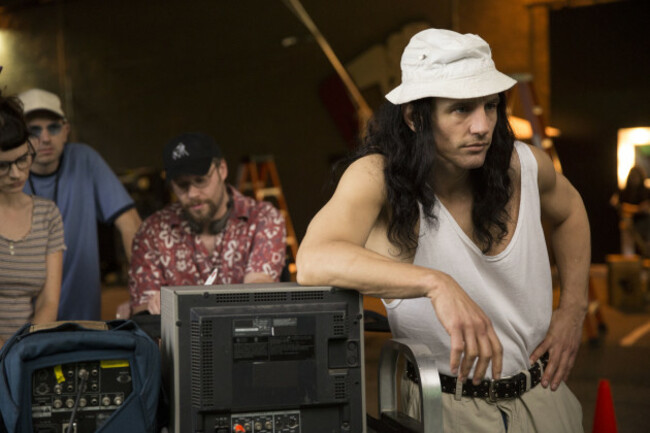
Such is the interest in the film that Hollywood star James Franco has directed a film about the making of The Room and its tragicomic director Tommy Wiseau – “an artist whose passion was as sincere as his methods were questionable”.
Vanity project
Wiseau burst onto the filmmaking scene out of nowhere in 2003. All he had was a dream and a script. The problem for him was the latter was terrible.
Raising $6 million to make his picture, Wiseau directed, produced and starred in The Room, a romantic melodrama with a love triangle gone pear-shaped. The plot, such as it is, is well-described here.
The billboard for the movie features a close-up of Wiseau looking tough, along with a sunken eyelid and a misspelled tagline “Tennessee Williams-level drama”.
It fared terribly at the box office, but the film slowly began to gather momentum and is still shown regularly in cinemas across North America and Europe.
It’s so popular at the Prince Charles Cinema just off Leicester Square in London, that monthly screenings are held and often followed by a Q&A with Wiseau himself.
In 2013, one of the film’s stars Greg Sestero published a book called The Disaster Artist in which he describes moving to LA and making The Room after meeting Wiseau at an acting class.
Franco said he’d never seen The Room when he read the book and became instantly fascinated with the enigmatic Wiseau.
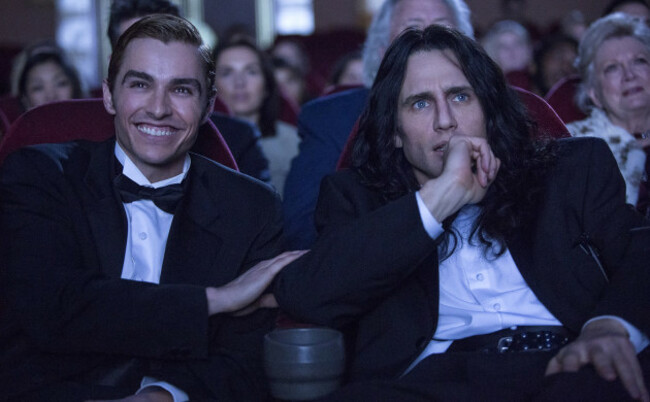
He said: “Tommy made his movie intending it to be a drama and then people laughed at it.
Greg’s book was about Hollywood, but it was also the story of these misfits involved in the production of The Room. I saw The Disaster Artist as an industry-insider story told through outsiders in the vein of Ed Wood, a movie I loved.
The Hollywood star has adapted Sestero’s book for the big screen, playing Wiseau himself alongside frequent collaborators Seth Rogen, and his brother Dave Franco.
Who is Tommy Wiseau?

The inherent badness of The Room has become a source of entertainment worldwide, and Franco focuses in on Wiseau’s own murky origins.
He claimed to be from New Orleans, but he’s more likely eastern European.
Sestero described seeing Wiseau in acting class as someone with great energy, but lacking in nuance.
He said: “There was something about him that you couldn’t take your eyes off it… The way he performed was a catastrophe, but there was something oddly artistic about it.”
Wiseau actually provided the big budget himself, with his own personal fortune supposedly rooted in owning property in California.
The Disaster Artist producer Evan Goldberg said: “Financing your own movie is something you never do, and Tommy did that with The Room, which is beyond insane.
He bought his own equipment and wrote the script himself, checking off every box for all the things you shouldn’t do in filmmaking if you’re making an original project from scratch. But it still worked.
Wiseau even bizarrely paid to keep up a billboard with a prime space on an LA motorway for five years after The Room was released, despite it costing $5,000 a month.
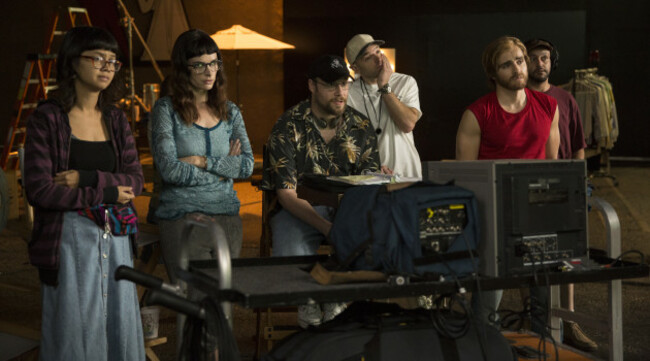
Seth Rogen, who plays the voice of reason on the set of The Room in the new film, said that Wiseau’s story is charming in its own way.
He said: “The Room is weird and crazy, and seems nonsensical and even like gibberish at times, with its lack of logic and motivation for what’s happening in the movie.
But the more you find put about Tommy and Greg’s relationship and history, you come to embrace their story. Tommy completely failed in one sense, but he also accomplished something in the way he was able to express himself in The Room.
Recreating a monster
The filmmakers behind The Disaster Artist said it was actually quite tricky to recreate scenes from The Room because they were done so poorly.
Director of photography Brandon Trost said: “It’s really hard to shoot something that you’re trying intentionally to make look bad. That’s part of why I think The Room became so successful – because it was made in earnest. Wiseau made it thinking that it would become the next Citizen Kane.”
It is this dedication to seriousness that makes The Room so unintentionally hilarious for many audiences. Watching people treating these bizarre scenes in such a serious manner when the acting is so bad and the plot is such gibberish has contributed to making earning such a cult following.
To get a flavour of what we’re talking about here, this eight-minute video of some The Room’s funniest scenes is well worth a watch.
Watching that, you’d think Wiseau and the rest of the cast are in on the joke. But, at $6 million, that’s a very expensive joke.
With all testimonies about Wiseau saying that he was deadly serious about all of this, it only adds to the bafflement and enjoyment audiences get with The Room.
The involvement of Franco and co in recreating this into a film of their own shows its enduring appeal.
For the worst film of all time, it’s not done too badly.
The Disaster Artist is currently showing in cinemas nationwide.

To embed this post, copy the code below on your site









have your say