Sign in. It’s quick, free and it’s up to you.
An account is an optional way to support the work we do. Find out more.
Sign in. It’s quick, free and it’s up to you.
An account is an optional way to support the work we do. Find out more.
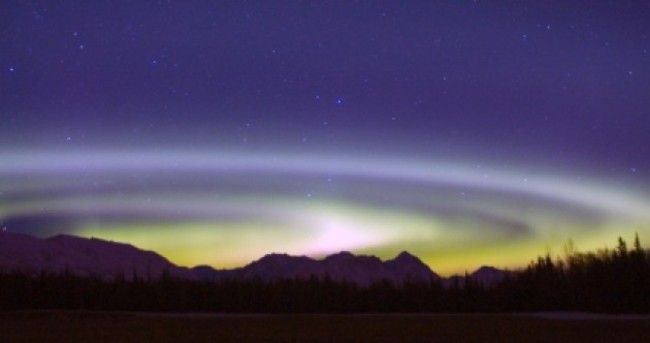
THE SKIES OVER Ireland will provide a visual feast for star-gazers in the coming days, with astronomical activity producing both aurora borealis and the year’s most significant meteor showers.
Increased solar activity last Friday led to aurora borealis, also known as the Northern Lights, becoming visible from Ireland – a rare event. David Moore of Astronomy Ireland told TheJournal.ie that sky-watchers may have the further chances to see aurora over the coming days, but warned that cloud cover may obscure the sights.
Aurorae are caused when solar radiation interacts with the planet’s magnetic field, causing glowing lights in the upper atmosphere that can be seen from Earth.
Moore explained that the aurorae, which are usually only visible in high latitude areas of the Northern Hemisphere, were pushed to areas like Ireland due to very strong solar activity. The sun is currently nearing the peak of 11-year cycle, which means increased sunspots and more sights in the sky.
Perseid meteor shower
The Perseid meteor shower occurs once a year and allows star gazers to witness spectacular streaks of light across the sky. The Perseids have been observed from Earth for the past 2,000 years.
The showers can be observed from August 5th to 19th, with the peak occurring on 12th (Friday), and Astronomy Ireland is encouraging the public to count the meteors they observe and pass on the information to them.
No special equipment is needed to see the Perseids.
Astronomy Ireland is holding a Sun Watch workshop at its headquarters in Artane at 1pm this Saturday, to explain the approaching solar maximum.

To embed this post, copy the code below on your site















have your say