Sign in. It’s quick, free and it’s up to you.
An account is an optional way to support the work we do. Find out more.
Sign in. It’s quick, free and it’s up to you.
An account is an optional way to support the work we do. Find out more.

CROSSOVER UTILITY Vehicles (CUVs), also sometimes known as crossover SUVs or just crossovers, are the darlings of Irish forecourts.
Ireland’s two top-selling cars of 2017 so far – the Hyundai Tucson and the Nissan Qashqai - are both crossovers, and this doesn’t look like it’s going to change anytime soon.
Some might say that crossovers are hatchbacks with the cumbersome size of an SUV – but you can’t go off-roading in them unless you fork out extra cash for one with all-wheel drive. Still, they have become a staple of mainstream motoring. So why have CUVs become so popular?
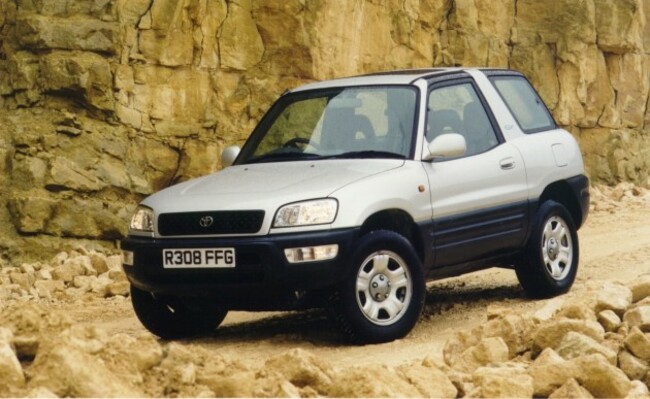
The first CUVs as we know them today are thought to be the Kia Sportage, which debuted in 1993 and the Toyota RAV4, which debuted in 1994. However, the first CUV to spark a really large amount of interest was the Nissan Qashqai, which arrived here in 2007.
Up until 2007, CUVs such as the Kia Sportage, Hyundai Tucson, RAV4 and Honda C-RV did well because of their small diesel engines and cheap price tags. But the Nissan Qashqai suited Irish motorists even better because it came with an even smaller diesel engine – meaning it was cheaper to run – and was better equipped, meaning it was great value for money. (We Irish are mad for the economical diesel units and love to think we are getting a bargain.)
When sales of the Qashqai soared, other manufacturer’s wanted a taste of Nissan’s success and jumped on the CUV bandwagon. Since then, competition in the CUV market has really heated up, and value for the buyer has increased as manufacturers have to offer more features, a better driving experience or lower prices to stay ahead of rivals.
But what made crossovers so desirable in the first place?
Crossovers initially rose to prominence because they so closely resembled SUVs, but were considerably less expensive.
In the 1990s, SUVs were very desirable mainly because they were big – and bigger is almost always better when it comes to status symbols. They were expensive and bought by affluent people who could afford to run them. If you drove an SUV it projected an image of wealth. Just look at how many Premiership players and their WAGs drove Range Rovers.
So when CUVs came on the market they looked like baby SUVs. This made them very popular as did their smaller engines, lower running costs, greater fuel efficiency and cheaper prices.
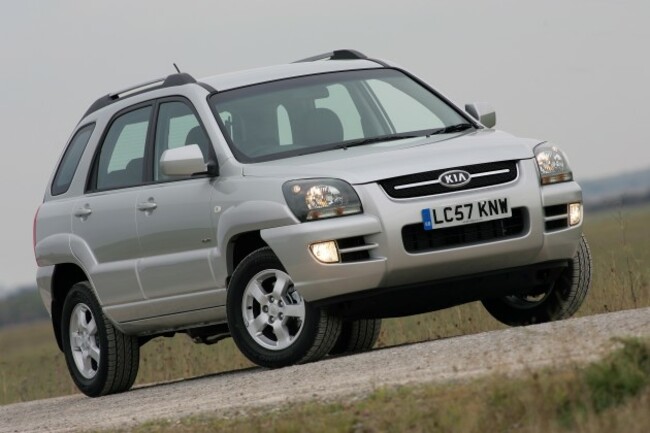
Most CUVs are built on unibody car platforms, not body-on-frame truck platforms like most of the more rugged SUVs were. This made CUVs more comfortable to drive than SUVs and offered a more stable, car-like driving experience. This appealed to those that really liked driving cars but required something more flexible.
Thanks to this unibody frame, CUVs are more spacious than most SUVs and the taller body means they offer more room than most cars. The extra leg and headroom are most welcome for those who spend hours commuting each day.
CUVs also have a high driving position, much like the SUVs. This means drivers have a good command of the road and usually makes drivers feel safer. This safe feeling adds to their desirability, especially as family cars.
So, essentially, CUVs combine the winning characteristics of both cars and SUVs. Therefore, when CUVs hit the market buyers no longer had to choose between the comfortable driving experience, decent fuel economy and low price of a car and the practicality and desirability of an SUV. So, the crossover craze seems to lie in CUVs being all things to all people.

To embed this post, copy the code below on your site









have your say