Sign in. It’s quick, free and it’s up to you.
An account is an optional way to support the work we do. Find out more.
Sign in. It’s quick, free and it’s up to you.
An account is an optional way to support the work we do. Find out more.
IRISH CONSUMERS ARE paying more than their counterparts in Britain for the same goods from some British retailers.
There is usually a big increase in online shopping at this time of year with Black Friday and Cyber Monday kicking off the busy Christmas period.
Companies which operate in both Ireland and the UK often charge different prices for the same products.
In general, when there is a price difference, the product is more expensive once the price is converted from euros to pounds.
The Journal found some examples of this price discrepancy when looking at the cost of products in retailers such as Boots, Currys and Marks and Spencer this week.
There are a number of reasons as to why the price of an item may differ from country to country, including supply chain issues, the cost of VAT (Value Added Tax), and increased business costs post-Brexit.
The standard VAT rate is 23% in Ireland and 20% in the UK.
If a consumer in Ireland buys a product from a UK-based store they would generally have to pay more for shipping and other costs.
When asked about why there is often a difference in prices on Irish and UK websites, a spokesperson for the Competition and Consumer Protection Commission (CCPC) said there is “no legislation that requires that the euro price charged must be a direct conversion of the price in any other currency”.
“Traders are not obliged to honour any sterling price that is advertised or honour the relevant daily conversion rate from sterling to euro,” they said.
All of the below prices were correct as of 30 November. We converted the price from euros to pounds via the XE, a widely-used currency converter website.
Boots
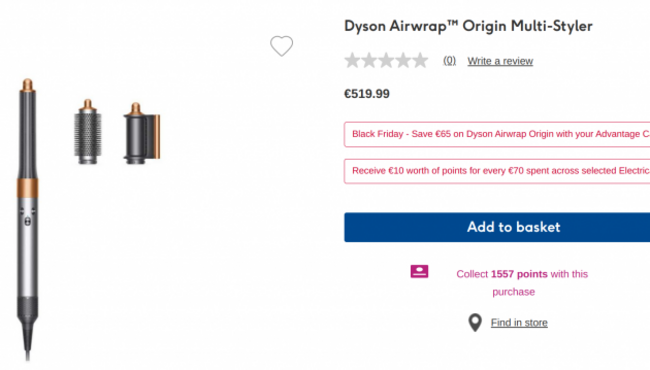
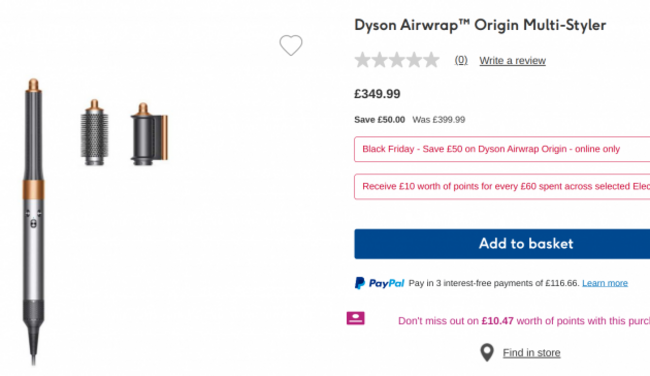
This Dyson Airwrap Origin Multi-Styler costs €519.99 (£449) on the Irish site, but £349.99 on the UK site - almost £100 cheaper.
The current cost of this item on the UK website includes a £50 discount but, even if that wasn’t applied, the item would still be £399.99 (about £50 cheaper than the Irish site).
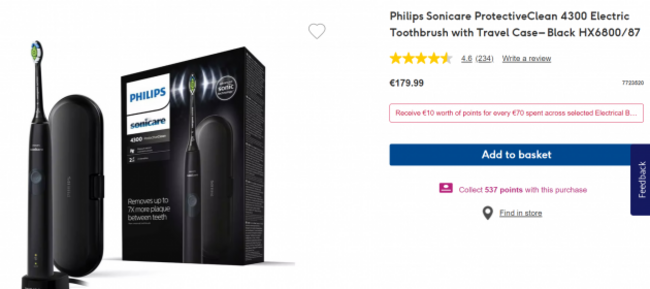
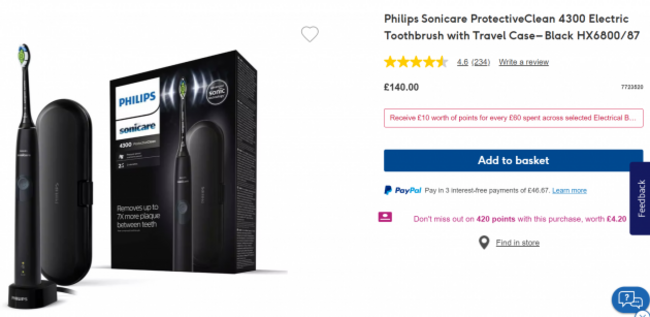
The below Philips Sonicare toothbrush costs Irish shoppers €179.99 (£155.75) on Boots’ Irish website, but £140 on the retailer’s UK site.
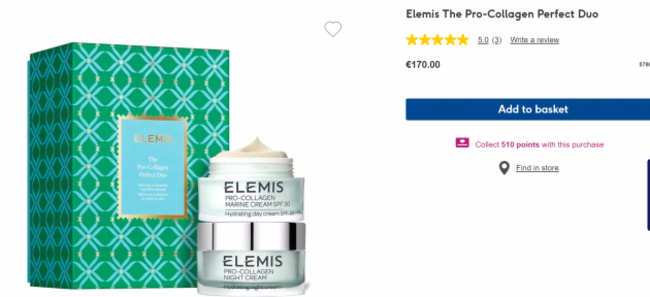
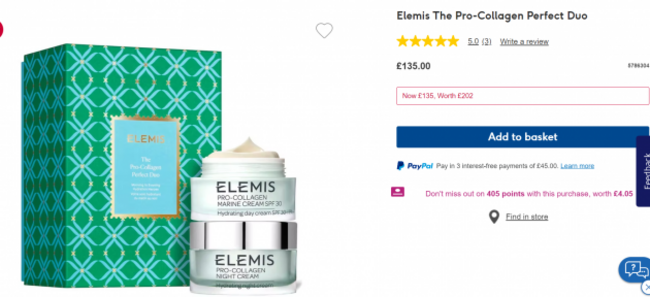
The price of skincare at times differs on both sites too. This Elemis set is €170 (£147) on Boots’ Irish site, but £135 on the UK site.
When asked for comment on the difference in prices on the company’s UK and Irish sites, a spokesperson for Boots Ireland said the retailer “constantly” monitors its pricing “to ensure that we offer our customers the best value”.
“We usually set our pricing to reflect manufacturer RRPs (recommended retail price),” they noted in a statement.
From time to time our value promotions aren’t aligned with Boots in the UK, reflecting the different pricing and promotional regulatory framework in Ireland.
“For instance, pricing differences may reflect a higher VAT rate in Ireland versus the UK and a differentiated supply chain,” they added.
Currys
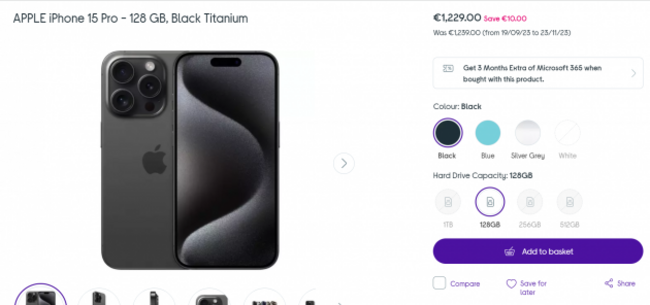
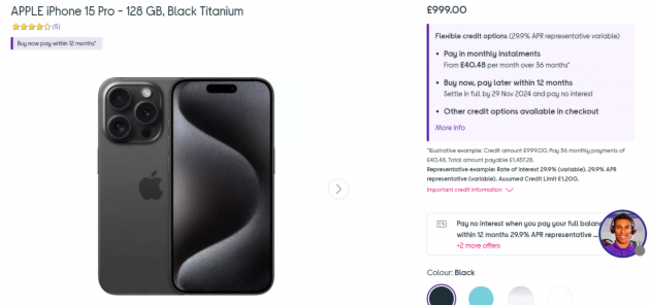
On Currys’ Irish website an Apple iPhone 15 Pro (128 GB) costs €1,229 which was £1,064 when converted yesterday.
However, the same phone on Curry’s UK website costs £999 – a difference of £65.
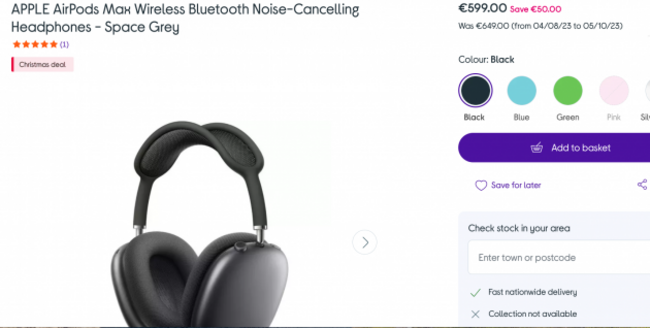
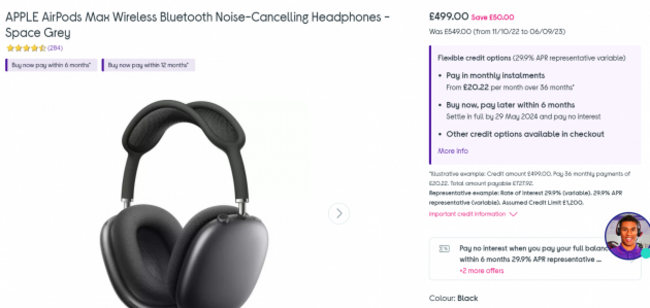
On Curry’s Irish website, these Apple Noise-Cancelling Headphones cost €599 or £518.50. However, the same headphones cost £499 on Curry’s British website.
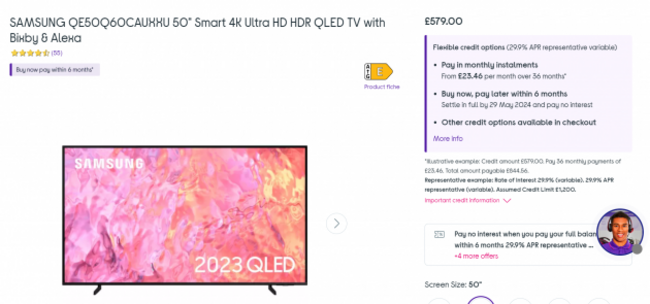
Irish consumers have to pay €699 (£605) for the below Samsung 50″ Smart 4K Ultra HD TV, while British shoppers would get the same television for £579.
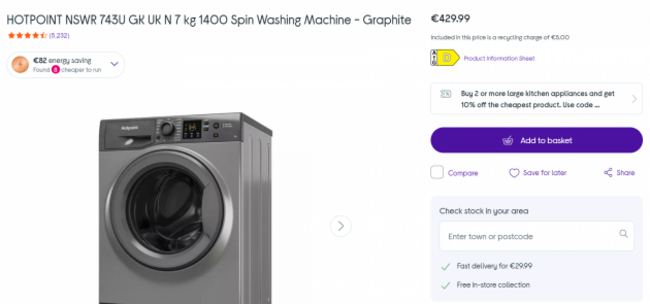
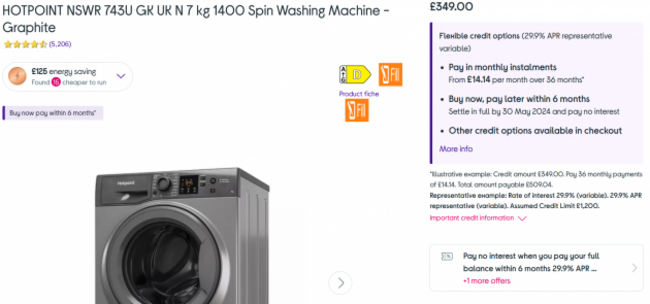
This Hotpoint washing machine costs €429.99 (£372) on Curry’s Irish website, but £349 on the company’s UK site.
When asked by The Journal why there is a difference in price on its Irish and UK websites, a spokesperson for Currys Ireland said the company sets its prices locally and aims to be “as competitive as possible”.
“Many factors need to be considered when setting the price for this market, including VAT in Ireland being 23% (versus 20% in the UK), along with the overall increase in business costs post-Brexit, particularly in logistics and supply chain operations.
While this can sometimes result in certain items being more expensive than our UK counterparts, very often Republic of Ireland customers benefit from lower prices on our products.”
Marks and Spencer
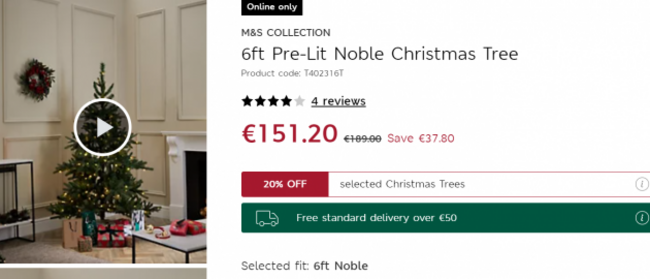
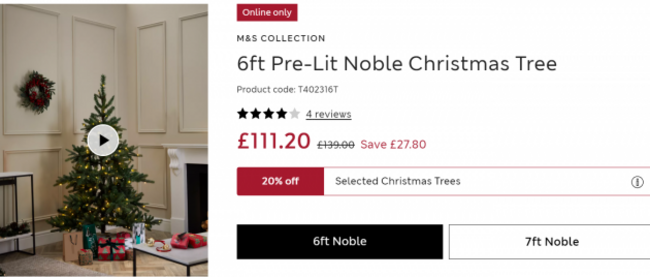
In terms of some of the prices at Marks and Spencer, this pre-lit six-foot Christmas tree costs €151.20 on the company’s Irish website (£130.68) but £111.20 on the UK site.
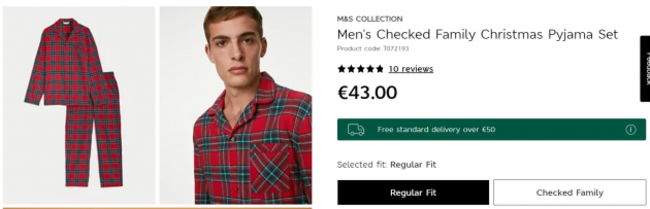
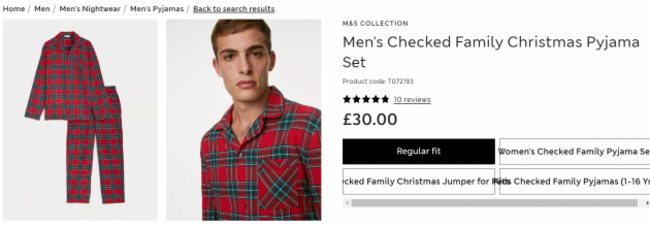
These men’s pyjamas cost €43 (£37) on the Irish website, but £30 pounds on the UK site.
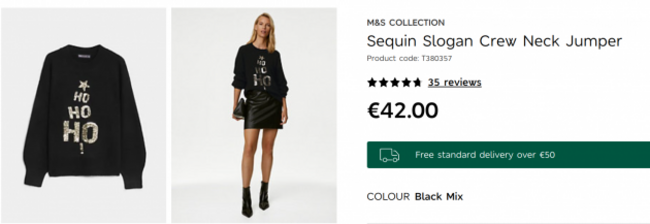
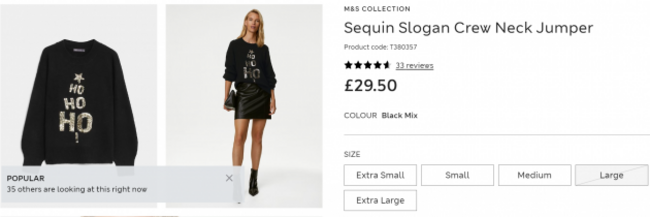
This women’s Christmas jumper is €42 (£36.35) on M&S’s Irish website, but £29.50 on the UK website.
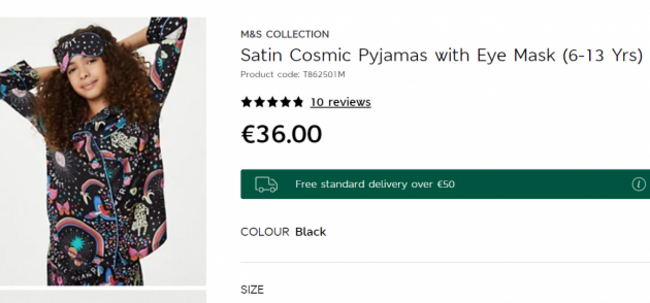
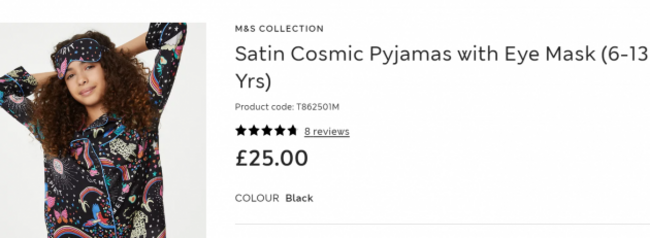
These children’s pyjamas are €36 on the Irish site (£31.15), but £25 on the British site.
When asked about how it prices items on its Irish and British websites, a spokesperson for Marks and Spencer said: “We work hard to ensure we offer our customers in Ireland great quality products that are competitively priced.
“Like any business, we have to take into consideration a number of factors that differ across all of our markets when setting our prices.”
‘Going on for years’
Speaking to The Journal, business and product development consultant for retail Eddie Shanahan said that price discrepancies between Ireland and the UK are not new
“It’s been going on for years. In some cases, it’s people profiteering. In other cases, it’s reflecting the cost of doing business in Ireland, so it’s not fair to paint everybody with the same brush – but in many cases, it’s probably the former rather than the latter,” he said.
“But Ireland is an expensive place to do business as we all know in terms of the cost of rental, the cost of insurance, the cost of power and all of the things that go into running a shop.”
Shanahan said the price of a product should be the same on a retailer’s website as it is in-store. When there is a price difference on the same product on Irish and UK websites, it could come down to the company’s business model.
“Are they shipping to Ireland? Are they paying duty on that? Are they storing it here? All of those things can add to the price.
If the model is that they’re storing in Ireland for local delivery, then they have costs of storage here, they have cost of handling here, they have cost of transport here. That could be dearer than the similar cost in the UK, or wherever.”
He said higher trading costs here mean that prices will not be the same as those seen in other countries.
“You’re not going to get the same prices because that would assume that the cost of labour, the cost of insurance, the cost of power, the cost of heat, the cost of light was the same in every country and it’s not.
I have every sympathy with consumers here but on the other hand, I also have to be fair to business because the cost of doing business in Ireland is expensive.”
Damian O’Reilly, retail lecturer at Technical University Dublin, told The Journal that Brexit plays a role in why the costs of some products from UK-based retailers are higher here.
The paperwork that’s involved in finalising stuff for Brexit is quite onerous, and that’s an added expense.
“If they bring the product in through a distribution centre in the UK, then they export it from the UK to Ireland, they’ve got to pay VAT and duty and so on. That makes the distribution a bit more difficult period Ireland,” he said.
He also said that input cost and the cost of labour is higher in Ireland, along with the cost of general rents and rates, while the volumes of products being sold here are not as large as they would be in the UK.
“If you’re not selling as many, you can’t sell it at a cheaper price. [Retailers] don’t have that many stores in Ireland compared to the UK so that affects all the input costs, the distribution costs.”
O’Reilly also said that exchange rates would likely have been hedged six months to a year ago to be able to give a particular price at this moment in time.
They would have bought sterling or bought euro six months ago, so if the exchange rate was different, that’s going to be reflected in the price.”
He said that when looking at price discrepancies, comparing the price of one product is probably not realistic.
“If [a retailer] has got 20,000 products on the shelf, do you say one product is twice the price as it is in the UK and they’re ripping people off? I don’t know if you can make that assumption. I don’t think it’s an issue of ripping people off,” he said.
People are very savvy. To me in these cases if there’s a discrepancy in the prices, see what products you can get elsewhere.
“People are good at looking for a product on the internet. They’re very good at searching and knowing what the price of something is. So if a company is doing it, they’re going to lose out eventually if the prices are too high.”
‘Know your rights’
As we enter the busy Christmas shopping period, the CCPC spokesperson said it can be a “stressful” time for consumers.
“Our advice to all consumers is to shop around, stick to your budget, and most importantly know your rights.”
The spokesperson noted that when buying online from traders based in Ireland or elsewhere in the European Union, shoppers have a 14-day cooling-off period.
“This gives you time to change your mind and return the item for a full refund. The 14 days start from the date of delivery and this law applies to almost all products and services, unless perishable or personalised.”
However, they added that if buying from a trader based outside the EU, “consumer rights may be weaker and it can be much harder to get redress if things go wrong”.

To embed this post, copy the code below on your site















have your say