Sign in. It’s quick, free and it’s up to you.
An account is an optional way to support the work we do. Find out more.
Sign in. It’s quick, free and it’s up to you.
An account is an optional way to support the work we do. Find out more.
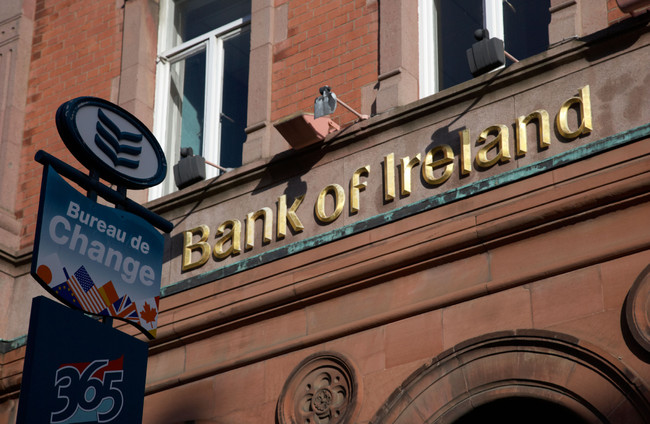
BANK OF IRELAND has warned about an increasing number of fake articles appearing online designed to defraud customers through bogus financial products, investments and cryptocurrency schemes.
The scam posts are made to look like news articles from genuine media outlets, but are false advertisements that fraudsters are paying for online.
Bank of Ireland’s head of fraud Nicola Sadlier said: “Our advice to consumers is: Don’t click on these adverts, ignore them completely, and if an investment sounds too good to be true, it’s probably fraud.”
The advertisements feature fabricated news stories with claims about specific cryptocurrency trading platforms or designed to entice readers to websites where they can then be defrauded, Bank of Ireland said in a statement.
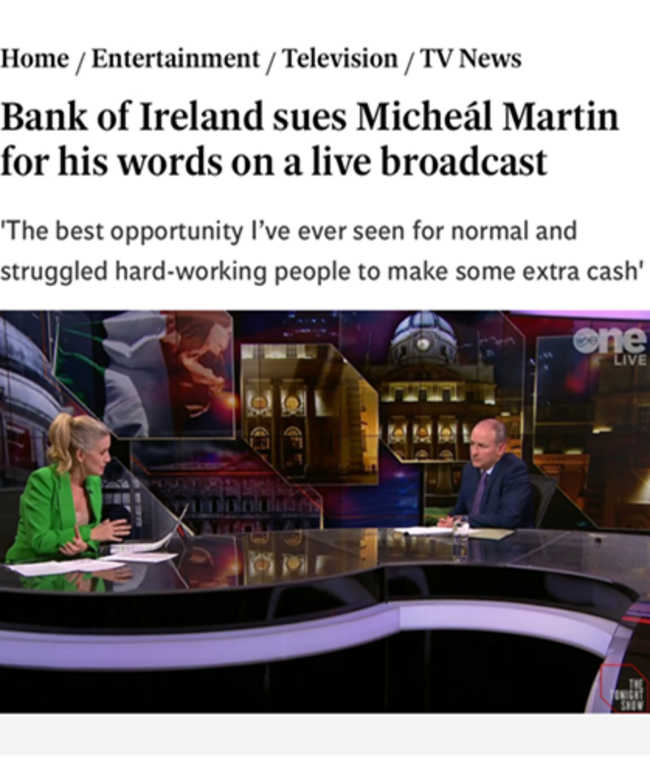
The fake articles often feature well-known celebrities or public figures, combined with a outlandish, attention-grabbing headlines.
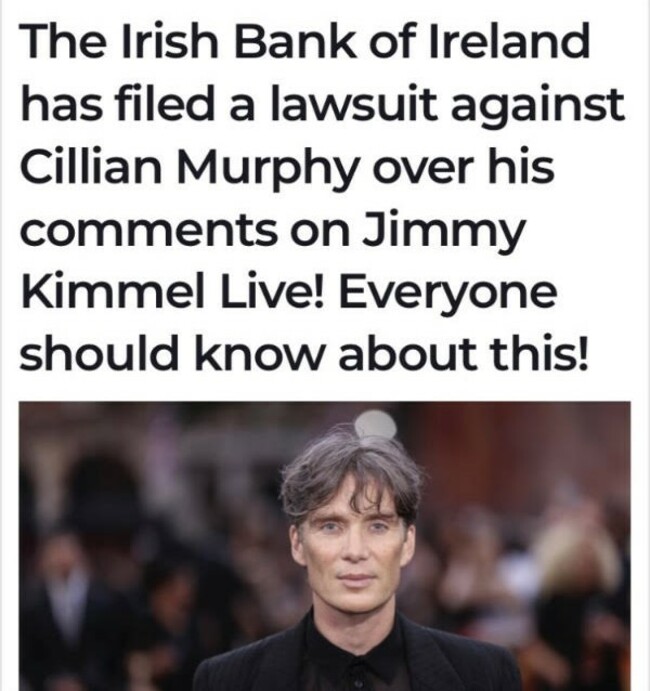
Sadlier said these fake articles are “designed to steal consumers’ money”.
She criticised social media companies for allowing the content to be published on their platforms.
“We see more and more fraud attacks starting from social media and tech platforms – these fake ads should be caught before they are published online, but many are not.
“Unfortunately, supervision of this is very inconsistent, at times it’s like a game of whack-a-mole trying to report the different scams to the social media companies and get them taken down,” she said, adding that it is unacceptable to see fraudsters operating openly online.
“No company should be generating advertising revenue from criminals – social platforms really need to step up and crack down.”
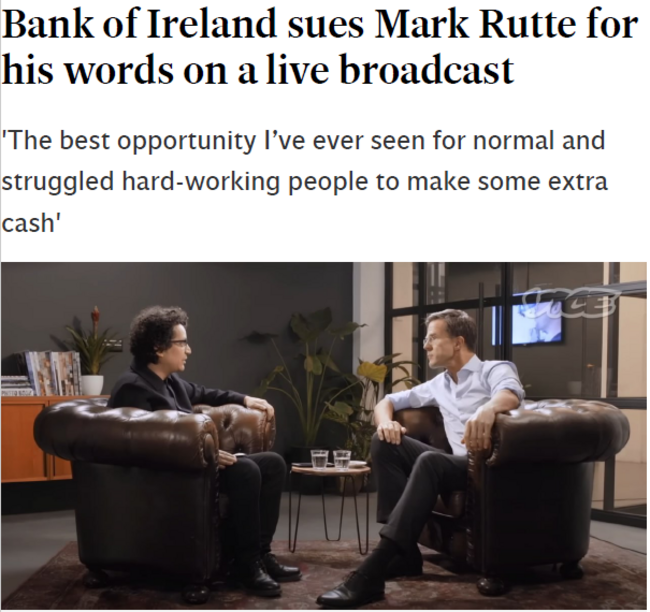
The proliferation of such false news articles has been particularly evident on social media sites lately, as documented by The Journal’s FactCheck team.
In our latest report on the phenomenon, the FactCheck team found that these links, once clicked, often bring the reader to a clone of a real, well-known website, reformatted to push software that promises to make them rich.
Most of the time, the site is an almost exact replica of a news outlet, such as Forbes, RTÉ or the Irish Independent. Often, these sites carry the bylines of real journalists who work for these outlets, falsely implying they had written the articles.
As The Journal‘s Shane Raymond reported, Bank of Ireland often features in these false articles, but this may be due to a mix-up on the part of the scammers, who are located abroad.
Because Bank of Ireland is a private bank and these fake posts usually describe it as withholding information about cryptocurrency schemes from the public, it’s possible the fraudsters are confusing it with the Central Bank of Ireland, which does have a broader remit to protect the public interest.
In statements provided to The Journal, Facebook and Instagram parent company Meta and Youtube owner Google both said they were taking measures to address the issue.
X (Twitter) did not respond to a request for comment but its policy is to prohibit fraudulent posts.
Enforcement seems to be lacking, however, as The Journal was able to find such celebrity scam ads on Facebook and X in less than a minute, just by scrolling through the main feeds of these sites.

To embed this post, copy the code below on your site













have your say