Sign in. It’s quick, free and it’s up to you.
An account is an optional way to support the work we do. Find out more.
Sign in. It’s quick, free and it’s up to you.
An account is an optional way to support the work we do. Find out more.
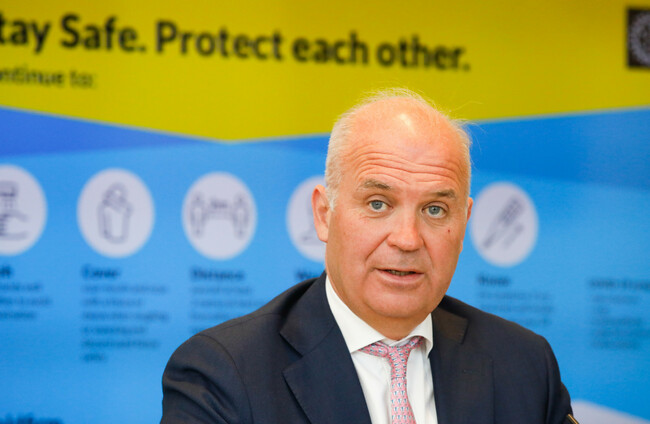
PUBLIC HEALTH OFFICIALS have confirmed 1,828 new cases of Covid-19 in Ireland, the highest daily total since January.
The Department of Health has reported that 198 patients in hospital have tested positive for the coronavirus disease and a total of 33 people are in intensive care units with the illness.
Yesterday, 1,782 cases of Covid-19 were reported, with 189 patients with the illness in hospital, 30 of whom were in intensive care.
As of last night, over 3.2 million people have received at least one dose and over 2.7 million people have two doses. A total of 222,000 have also received the single-shot Janssen vaccine.
We’ve reported over 18,000 cases of #COVID19 in Ireland in the last fortnight.
— Dr Ronan Glynn (@ronan_glynn) August 6, 2021
The 14-day incidence rate has increased to 386 per 100,000 population, that’s the highest it’s been since early February.
🦠ℹ️👇👇
pic.twitter.com/Dht585t4ZE
In a video posted on Twitter today, the Deputy Chief Medical Officer Dr Ronan Glynn said more than 18,000 cases have been reported in Ireland over the last fortnight.
He said the incident rate has increased to 386 per 100,000 people and there is “significant uncertainty in terms of the underlying trends”.
The recent August bank holiday weekend may have impacted case numbers and referral patterns, Dr Glynn said.
Just 3% of all cases are in people aged 65 and older and the highest incidence is among those aged 16-34.
Incidence rates are particularly high in Donegal, Louth, Galway, Mayo and Monaghan.
“Although the link between cases and severe disease has been very substantially weakened through vaccination, it has not been completely broken and unfortunately, due to the high incidence, we continue to see an increasing number of people in hospital.”
He said the outlook for the next few days is “uncertain” and encouraged people to get vaccinated if they haven’t already.
Speaking to The Journal yesterday, Dr Glynn discussed Covid-19 misinformation and why uncertainty around the disease can help false information to spread.
“We’re living in this world of uncertainty and we’re communicating in this world of uncertainty and meanwhile we’ve anti-vaccine groups, anti-lockdown groups who are professing things with absolute certainty – Covid is no worse than the flu, people who died with Covid were going to die in the next few months anyway, vaccines do this, vaccines do that – so it can be difficult at times to overcome that,” he said.
Additional reporting by Orla Dwyer.

To embed this post, copy the code below on your site














have your say