Sign in. It’s quick, free and it’s up to you.
An account is an optional way to support the work we do. Find out more.
Sign in. It’s quick, free and it’s up to you.
An account is an optional way to support the work we do. Find out more.
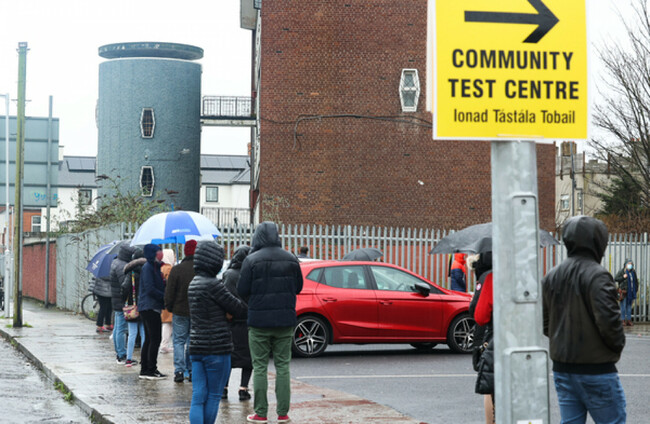
COVID-19 TESTING FOR the general public is set to be stood down in the autumn, after the Government accepted advice from the Interim Chief Medical Officer.
The decision to accept the recommendation from the interim CMO, Professor Breda Smyth, was taken by the Government after being brought to Cabinet by Health Minister Stephen Donnelly.
Under the plan, general Covid-19 testing facilities are expected to be stood down but this will not be implemented until the Autumn.
Anyone seeking to get a Covid-19 test from then on will be required to go through their GP or clinician, who will decide whether or not they are sent forward for testing.
It is not clear if this includes the antigen tests that are sent out by the HSE or will be exclusive to PCR testing.
Despite the change in testing policy, the HSE are now set to develop emergency response plans for both testing and tracing due to uncertainty about the future spread of Covid-19.
The change in testing policy comes days after the Health Minister announced changes to Ireland’s Covid-19 vaccination programme, following new advice from the National Immunisation Advisory Committee (NIAC).
These recommendations will see changes to how booster vaccines are administered, including second and third boosters for those with underlying conditions and the immunocompromised respectively.
NIAC also recommended that Covid-19 vaccines could be administered at the same time as seasonal flu vaccines.
New data from the Central Statistics Office (CSO) has also shown that almost 9% of people have already received their second booster dose.
The average rate for a second booster is 8.7% across all local electoral areas, with figures ranging from between 2% to 15%.
The local electoral areas with the lowest booster vaccine take-up are Blanchardstown, Mulhuddart, Tallaght South and Ongar, which are all in Dublin.
Additional reporting by Press Association

To embed this post, copy the code below on your site












have your say