Sign in. It’s quick, free and it’s up to you.
An account is an optional way to support the work we do. Find out more.
Sign in. It’s quick, free and it’s up to you.
An account is an optional way to support the work we do. Find out more.
LAST UPDATE | 11 Mar 2024
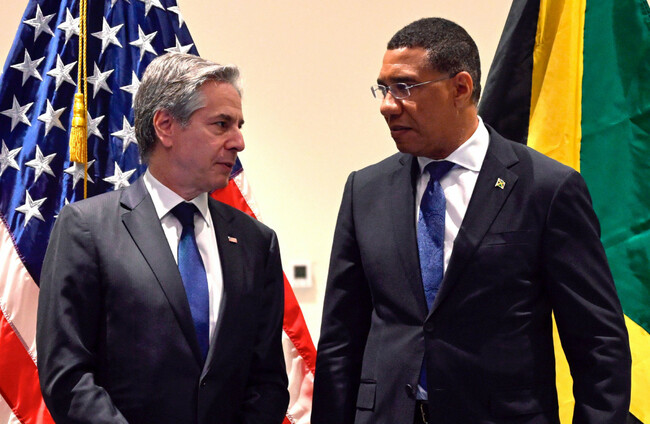
THE UNITED STATES’ Foreign Minister Antony Blinken has pledged to provide another $133 million in financial aid support to Haiti, saying the spiraling crisis showed the urgency of deploying a multinational force.
The Secretary of State Blinken arrived at an emergency summit in Jamaica in response to the spiralling violence in Haiti, as armed groups are closing in on the Island’s capital.
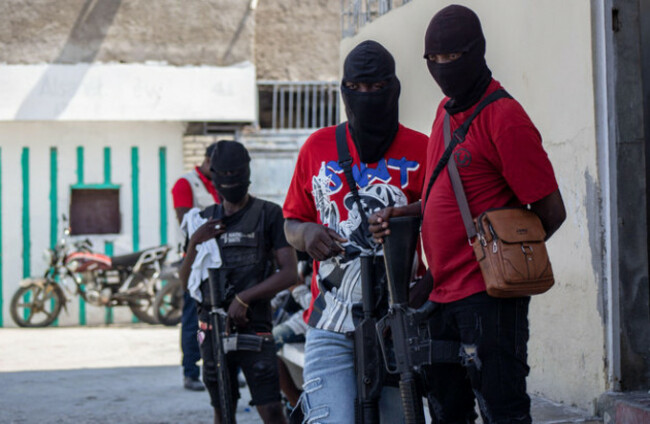
AFP reporters saw bodies lying in the streets of the capital on this weekend, when dozens of residents sought safety in public buildings and in at least one case broke in to seek refuge.
Police had repelled gang attacks the previous day, including on the presidential palace, while several “bandits” were killed, Lionel Lazarre, of the Haitian police union, said.
The well-armed gangs recently have attacked critical infrastructure, including two prisons, allowing most of the 3,800 inmates to escape.
The armed groups in Haiti are expressly attempting to overthrow acting President Ariel Henry, who has been in power since the 2021 assassination of president Jovenel Moise.
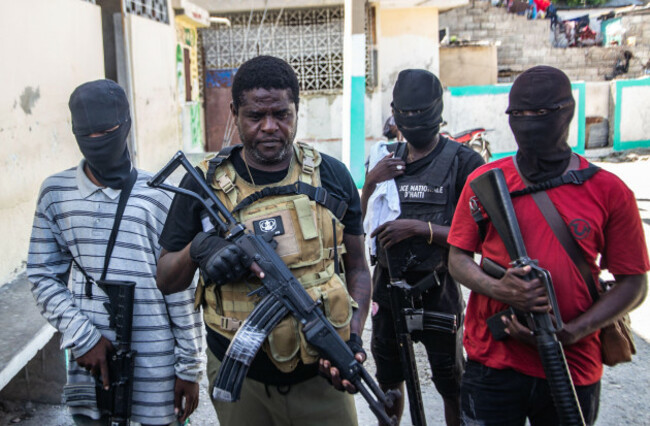
Jimmy “Barbecue” Cherizier, a former police officer who presents himself as a revolutionary, is the leader of one of the most powerful gangs in Haiti.
As the head of an alliance of gangs dubbed “the G9 family”, 46-year-old Barbecue has become a public face of the violent chaos engulfing the country.
The emergency summit in Kingston is being attended by envoys from France, Canada, the United Nations and the US, as well as the CARICOM group of Caribbean nations.
Blinken said the United States would commit another $100 million to the forthcoming Multinational Security Support Mission plus an immediate $33 million in humanitarian aid, bringing total US pledges for Haiti during the years-long crisis to $333 million.
The European Union and the United States have evacuated their staff from Haiti due to growing violence on the Caribbean island that has seen anti-government armed groups tighten their grip on the capital, Port-au-Prince.
The EU’s decision to pull its staff members was made due to “the dramatic deterioration of the security situation”.
“Currently we have removed and evacuated all the EU staff from Haiti,” said European Commission spokesman Peter Stano.
The European Union is “extremely concerned” about developments in Haiti over recent days, he added.
“As a response to the dramatic deterioration of the security situation, we took the decision to reduce our activities on the ground and we moved the staff of the EU delegation in Port-au-Prince to a safer location outside of the country,” Stano said.
Essential staff are continuing to work “but not from Haiti itself”, he said, adding that the EU would assess the situation from abroad.
Meanwhile, Haiti’s deeply unpopular Henry remains in exile in nearby Puerto Rico. He was in Kenya signing an agreement with the Government there to send a peacekeeping force to Haiti when the latest surge in violence occurred last week.
After a landing request was rebuffed by the Dominican Republic, his plane ended up touching down in the US territory.
Haiti has long been the victim of international meddling, especially from its former colonial master, France. After the slave revolt that overthrew the French colonial regime in 1804, Haiti was forced to pay “reparations” for generations.
Attempts by the UN to intervene from 2004 to 2017 ended with the international body’s reputation in tatters in Haiti for a number of reasons, the most obvious being allegations of sexual misconduct and abuse made against UN staff.
Additionally, Haitians had to endure 29 years of dictatorship between 1957 and 1986, and before that the country was occupied by the US between 1915 and 1934.
To make matters worse, Haiti was hit by a massively destructive earthquake in 2010.
Conditions for average Haitian citizens are increasingly dangerous. Almost 4,000 people were killed and 3,000 kidnapped in gang-related violence last year, according to the UN.
The UN also said last year that around 40% of Haiti’s healthcare workers have reportedly left the country, while women and girls have been subject to brutal sexual violence.
According to the World Food Programme, Haiti has one of the highest levels of food insecurity in the world. The number of food-insecure people has tripled since 2016.
A total 4.35 million Haitians – nearly half the population – do not have enough to eat and 1.4 million are facing emergency levels of food insecurity.
Some 362,000 Haitians have been displaced, according to the International Organization for Migration.
Includes reporting from AFP

To embed this post, copy the code below on your site














have your say