Sign in. It’s quick, free and it’s up to you.
An account is an optional way to support the work we do. Find out more.
Sign in. It’s quick, free and it’s up to you.
An account is an optional way to support the work we do. Find out more.
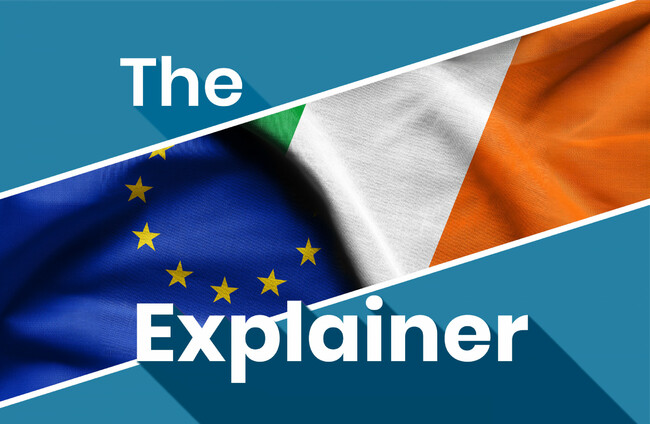
THE IRELAND OF the early 1970s was a very different one to today.
The country was still finding its feet after gaining full independence from the United Kingdom. The economy was geared around agriculture rather than industry and corporation tax receipts. Beyond peacekeeping, our diplomatic footprint internationally was limited. Even within Europe we were an outlier – both due to the simple fact that Ireland is an island beyond an island on the edge of the continent, and we weren’t carrying the baggage of post-war reconstruction.
And then, in 1972, the public voted to join the European Economic Community, now known as the European Union. The difference when compared with today is, objectively, night and day – but the journey hasn’t been without its various stumbling blocks
But how did we get there? What drove Ireland towards the European project? On this week’s episode of The Explainer – the latest in a series arming our listeners with the information they need ahead of the European elections – we’re joined by Dr Barry Colfer, director of research at the Institute of International and European Affairs (IIEA).
Colfer looks back on everything from Ireland’s nascent relationship with Europe in the 1970s to the country’s treatment during the bailout in the 2010s – and how, throughout all of this, the public would rarely be described as Europhiles but equally rarely as Eurosceptic.
Plus, is it really all about just building roads?
https://soundcloud.com/the-explainer-podcast/what-is-irelands-history-with-the-european-union/s-L3LvltmmUwM?si=d79bd8634e9b4a6fb66fc09d47c2356f&utm_source=clipboard&utm_medium=text&utm_campaign=social_sharing
This episode was put together by presenter and executive producer Sinéad O’Carroll and senior producer Nicky Ryan.
—
This work is co-funded by Journal Media and a grant programme from the European Parliament. Any opinions or conclusions expressed in this work are the author’s own. The European Parliament has no involvement in nor responsibility for the editorial content published by the project. For more information, see here.

To embed this post, copy the code below on your site












have your say