Sign in. It’s quick, free and it’s up to you.
An account is an optional way to support the work we do. Find out more.
Sign in. It’s quick, free and it’s up to you.
An account is an optional way to support the work we do. Find out more.

IRISH WORKERS ARE logging more hours than ever, with the majority of us performing work-related activity off the clock.
A new study has found that 72% of Irish employees regularly work from home outside of office hours.
Speaking t0 TheJournal.ie today, a spokesperson for the Irish Congress of Trade Unions (ICTU) said the rise of smartphones was to blame for people doing longer hours.
You are constantly checking and you are constantly plugged in. It’s like a 24-hour office.
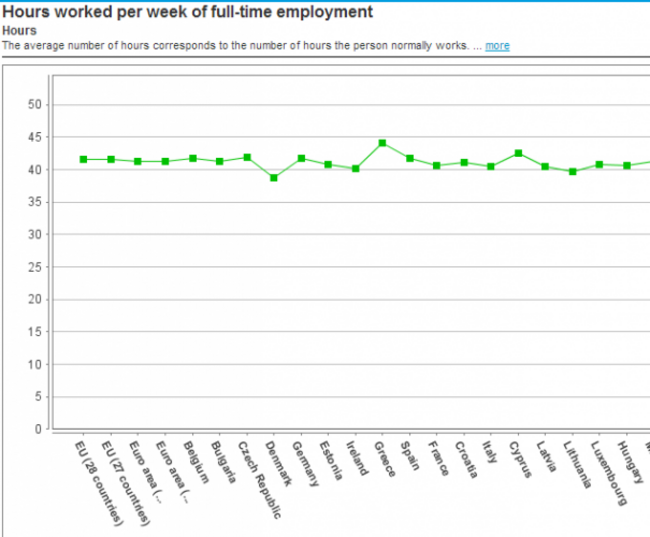
This is despite statistics from Eurostat showing the Irish working week to be the fifth shortest in the Eurozone, with people working 40 hours on average.
Today’s survey, which focused on work-life balance, also found that Irish women are busier than their male counterparts, expending 15% more energy during an average week.
Just over half of respondents felt that they managed to keep on top of their hectic lifestyles while two fifths described themselves as feeling “totally stretched” and that they would like to “indulge in some well deserved time to themselves”.
Of those that responded, 45% felt a desire to exercise more. Out of the female respondents, 70% felt they did not have enough time “to keep fit and spend time with family and friends”.
In April this year, a law was passed in France protecting some workers in the digital and consultancy sectors from having to check their emails outside of working hours. Companies were required to put no pressure on workers to ensure they receive the full minimum rest period.
On this, the ICTU representative pointed out that issues could arise from “people putting pressure on themselves for perhaps being looked on unfavourably” and that we would have to wait for the results.
In Sweden this year, a six hour working day was being trialed by council staff in Gothenburg, testing the theory that productivity drops off after a certain point.
On this the spokesperson for ICTU said:
It’s a great idea. It’s based on logic really. From a working day, the slower you become the less productive you are. Count up the hours in a day and count up the productive hours.
“If you look back at the origin of the trade union, it was about breaking up the long, long working day. That is where the eight hour day came from.”
The study was carried out by pharmaceutical company Pharmaton.

To embed this post, copy the code below on your site















have your say