Sign in. It’s quick, free and it’s up to you.
An account is an optional way to support the work we do. Find out more.
Sign in. It’s quick, free and it’s up to you.
An account is an optional way to support the work we do. Find out more.
LAST UPDATE | 30 Dec 2021
PUBLIC HEALTH OFFICIALS have confirmed an additional 20,554 cases of Covid-19 in Ireland
As of 8am, 619 people were in hospital with the virus, 88 of whom were in intensive care.
There were 568 people in hospital with the virus on Monday, 93 of whom were in intensive care.
This evening, changes were announced to guidelines regarding PCR and antigen testing as well as to the amount of days those positive for Covid have to self-isolate.
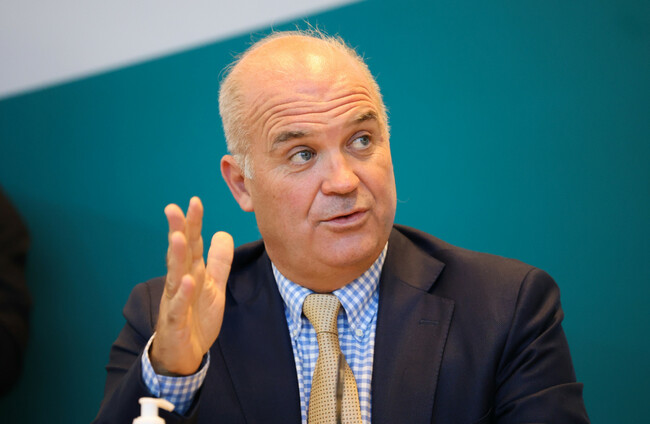
Chief Medical Officer Dr Tony Holohan said: “For the fourth time this week, we are reporting Ireland’s highest ever number of confirmed cases of Covid-19.
“The most effective way to minimise the risk of any of us transmitting this virus to others is to avoid mixing indoors with people from other households. I know this is not the advice any one of us wants to hear, particularly in advance of New Year celebrations. However, given the current profile of the disease, it is essential that all of us continue to keep our social contacts as low as possible in the days ahead.”
In the last 24 hours, 148 people with Covid-19 were either admitted to hospital or received a “detected” test result while in hospital.
“Hospitalisations at this level are not sustainable and are having a significant impact on our health service,” he said.
Holohan added: “It is important to note that these admission figures are increasingly likely to be driven by the surge in Omicron infection which now accounts for over 90% of PCR confirmed cases in Ireland. Over 90% of people in hospital and intensive care with Covid-19 are there for the management of Covid-19; less than 5% of those in hospital or intensive care have ‘incidental’ (asymptomatic, non-infectious) disease.”
Dr Ronan Glynn, Deputy Chief Medical Officer, said Omicron is far more contagious than previous variants and incidence across the country is now much higher than at any point in the pandemic.
“Because of this, many people, despite being boosted and having taken other measures to protect themselves will be infected with SARS-CoV-2. However, their booster will protect the vast majority from serious illness or hospitalisation, and it will help to protect our health service and critical care capacity,” he said.

To embed this post, copy the code below on your site












have your say