Sign in. It’s quick, free and it’s up to you.
An account is an optional way to support the work we do. Find out more.
Sign in. It’s quick, free and it’s up to you.
An account is an optional way to support the work we do. Find out more.
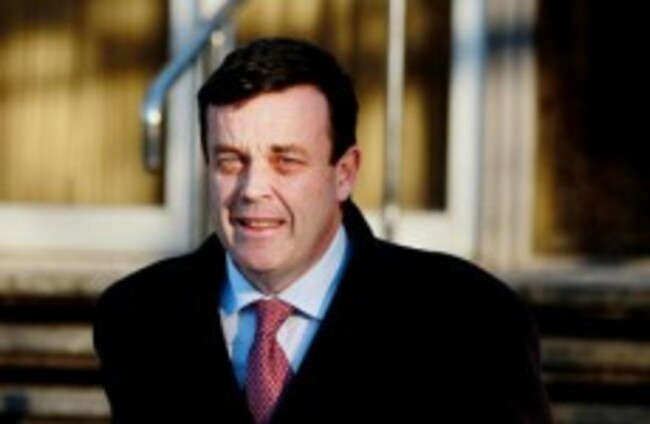
FINANCE MINISTER BRIAN LENIHAN has just delivered finishing a Budget that has left the country reeling.
In his sometimes bullish opening remarks, Lenihan said there were signs “that conditions in the labour market are beginning to stabilise. The Live Register has fallen for the third month in a row, the first time since early 2007.
“Redundancies in the last three months were over 30% lower than in the same period last year,” he continued.
He added:
The balance of payments is expected to record a small surplus next year, meaning that the economy as a whole will be paying its way in the world.
However, Lenihan went on to outline that the gap between government receipts and spending would reach €19bn this year – and “this gap must be closed”.
Between 2000 and 2008, he said, public spending had increased by 140% while the consumer price index had increased by just 35%. Working-age social welfare rates were now more than twice their rate in 2000, while the state pension had almost doubled in the same timeframe.
He announced that changes were necessary to the social protection system:
Lenihan also announced a number of job creation initiatives, and said the government’s capital programme would still account for 3% of GDP in 2011.
Addressing the issue of public sector pay reform, Lenihan acknowledged the contribution made by the public service to date; however, he said the cost of delivering public services would still have to fall further.
He went on to announce the following cuts and adjustments:
The Finance Minister said Ireland’s taxation system was no longer “fit for purpose”, saying that the upper 8% of taxpayers accounted for 60% of all imcome tax payments, while 80% of taxpayers contributed just 17% of the total tax take.
With this in mind, Lenihan announced the following reforms of the tax system:
The net income of a married couple with no children earning €25,000 would fall by 2.8% or €12 per week, Lenihan said, while for a similar family with two children, net income will fall by just 1% or €5 a week.
The Minister for Finance added that a further nine tax reliefs would be abolished, on top of 16 previously eliminated, and said he aimed to abolish all property-based tax reliefs by 2014. The tax-free threshold for capital acquisitions tax would be cut by 20%.
DIRT tax on deposit accounts will be increased by 2% to 27%, and by 2% to 30% in the case of longer-term deposit accounts.
Announcing a number of changes to the tax treatment of pensions, Lenihan said employee PRSI and health levy relief on pension contributions would be abolished, while retirement lump sums above €200,000 would be taxed. Employer tax relief on employee pension contributions will be halved.
The corporation tax will remain at 12.5%; Lenihan also announced a revamp of the Business Expansion Scheme.
Lenihan also announced a number of measures aimed at stimulating the property market, including:
Despite calls for the abolition of the air travel tax, Lenihan instead announced the introduction of a new singular tax of €3, which would be applied on a temporary basis from March 1 until the end of 2011.
Excise duty on petrol will be increased by 4c a litre, while diesel will go up by 2c a litre. The car scrappage scheme will be extended by six months, while relief on VRT during that period will be reduced to €1,250.
In gambling, the duties applied to bets made online would now be made equal to the duties paid for bets made in person.
The minister announced that legislation facilitating burden-sharing by subordinated bondholders would be introduced to the Dáil by next week; however, there would be a limit to burden sharing, and there would be no reneging on the government’s commitments to senior bondholders.
Concluding, Lenihan said the government had “faced up to its responsibilities; we have acknowledged our mistakes; worked might and main to rectify them and we have put in place the measures to ensure that these mistakes can never be made again.
We know we can have sustained, balanced, export-led growth in this economy. We had it in the 1990’s and we have what it takes to win it back if we pursue the correct policies.
There is every reason to be confident about the future of this economy and this country if we only have confidence in ourselves.
Additional reporting by Jennifer O’Connell

To embed this post, copy the code below on your site








have your say