Sign in. It’s quick, free and it’s up to you.
An account is an optional way to support the work we do. Find out more.
Sign in. It’s quick, free and it’s up to you.
An account is an optional way to support the work we do. Find out more.
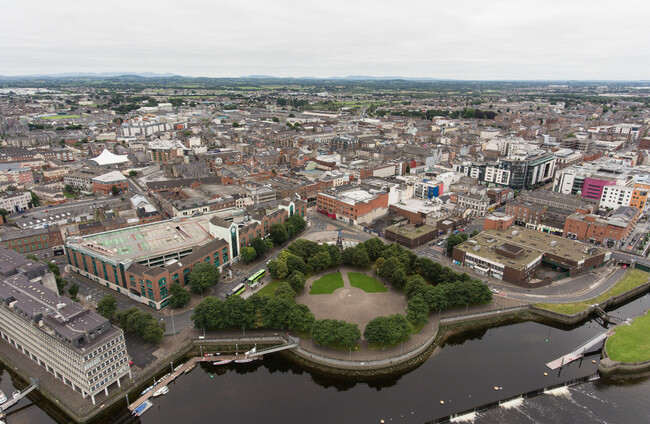
UNLIKE THE PEOPLE of Cork and Waterford, the electorate of Limerick has voted to have a directly-elected mayor in the city.
The results of the plebiscite were narrow in all three cities, but Limerick will now take a different path to the others as it will, under the government’s proposals, see a new democratic position created with expanded powers as well as accountability to the people of the city.
It still won’t be several years, however, until such a mayor is actually put in place.
What happens now?
In short, not a lot will happen for quite some time.
Addressing the Seanad last month, Taoiseach Leo Varadkar said that in areas where the plebiscite was passed – in this case only Limerick – the government would bring about legislation to allow for the first directly-elected mayors to take up office in 2022.
This was echoed by Minister of State for Local Government John Paul Phelan yesterday.
In a statement from Phelan yesterday, it said that as Limerick has passed the vote the minister has two years to prepare and submit to the Oireachtas proposals to enact the law that would create the position of the mayor in Limerick.
That law must then go through the Dáil and the Seanad in the normal manner.
“The Oireachtas will then consider the legislation and once the required legislation is passed, an election for Mayor with executive functions will take place for the area concerned,” the statement said.
The government has given any signal that it’ll try to speed these proposals along, so it’s looking like 2022 at the earliest when Limerick will elect its mayor.
That mayor would then have a five-year term of office.
What will the mayor actually be able to do
The government has said that its proposals for a directly-elected mayor would allow more decisions that affect the people of those cities to be made on the ground there, rather than by government departments in Dublin.
Currently, much of the power that will transfer to the directly-elected mayor will come from the chief executive.
Currently, the chief executive on the 31 local authorities is responsible for executive functions such as those relating to employees, the granting or refusal of planning permissions, the allocation of local authority houses, signing of contracts and generally any function involved in the day-to-day administration and business of the council.
In effect, the chief executive is also the person responsible for following through on the actions decided by elected councillors.
Under the government’s proposals, the directly-elected mayor would have executive functions which would:
To an extent, the mayor will also be responsible for drafting and presenting policies to the elected council, for the council’s approval.
Whereas the powers granted to councillors is limited, the directly-elected mayor will have much greater scope to shape policy and implement changes in their city.
Along with that, as they are chosen by the people – unlike the current system under a council chief executive – the argument is that it will provide greater accountability for the actions taken in their city.
Phelan said: “The mayor of Limerick is going to be answerable to the people of Limerick and will drive development and growth in the city, county and wider region.”
Full details of the government’s proposals can be read here.
Who will that be?
The easy answer is that we don’t really know yet. If it’s three years until the actual election for mayor will take place, there’s plenty of time for people to signal an interest in the role.
But what will that person’s background be? A local councillor, a senator or TD, or a chief executive? Someone else outside of politics? It’s difficult to tell at this stage, but such a role will obviously hold appeal to politicians.
With the same length of term as a sitting TD, and powers specific to that constituency, it wouldn’t be a surprise if a sitting member of the Dáil was tempted to give up their seat to run for mayor of Limerick.
The role will certainly have a lot of responsibility, with former Waterford Lord Mayor Adam Wyse telling TheJournal.ie prior to the plebiscites that it would need a “seriously high calibre of person” to take the reins over and handle the running of a city.
“The type of person who does this job will need to be similar to the other CEOs running the councils around the country,” the Waterford councillor said. “You’d wonder if those kinds of people would put themselves forward on the ballot.”
Former Cork city Lord Mayor Des Cahill also told TheJournal.ie prior to the plebiscites that it’s a position any local councillor would relish.
““I don’t know any local politician who wouldn’t want to lead their city,” he said. “Many of us already have 10-15 years’ experience on the council. We’re all part of the development plan for Cork. Personally, I know myself I’d like to lead that.”
Cork and Waterford may have turned down that option presented to them for now, so all eyes will be on Limerick to see if the government’s finalised plan for the powers of the mayor go far enough to bring about the kind of change envisaged and whether the person chosen to lead Limerick can deliver upon that.
With reporting from Órla Ryan

To embed this post, copy the code below on your site














have your say