Sign in. It’s quick, free and it’s up to you.
An account is an optional way to support the work we do. Find out more.
Sign in. It’s quick, free and it’s up to you.
An account is an optional way to support the work we do. Find out more.
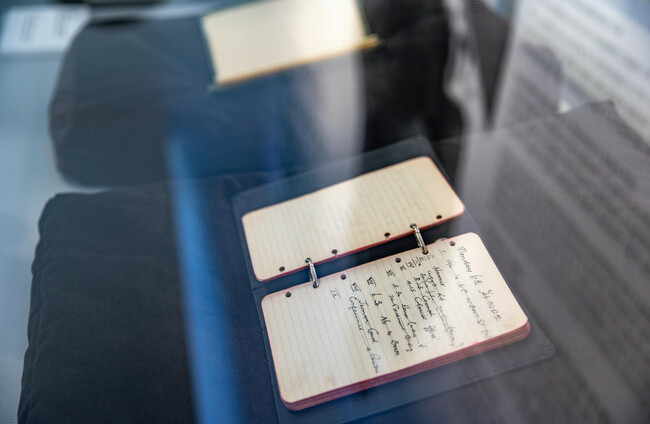
DIARIES KEPT BY Michael Collins during the last four years of his life will be made available to the public for the first time next month.
The diaries were loaned to the National Archives by members of the Collins family last November, around 100 years after the revolutionary leader used them to organise his dramatic life.
The five diaries cover the period from 1918 to Collins’ death in 1922. The National Archives has digitised the notebooks in totality, to preserve them for posterity, and they will be available to the public in digital form from September.
They represent the first fresh primary source material on the politician in many decades. Previously just two of the diaries were on display and only two pages were visible.
The diaries cover a huge range of subjects, including information on Collins’ movements, observances about matters in the news and even notes on sporting fixtures that were taking place.
National Archives Director Orlaith McBride said the diaries chart Collins’ journey from being one of several key revolutionary figures into being one of the most powerful people in Ireland.
She described Collins as being “quite economical with what he says in the diaries, because he’s always on the run”.
“The diaries would make little mention of some of the momentous events that we would expect to see,” McBride told RTÉ’s Morning Ireland today.
“The diary that he kept while in London during the treaty negotiations, there is nothing between the signing of the treaty on 6 December and 10 December, when they would have come home and at that extraordinary Cabinet meeting, so some of those extraordinary events go unmarked.”
Despite these intriguing absences, the books are filled with numerous appointments and tasks and even information on Collins’ well-being, including details about a tooth-ache and when he was unwell and may have had the Spanish flu.
“People would be surprised in that they’re not going to read Michael Collins’ innermost thoughts or contemplations,” McBride explained.
“They are not there, but there are significant entries that clearly speak to a man involved in extraordinary times.”
Over 5,000 people are expected to attend a commemoration marking the 100th anniversary of Collins’ death at Béal na Bláth in west Cork.
The centenary ceremony will be marked by a historic joint address by the Fianna Fáil leader and Taoiseach Micheál Martin and Fine Gael leader Tánaiste Leo Varadkar.
It will be the first time a Fianna Fáil party leader has addressed the commemoration of the ambush in which the pro-Treaty leader was killed during the Civil War.

To embed this post, copy the code below on your site







have your say