Sign in. It’s quick, free and it’s up to you.
An account is an optional way to support the work we do. Find out more.
Sign in. It’s quick, free and it’s up to you.
An account is an optional way to support the work we do. Find out more.
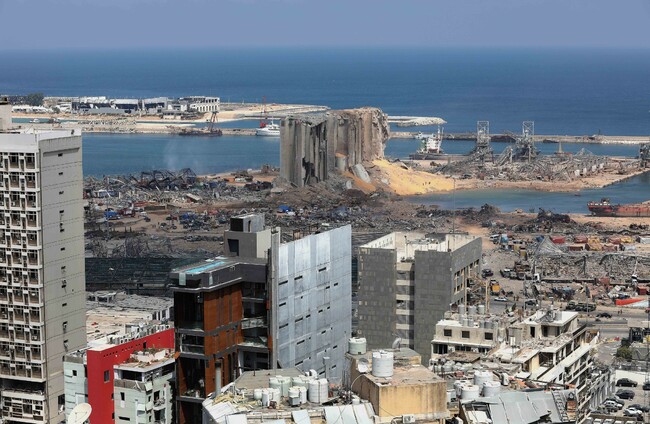
LEBANON’S LEADERSHIP faced growing rage after a massive explosion laid waste to large parts of central Beirut, with security forces firing tear gas at demonstrations yesterday evening as international leaders called for reform.
Shock has turned to anger in a traumatised nation where at least 149 people died and more than 5,000 were injured in Tuesday’s colossal explosion of ammonium nitrate in a portside warehouse.
To many Lebanese, it was tragic proof of the rot at the core of their governing system, which has failed to halt the deepest economic crisis since the 1975 – 1990 civil war and has plunged millions into poverty.
State media reported late Thursday that security forces fired tear gas in central Beirut to disperse dozens of anti-government demonstrators enraged by the blast.
Some in the small protest were wounded, the National News Agency reported.
Earlier, visiting French President Emmanuel Macron pledged to lead international emergency relief efforts and organise an aid conference in the coming days, promising that “Lebanon is not alone”.
But he also warned that the country – already in desperate need of a multi-billion-dollar bailout and hit by political turmoil since October – would “continue to sink” unless it implements urgent reforms.
Speaking of Lebanon’s political leaders, Macron said “their responsibility is huge — that of a revamped pact with the Lebanese people in the coming weeks, that of deep change”.
The International Monetary Fund, whose talks with Lebanon started in May but have since stalled, warned that it was “essential to overcome the impasse in the discussions on critical reforms”.
The IMF urged Lebanon – which is seeking more than $20 billion in external funding and now faces billions more in disaster costs – “to put in place a meaningful programme to turn around the economy” following Tuesday’s disaster.
Macron’s visit to the small Mediterranean country, a French protectorate during colonial times, was the first by a foreign head of state since the disaster.
The French president visited Beirut’s harbourside blast zone, a wasteland of blackened ruins, rubble and charred debris where a 140-metre-wide crater has filled with seawater.
As he inspected a devastated pharmacy, crowds outside vented their fury at the country’s “terrorist” leadership, shouting “revolution” and “the people want an end to the regime”.
Later Macron was thronged by survivors who pleaded with him to help get rid of their reviled ruling elite.
Another woman implored Macron to keep French financial aid out of the reach of Lebanese officials, accused by many of their people of rampant graft and greed.
“I guarantee you that this aid will not fall into corrupt hands,” the president pledged.
Lebanon recorded 255 coronavirus cases yesterday – its highest single-day infection tally – after the blast upended a planned lockdown and sent thousands streaming into overflowing hospitals.
The disaster death toll rose from 137 to 149 on Thursday evening, the health ministry said, and was expected to further rise as rescue workers kept digging through the rubble.

To embed this post, copy the code below on your site








have your say