Sign in. It’s quick, free and it’s up to you.
An account is an optional way to support the work we do. Find out more.
Sign in. It’s quick, free and it’s up to you.
An account is an optional way to support the work we do. Find out more.
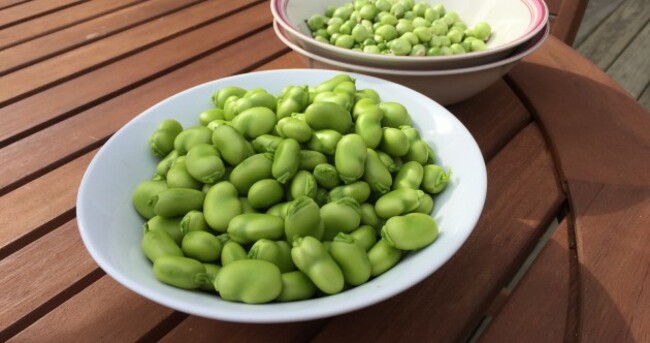

THIS WEEK’S VEG patch activity was mainly characterised by two activities – weeding and shelling peas – neither of which I am particularly fond of.
You will know from last week’s column that I am just back from two weeks holiday which had me away from the veg patch. The carpet of weeds that awaited me on my return was astonishing considering that I had the place more or less weed free before I left.
I am finding it to be a particularly weedy year and I can’t work out whether it’s down to the weather or the fact that there were more weed seeds than normal in last winter’s ground cover (seaweed and home-made compost). I am hoping that this is peak weed time and that things will improve as growth slows from August on. “Hands and Knees” weeding is just never fun..
Nothing quite like the flavour of a freshly picked pea
I am always somewhat conflicted in my views on homegrown peas – there is of course, nothing quite like the flavour of a freshly picked pea and I love that our kids get to walk up and down the rows in summer grazing on peas.
Increasingly though I’m of the view that while they are a wonderful thing to eat fresh they are just not worth the hassle as a ‘storage’ veg given the amount of labour that goes in to processing them for the freezer.
I estimate we spent up to 4 hours this week working on peas – picking them, shelling them, blanching and freezing. At one stage all four of us were involved, with seemingly never-ending buckets of peas in front of us. The result of all that labour? Just under 2kg of peas which would cost around €4 to buy from the supermarket freezer.
Still, there’s a certain amount of satisfaction to be had from knowing that there are about ten veg portions awaiting us (we froze them in individual 200g portions) for later in the winter when they will be greatly appreciated. And besides, the process of shelling peas can be soothing at times – therapeutic, meditative even. Though I am not sure the kids would agree…!
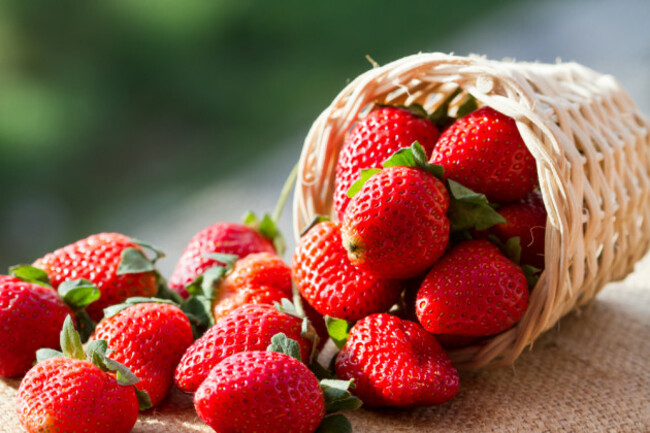
Things to do this Week – Strawberry Plant Care and Propagation
After strawberries have finished cropping, remove the old leaves with a secateurs and clean up the plants and surrounding soil. If you’ve been using a mulch of straw or black polythene to protect fruit, you can remove it now, to prevent a build-up of pests and diseases.
Strawberry plants replicate themselves quite naturally by sending out ‘runners’ which will take root in surrounding soil. It’s a good idea to remove these unwanted runners by snipping them off at the plant. If you want to create new plants to replenish your stock (strawberry plants generally only fruit well for three years), you can put the runner in to a small pot full of soil or compost and pin it down to encourage it to take root. When it has done so, snip the vine to separate it from the main plant.
Recipe of the Week – Pea and Bacon Gnocchi
The classic combination of peas and bacon gets an Italian makeover in this mouth-watering recipe from www.sketch.uk.com. Serves 2.
Ingredients:
200g peas, cooked and mashed
200g potatoes
120g flour
½ egg, whisked
Salt
To serve
50g smoked bacon, sliced
30g fresh peas, cooked
1 baby gem, roughly chopped
Directions:
Preheat the oven to 180C/350F/gas mark 4. Rub the potato skins with a little oil, then bake for around 45 minutes. Scoop out the flesh, then mash or put through a potato ricer. Blitz the peas to a puree in a blender, then mix in the potatoes. Add the flour, egg and a pinch of salt. Shape the mix into small oval shapes, then bring a pan of salted water to the boil.
Drop the gnocchi in, and as soon as they float to the surface, remove from the water. Put the bacon in a frying pan with the gnocchi, then cook until browned. Add the peas and shredded lettuce, cooking until just wilted, then serve.
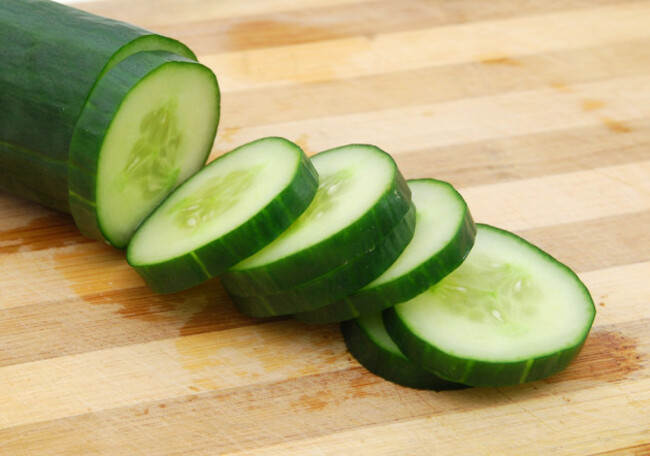
Tip of the Week – Pinching out Cucumber Sideshoots
I grow three to four cucumber plants in the polytunnel at home (which is more than enough for our family), while in the GIY Market Garden here in Arclabs our Head Grower Dermot Carey grows a full 40ft row of them in a commercial tunnel. Dermot was showing me this week how to get the most from the plants, encouraging fruit development rather than leafy growth.
He trains the plants up a length of twine hanging from the top of the polytunnel – when they reach the top of their support, he pinches out the growing point at the top of the plant. He also pinches out the end of each side shoot, leaving three to four fruits to develop on each side shoot. This helps to encourage more sideshoots which will produce bigger crops of cucumbers.
Michael Kelly is a freelance journalist, author of ‘GROW COOK EAT’ and founder of GIY.
GIY’s vision is for a healthier, more connected and more sustainable world where people grow some of their own food. Each year we inspire and support over 65,000 people and 1,500 community food-growing groups and projects around Ireland, and run food-growing campaigns, events and publications. www.giyireland.com
To embed this post, copy the code below on your site















have your say