Sign in. It’s quick, free and it’s up to you.
An account is an optional way to support the work we do. Find out more.
Sign in. It’s quick, free and it’s up to you.
An account is an optional way to support the work we do. Find out more.

A GROUP CALLING itself Overweight Haters Ltd has been handing out cards to women on the London Underground.
The cards, bearing the legend ‘Overweight Haters Ltd,’ read something like this:
Our organisation hates and resents fat people. We object to the enormous amount of food resources you consume while half the world starves. We disapprove of your wasting NHS money to treat your selfish greed. And we do not understand why you fail to grasp that by eating less you will be better off, slimmer, happy and find a partner who is not a perverted chubby-lover, or even find a partner at all.
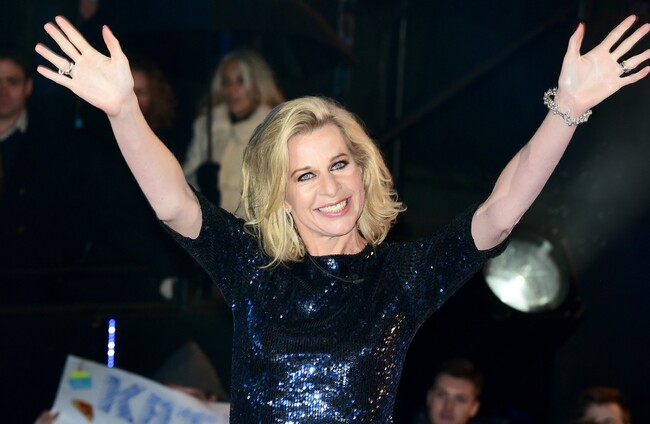
You see the bellies of the overweight are an easy landing pad from which commentators ranging from Katie Hopkins to unthinking politicians can score points while proving their own moral superiority.
Yes it’s very easy to shout “Eat less, move more”, without showing any real desire to understand why someone might end up on a path that is different to our own. Fat-shaming is clearly a big problem and it’s something you can see all over Twitter.
On top of this the fat are blamed for so many of our problems – from putting too much strain on the HSE to taking up too much space on flights. In fact the collective hatred for overweight people often borders on sadistic and there are people out there who seem to get a kick out of taunting the obese. But are people who experience discrimination or negative interactions based on their weight actually encouraged to lose the extra pounds? Of course not.
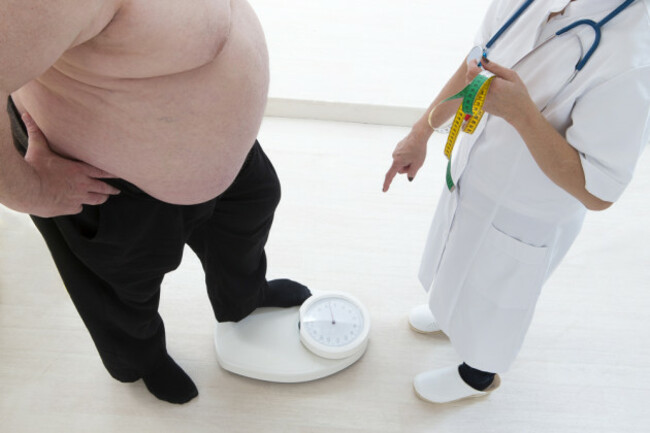
That’s according to a recent study out of University College London. “Our results show that weight discrimination does not encourage weight loss, and suggest that it may even exacerbate weight gain,” the study’s lead author, Sarah Jackson said.
“Previous studies have found that people who experience discrimination report comfort eating. Stress responses to discrimination can increase appetite, particularly for unhealthy, energy-dense food.” Oh, and: “Weight discrimination has also been shown to make people feel less confident about taking part in physical activity, so they tend to avoid it.”
The researchers surveyed 2,944 British adults over 50, finding a 5% slice who’d experienced something like “harassment, poor service in stores or restaurants, teasing and bad treatment from doctors or hospitals.” Those who experienced harassment gained two pounds on average; others lost 1.6 pounds.
Of course the researchers couldn’t establish 100% definite causality, but it dovetails nicely with what common sense already says. It also proves that casual or overt ill-treatment of overweight and obese people is hard to justify, whether that is coming from health-care professionals or online bullies.
Obesity is, in many cases, as much a mental illness as it is a physical one. For people who have not become obese due to an existing disability, it is mostly the result of disordered eating and drinking (numerous studies have linked fatness with anxiety and depression etc). It’s far too simplistic and selfish to attack a bunch of sick people simply because you happen not to like the way they look.
This is not to say we should tiptoe around the fat and avoid the subject; it’s that we should perhaps seek to find out the underlying causes that have made them that sick in the first place. Given that we are getting bigger every day, these are discussions we desperately need to have. We must talk about the health effects of obesity and the fact that in general terms, the larger people are, the less healthy they are. But let’s keep the judgments and personal abuse out of it.
It is time for a considered approach to talking about obesity, because otherwise there is a real danger of cruelty swallowing us all. If the public can accept the existence of a food disorder at one end of the spectrum, why not at the other end? Anorexia took some time to be taken seriously – the obese shouldn’t need to keep on waiting for us to wake up to their problems.
Lorraine Courtney is a freelance journalist. Follow her on Twitter @lorrainecath.
To embed this post, copy the code below on your site














have your say