Sign in. It’s quick, free and it’s up to you.
An account is an optional way to support the work we do. Find out more.
Sign in. It’s quick, free and it’s up to you.
An account is an optional way to support the work we do. Find out more.
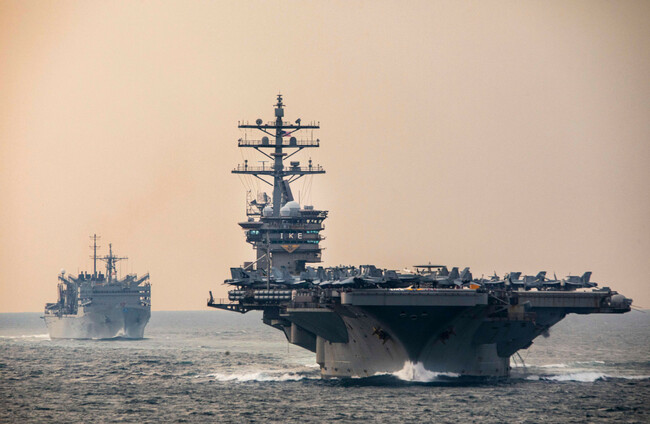
THE UNITED STATES has launched five military strikes against Houthi targets in Yemen.
The latest salvo comes after the Houthis announced yesterday that they had stuck an oil tanker, which they said was British but the US claimed was Danish.
The US Department of Defense said it had launched five “self-defence strikes” on the Middle-Eastern country that remains ravaged by almost a decade of fighting in a recently suspended civil war.
The Houthis control key territory in Yemen including the port of Hodeidah and the capital, Sana’a. The group has been launching attacks at ships passing through the Red Sea that have some connection to Israel, and now the US and UK, in an effort to support the Palestinian people in Gaza.
The Houthis have promised to continue their strikes until the siege of Gaza is lifted.
The strikes occurred at 3 pm and 8 pm Sanaa time, the US military said, and are part of a series of actions taken by the United States and its allies against the Houthis, aimed at halting the Iran-backed rebels’ repeated attacks that began last year in response to the Israeli assault on Gaza.
The five strikes included targeting “the first observed Huthi employment of a UUV (unmanned underwater vessel) since attacks began”, according to a statement from the US Central Command.
Another of the five targeted an unmanned surface vessel, or USV, essentially a floating drone. The use of such vessels has been comparatively rare.
The other three were aimed at anti-ship cruise missiles, the statement said.
The US said it had determined these targets “presented an imminent threat to US Navy ships and merchant vessels in the region,” adding that it struck the five to “make international waters safer.”
Most of the Houthi attacks have been intercepted by US and UK ships and so far there have been no deaths reported resulting from them.
The disruption has raised insurance premiums for shipping companies, forcing many to avoid the Red Sea, a vital route that normally carries about 12% of global maritime trade.
With reporting from AFP

To embed this post, copy the code below on your site













have your say