Sign in. It’s quick, free and it’s up to you.
An account is an optional way to support the work we do. Find out more.
Sign in. It’s quick, free and it’s up to you.
An account is an optional way to support the work we do. Find out more.
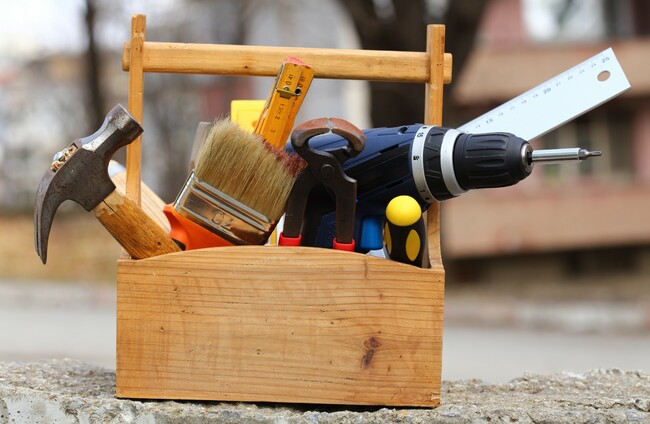
I’M A FIRM believer in the importance of having the right tools for the job on hand when you need them.
Whenever I’ve attempted DIY without the proper tools, it has always made the task more difficult and usually ended with me not being able to finish properly.
When it comes to the tools that are essential, it really depends on the kind of jobs you’re doing. In the interest of not rambling indefinitely, I’ve prepared this list with a few standard tasks in mind that the average homeowner might need to do, namely:
Hanging a shelf, picture, or hook
Assembling flatpack furniture
Small repairs around the home
So, if you’re looking for a stocking filler for the DIY enthusiast in your life, read on.
1. A cordless drill and drill bits
While this is obviously a big expenditure, a reliable drill with a decent set of drill bits and accessories can do the jobs of three or four other tools – and can halve the effort of trying to get by without a drill.
Go for cordless and, if your budget can stretch to it, get two of the rechargeable batteries so that you have a backup if you run out of power mid-job. It’s important to see and feel a drill in real life before you buy – check that you can grip it easily and that the weight is comfortable for you.
Features that are handy in a drill are an integrated spirit level, a light so you can see where you’re drilling, and a magnet to hold your screws. Woodies has an excellent range of brands and sizes, and usually have them on display for you to get a good look.
2. An interchangeable screwdriver
The number one tool I reach for most often is the interchangeable screwdriver – useful for everything from putting new batteries in toys to assembling furniture. Mine has Phillips heads (to fit screws with a cross on top), flat heads (to fit screws with a straight slot on top), and a bunch of Allen key attachments (for bolts with hexagonal heads), which cover most jobs.
Most of these interchangeable screwdrivers have a switch to reverse the rotation direction so that you can easily remove screws and bolts as well as put them in. I love this screwdriver that comes as an advent calendar.
3. A hammer
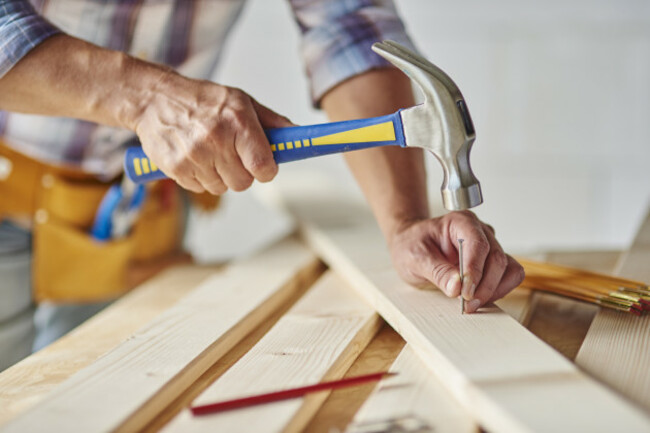
A hammer is essential for putting nails and hooks in walls, and tapping dowels into flatpack furniture. For versatility, go for a claw hammer so you can also take nails and hooks out of walls, and take lids off paint tins. It’s also handy for putting lids back on paint tins!
Weight is important here, too heavy and you’ll be taking lumps out of everything and too light just won’t be effective – 16oz is a good happy medium. A steel or synthetic handle will have a better grip than a wooden one and will last longer.
4. A pair of pliers
A pair of pliers is an invaluable tool around the house – primarily you’ll use them for any job that needs a strong grip, for example holding bolts while you tighten them, or bending stiff wire. Since pliers aren’t the type of tool you’d use every day, I’d recommend a multipurpose version so that it’s as useful as possible. At a minimum, combination pliers with a wire cutter built in are very practical, and even better is a Leatherman which features a multitude of tools.
5. A versatile saw
One small saw is really all you’ll need for basic household DIY, and you’ll mainly use it when trimming something that comes as one-size-fits-all, such as a curtain pole. I find a hacksaw will suit most jobs; it won’t give you a perfectly straight edge or a nice fine cut, but it’ll get the job done and the blades are replaceable, so one decent one will last you years.
6. Tape measure
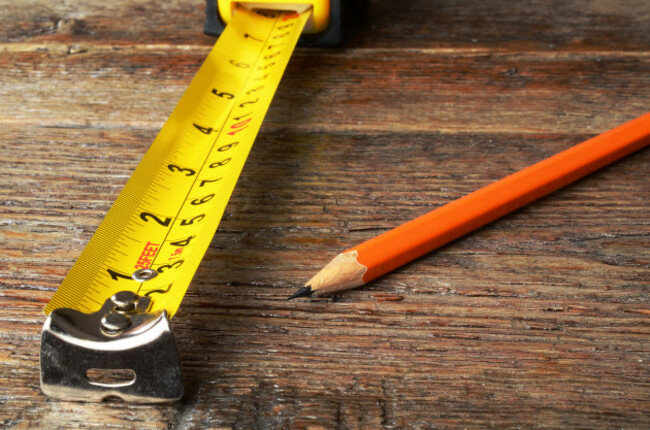
While vital for checking size, position, and figuring out if something will fit in your boot, there’s nothing too complicated about tape measures. A retractable one will stay nice and tidy in your toolbox, the standard five meter size should be enough for most jobs, and a clip to attach it to your belt or pocket is a welcome feature.
7. Spirit Level
You’ll absolutely need a spirit level for making sure that wall shelves or pictures with more than one fixing are straight, but you’ll also find it really handy for checking that furniture or appliances with adjustable feet are level. An integrated ruler and a magnetic edge are great features, and this dinky little one also features a laser to help you mark out gallery walls or sequences of frames.
8. Sundries
It’s a terrible annoyance to begin a DIY job and realise that you’re missing a key item, so I recommend having a selection of sundries on hand at all times. The main bits and bobs I always keep in my toolbox are a selection of screws, nails, and picture fixings all in various sizes, sandpapers in a range of grades, some masking tape or frog tape, rawl plugs (for holding screws in walls), wood glue, heavy duty scissors, a pair of sturdy gloves, safety goggles, a dust mask, and last but by no means least, a pencil with an eraser on the end.
Always ensure that you know what you’re doing before attempting any DIY jobs – working with tools is dangerous and you can never be too careful.
Follow Gráinne @parsekus on Instagram for more home hacks and décor inspiration.

To embed this post, copy the code below on your site






have your say