Sign in. It’s quick, free and it’s up to you.
An account is an optional way to support the work we do. Find out more.
Sign in. It’s quick, free and it’s up to you.
An account is an optional way to support the work we do. Find out more.
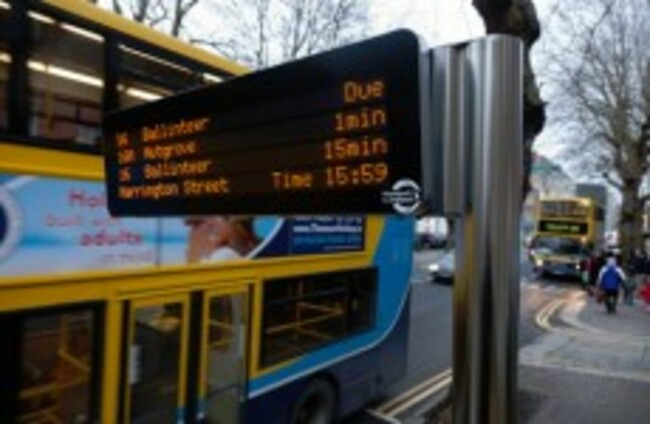
DUBLIN BUS PASSENGERS will soon be able to check the live position of their bus via text and a smartphone app.
Public transport minister Alan Kelly today announced that the current trial of real-time bus timetables in Dublin is to be extended to Cork, with the Dublin scheme extended to include over 300 of those signs.
To supplement the fleet in Dublin, a live text service is to launch in autumn allowing users to receive a live update of how far away their bus is. A smartphone app with the live positions of the bus fleet will launch soon afterward.
“With the new developments being rolled out in the coming months, gone will be the days of staring into the distance wondering when the bus is going to come,” Kelly said.
We will have in the region of 500 real-time bus signs displayed between Dublin and Cork by year’s end. We will be commencing testing in Cork shortly, which will lead to a rollout after that.
The trial of the real-time bus information signs is also to be extended to Galway, Waterford and Limerick next year.
The smartphone apps for Dublin will feed from a public Application Programming Interface (API), which will also allow creative web programmers to concoct clever tools like this one from London.
When the whole nationwide system is complete, it is envisaged that anyone anywhere in the country will be able to use a single text number to find the proximity of buses near them.
“The idea is that you can text your bus stop number to a single number, and you will then receive a text telling you how long the bus will be,” Kelly explained.
The scheme will build on Bus Éireann’s existing When’s My Bus website, which tracks the live positions of almost all the vehicles in its fleet nationwide over the web and via SMS.
More information on the plans can be found at the Transport for Ireland website.

To embed this post, copy the code below on your site












have your say