THE FOUNDER OF whistle-blowing website WikiLeaks, Julian Assange, will today make his first public statement since seeking political asylum in the Ecuadorian embassy in London two months ago.
WikiLeaks says its founder and editor-in-chief will make a statement “in front of the Ecuadorian embassy” at 2pm. Assange has been in the embassy for 61 days now.
The BBC has cited comments from Ecuador’s president Rafael Correa, who said Assange could potentially agree to co-operate with authorities and have himself handed over to police for extradition to Sweden in exchange for open pledges that he would not be then passed onto the United States.
If the WikiLeaks statement is taken literally, and Assange makes his statement “in front of” the embassy, he may escalate already fraught tensions between Ecuador and the UK.
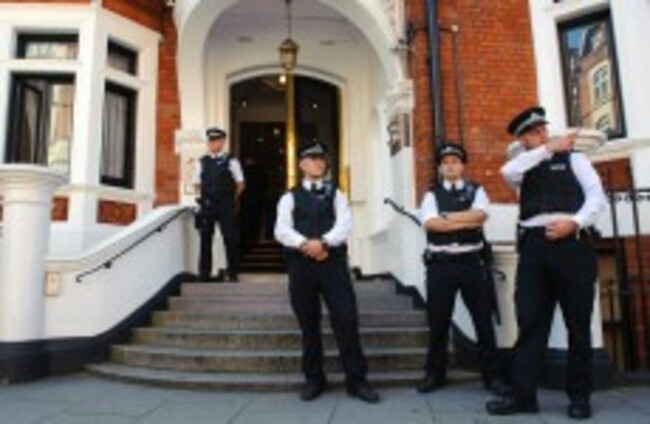
Under classical diplomatic theory, British police have no jurisdiction inside the embassies of other countries – but if Assange was to step outside, he could potentially veer into ‘British’ territory and allow himself to be arrested.
Diplomatic tension
Tensions between the two countries took a turn for the worse during the week, when foreign secretary William Hague said Britain could revoke the Ecuadorian embassy’s diplomatic status – which would free police to enter and arrest Assange.
As a result, Assange may give his statement from a window of the ground-floor apartment which serves as the Ecuadorian embassy in Knightsbridge. Alternatively, a doorstep statement may directly proceed a surrender to British police.
The Australian native entered the embassy in June to seek political asylum, after London’s Supreme Court dismissed his appeal against an extradition to Sweden.
Assange is wanted there for questioning over alleged sexual offences, which he denies, but has refused to travel to Sweden on the grounds that he may then be extradited to the United States following WikiLeaks’ publication of sensitive war documents and diplomatic cables.
Though the government of Ecuador decided to grant asylum to Assange earlier this week, the 41-year-old remains unable to leave the embassy and physically travel to Ecuador – because doing so would require him to return to British territory, where he would be arrested.
The difficult practicalities of transporting him to Ecuador may mean Assange is more likely to hand himself over to British authorities, as long as he is given assurances about his future treatment.
In depth: Assange faces boredom – and stress – as standoff continues


Comments (52 Comments)