Sign in. It’s quick, free and it’s up to you.
An account is an optional way to support the work we do. Find out more.
Sign in. It’s quick, free and it’s up to you.
An account is an optional way to support the work we do. Find out more.

IN THE BUILD-UP to December’s Budget the Croke Park Agreement on public sector pay and reform is sure to dominate as the government looks to make a €3.5 billion fiscal adjustment.
With pay in the public sector protected by the agreement in return for reforms to working practices Ministers in all government departments will have to search elsewhere for expenditure savings as part of €2.25 billion in spending cuts required in the Budget.
It is is a difficult task but the government has committed to honouring the agreement negotiated by its predecessor with the so-called social partners but what do all the individual political parties think? This week, we asked them.
We sent the following four questions to all the political parties and a smattering of independents in a bid to ascertain their exact views on the agreement:
1. Would your party honour the Croke Park Agreement in its current form until it runs out in 2014?
- If yes, briefly (in 100 words max) explain why…
- If no, briefly (in 100 words max) explain why…
2. Can you identify an aspect of the Croke Park Agreement that has worked well?
3. Can you identify an aspect of the Croke Park Agreement that has not worked well?
4. Explain, in a maximum of 300 words, what changes (if any) your party would seek to make in any extension/successor to the Croke Park Agreement?
Here is what they said in response in order of the size of their Dáil numbers:
1. Would your party honour the Croke Park Agreement in its current form until it runs out in 2014?
As the Taoiseach has already indicated, it is the intention of this Government (and Fine Gael, as a constituent part of that Government) to honour the agreement, while striving to accelerate the savings and efficiencies which are attainable within its parameters.
It is Fine Gael’s view that, while this agreement was signed by the previous Government, honouring agreements sets an important precedent. This is especially true if one may be negotiating with the other party (or parties) in an existing agreement at some point in the future.
Not applicable
2. Can you identify an aspect of the Croke Park Agreement that has worked well?
Some of the flexibility in work practices has been very constructive. For example, the Gardai have undertaken new rosters via the Croke Park Agreement. This is an issue which had been discussed for many years prior to Croke Park, but had never been agreed or implemented.
3. Can you identify an aspect of the Croke Park Agreement that has not worked well?
The original framing of the agreement when it was drafted left far too much ambiguity with regard to what constitutes core pay, and what can reasonably be considered to be additional allowances, bonuses, increments, etc
4. Explain, in a maximum of 300 words, what changes (if any) your party would seek to make in any extension/successor to the Croke Park Agreement?
A successor to the Croke Park Agreement would seem to be something that is worth considering on its merits. This is in terms of preserving stability, maintaining industrial peace, and helping to ensure an ambitious and constructive reform of the public service (in terms of numbers, work practices, realistic and viable pay and pension conditions, more effective and efficient services, etc.)
It would clearly be necessary to examine issues that were not dealt with effectively in the original agreement. These include what constitutes core pay, allowances, bonuses, privileges and perks. Many of these conditions were originally introduced when the country was in a very different economic situation, and it would be crucial to frame any new agreement within the context of Ireland’s current economic realities. This would help to maintain a continuing transition to a more effective, efficient and sustainable public service.
1. Would your party honour the Croke Park Agreement in its current form until it runs out in 2014?
Yes.
The Croke Park Deal is doing what it set out to do. it has enabled the Govt to drive genuine reform bring efficiency and reduce costs in the delivery of public services. We have done this while at the same time ensuring industrial peace in the civil and public service.
2. Can you identify an aspect of the Croke Park Agreement that has worked well?
There are many aspects of Croke Park that are working well. For example although there are fewer members of An Garda Siochana, thanks to rostering and scheduling reforms there are 25 per cent more Gardai out on the beat.
3. Can you identify an aspect of the Croke Park Agreement that has not worked well?
We would certainly like to see more reforms delivered sooner rather than later.
4. Explain, in a maximum of 300 words, what changes (if any) your party would seek to make in any extension/successor to the Croke Park Agreement?
The successor to the Croke Park agreement is some way off, and no party to negotiations will show their hand at this stage. However, as far as the Labour Party is concerned, any deal should continue to provide for reform, efficiencies and cost reductions, and should be fair both to users of public services and to those who provide them.
1. Would your party honour the Croke Park Agreement in its current form until it runs out in 2014?
The Croke Park agreement as initiated was good for both the taxpayer and public sector employees though the Government are failing to implement it adequately.
Those who call for the Croke Park agreement to be renegotiated or unilaterally scrapped by the Government are essentially calling for it to be replaced by the same initiatives which it seeks to implement: more efficient work practices, reducing premium pay and a phased reduction in employee numbers.
The benefit of the agreement is that it allows the very necessary changes to be implemented in an agreed manner without the threat of strike action hanging over the public sector. We continue to support the principles under pinning the agreement.
2. Can you identify an aspect of the Croke Park Agreement that has worked well?
The extension of the working day within the HSE so that it runs from 8.00am to 8.00pm and the roll out of new Garda rosters are good example of the practical benefits that the agreement can deliver to the community.
It is important that we actively measure performance in key areas such as hospital waiting lists, the time taken to process social welfare/medical card applications (including appeals) and the delivery of services by local authorities in order to get an accurate picture about the impact the agreement is having on the ground.
The Implementation Body report in its current form is not providing a complete picture of the implementation of the agreement.
3. Can you identify an aspect of the Croke Park Agreement that has not worked well?
The failure to achieve savings in respect of allowances is very regrettable. Most of the reduction in combined public service pay and pensions bill occurred in 2009 and 2010. Since then there has been a considerable slowing in the pace of implementation of the agreement this year such that the recent implementation body report indicates that the combined pay and pensions bill will actually increase this year when compared to last year.
We believe the lack of a structured skills assessment process is hampering staff redeployment within the public service. While redeployment and flexibility are part of the agreement it is often the case that a person can find themselves re-assigned to an role which does not match their skill set. A more rigorous matching of available skills with identified needs in addition to training would greatly improve the efficiency of the overall public service.
4. Explain, in a maximum of 300 words, what changes (if any) your party would seek to make in any extension/successor to the Croke Park Agreement?
A straightforward extension of the Croke Park agreement along the lines of current deal is unlikely to achieve any additional benefit over and above what will have been delivered by its completion.
If an extension is considered, very ambitious targets will be required in respect of productivity gains from reform and re-organisation. The concept of shared service models across public bodies for functions such as HR, IT and payroll will have to imbedded in any agreement.
We also need more pressure on public service managers to deliver savings in areas within their responsibility.
In addition where possible services should be delivered on line. This has already been successfully done in the case of revenue and motor tax and should be the norm to free up scarce resources.
We also need to look at introducing rigorous performance management systems in sectors where they currently are not in place, for example the education sector or Gardaí.
1. Would your party honour the Croke Park Agreement in its current form until it runs out in 2014?
2. Can you identify an aspect of the Croke Park Agreement that has worked well?
3. Can you identify an aspect of the Croke Park Agreement that has not worked well?
4. Explain, in a maximum of 300 words, what changes (if any) your party would seek to make in any extension/successor to the Croke Park Agreement?
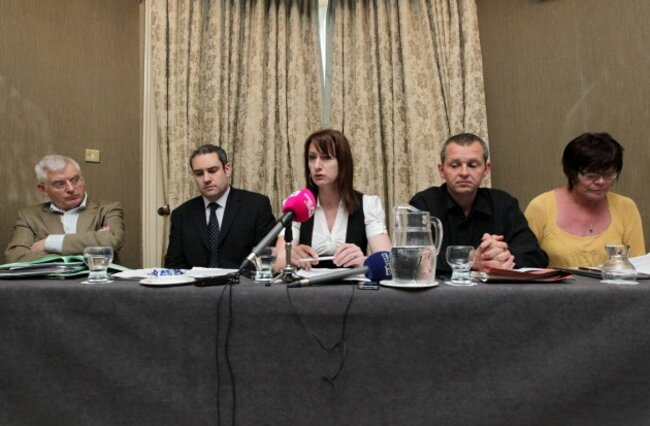
In response to our questionnaire, Sinn Féin, through its deputy leader Mary Lou McDonald, sent this:
One of Sinn Féin’s primary criticisms of the agreement has been the failure of Government to use Clause 1.28 to tackle excessive pay of office holders, senior management across the public sector, including City and County Managers, VEC Chiefs and CEO’s of state agencies who continue to enjoy salaries in excess of many of their European counterparts.
Low and middle income public sector workers have seen their pay significantly reduced over the last two years. New entrant teachers will now earn €11,000 less each year than their similarly qualified colleagues recruited in 2010. and let’s not forget that at least 10% those in receipt of Family Income Supplement are low income public sector workers yet Secretaries’ General are still paid €200,000 each year.
There are mechanisms within the Croke Park Agreement to once and for all reform the inequitable pay structures within the civil and public sector but to date Labour and Fine Gael like Fianna Fáil and the Green’s before them have refused to take on the issue of high pay.
Low and middle income workers view the agreement as their last line of defence against a right wing Government happy to tap their meagre incomes for savings whilst protecting those at the top of the civil and public sector. The Minister for Public Expenditure and Reform could reduce the public sector pay bill by €265m if he capped high level pay.
Public sector workers are generally working harder, longer and for less money – particularly those at the frontline who have seen their numbers depleted over the last 19 months. Senior management have finally acknowledged the need for real modernisation of the civil service, the challenge for them now is the delivery of a 21st century public service fit for purpose that delivers first world services for citizens as and when they need them.
We put it to the party that it might be in its best interests to answer the questions directly as other parties had done but we were later told that the above answered the questions we had put.
We put the questions to both the ULA’s People Before Profit element through Richard Boyd-Barrett who did not return the questionnaire and to the self proclaimed United Left Alliance TD Clare Daly who did not return our call. We also attempted to reach the Workers and Unemployed Action Group TD Seámus Healy who did not return our call and People Before Profit TD Joan Collins did not return the questionnaire at the time of publication.
We forwarded the questions to the Socialist Party:
1. Would your party honour the Croke Park Agreement in its current form until it runs out in 2014?
If yes, briefly (in 100 words max) explain why…
If no, briefly (in 100 words max) explain why…
2. Can you identify an aspect of the Croke Park Agreement that has worked well?
3. Can you identify an aspect of the Croke Park Agreement that has not worked well?
4. Explain, in a maximum of 300 words, what changes (if any) your party would seek to make in any extension/successor to the Croke Park Agreement?
And we were sent this response from a member of its National Executive Committee:
The Socialist Party opposed the Croke Park Agreement. We campaigned against the Agreement on the basis that it would have a detrimental impact on public services and on the pay and conditions of public sector workers.
By the end of the agreement 40,000 public sector jobs will have been lost at a time of the worst mass unemployment in the history of the state. Public sector workers pay has been slashed by up to 19% and now allowances and increments, (which are part of core pay and on which public sector workers depend), are under threat. Public services have been decimated by the €25 billion of austerity cuts. Croke Park has been the mechanism by which the government has implemented these vicious attacks on jobs, pay and services whilst the pro-social partnership union leaders have done absolutely nothing to stop them, hiding behind the lie that without the Croke Park Agreement things could be much worse.
All of this has been done in order to make public sector workers and millions of ordinary working class people who depend on public services pay for the bailout of the property developers, the bankers and to repay the super-rich bondholders. If the Socialist Party was in government we would scrap the Croke Park Agreement and instead restore public sector workers pay to pre Agreement levels and implement a massive programme of public works to take hundreds of thousands of the dole and end the staff shortages in the health service, education and social services.
In 2014 the Socialist Party will be campaigning against the signing of a new deal. Instead the trade union leaders should prepare for a massive campaign of industrial action including strike action by public sector workers to defend pay and conditions and to fight any further job cuts in the public sector. The ICTU leaders should follow the example of the 50% of householders who have refused to pay the Household Tax. Militant resistance by the unions is needed to stop the government and the Troika’s austerity programme.
The British TUC has organised mass demonstrations on 20 October in London, Glasgow and Belfast against the ConDem government’s austerity attacks. A motion calling for a one-day general strike in Britain against austerity and the attacks on the public sector was passed at last week’s TUC congress. This is the type of action we need in Ireland. There is massive anger across society against austerity – the right wing trade union leaders should abandon their failed “partnership” approach and instead harness this anger into a mass movement against austerity.
We asked the following questions in an attempt for clarification on the original response:
This is the response that we got:
As I said already, “If the Socialist Party was in government we would scrap the Croke Park Agreement and instead restore public sector workers pay to pre Agreement levels and implement a massive programme of public works to take hundreds of thousands of the dole and end the staff shortages in the health service, education and social services.”
So we would get rid of a bad agreement in which there is nothing worthwhile to honour and replace it with better conditions for public sector workers. And we will be actively campaigning across all unions to get trade union members to vote against the signing of a successor to the Croke Park Agreement if that is what is proposed.
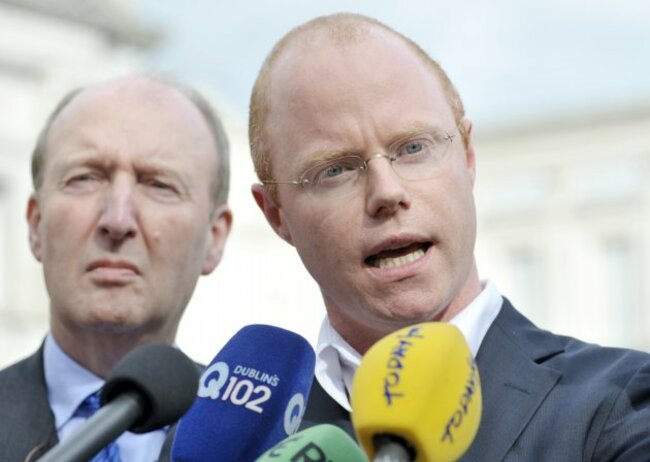
We also reached out to a number of independent TDs including Wicklow TD Stephen Donnelly who responded:
1. Would you honour the Croke Park Agreement in its current form until it runs out in 2014?
No – it does a disservice to the country and to public servants.
The Croke Park deal is fundamentally flawed in two ways.
First, it sacrifices frontline jobs for wages for existing employees. Some public servants cannot absorb further cuts, some can. Instead of cutting higher-end wages, it depletes our schools of teachers, our hospitals of nurses and our streets of Gardai. This closes off jobs to school and college leavers.
Second, it anchors reform against today’s working practices. Let’s take schools as an example. Ireland has seen the biggest fall in educational standards for 15 year olds in the developed world in a decade. Croke Park gradually improves the current system when we need a new one. We are in a Morris Minor competing with other countries in BMWs. The Croke Park deal puts new tyres of the Morris Minor when we need is to scrap the car and get behind the wheel of something more modern, more powerful, and more fuel efficient.
2. Can you identify an aspect of the Croke Park Agreement that has worked well?
Changes to rostering, allowing for more flexible deployment of staff over the working week and between locations.
3. Can you identify an aspect of the Croke Park Agreement that has not worked well?
The entire, prescriptive approach is incorrect – it doesn’t have the buy-in of public servants, as they were not meaningfully consulted about what needed to change.
4. Explain, in a maximum of 300 words, what changes (if any) you would seek to make in any extension/successor to the Croke Park Agreement?
My answer may read like I’ve swallowed a Dilbert cartoon. But there’s a good reason. I specialised in large scale organisational change before running for office.
Croke Park is an outdated, flawed approach to improving the performance and cost effectiveness of public sector organisations. It centrally dictates detailed changes to hundreds of thousands of public servants who were not consulted on them, and many of whom do not believe in what is being asked of them. The approach is failing and will continue to fail. The proof of this is in the repeated public references to senior managers resisting implementation of changes.
The objective of public sector reform is to build organisations to provide services to citizens which are: i) Designed according to the needs of citizens; ii) High quality; iii) Cost effective; iv) Transparent and accountable.
Some parts of the public sector meet these criteria, but many do not. Why is this, when there are so many brilliant, hard-working and patriotic public servants? Why are educational standards going backwards when we have excellent teachers and principals?
Here’s why: Imagine spending ten years in a system that stated: ‘No matter how hard you work, you will not be rewarded. No matter how little you do, you will not be penalised (but you will be if you rock the boat). That eejit you work with will be promoted before you, because he’s worked here longer.’ This culture turns idealism and hard work into frustration and anger, and ultimately to people doing less than they are capable of.
So how do you change it? You listen to the people you pay to deliver your services. You ask them what type organisation they want to work for. You ask them what’s involved in getting there. You agree a plan, you provide support, and then you hold them to account for delivery. It’s nuanced and it needs to be done with skill and care. But it works. It is an incredible thing to have worked with public servants abroad to help them rebuild organisations that let them be the best they can be and to be proud of the services they provide and what they contribute to their country. The same is possible and badly needed in Ireland.
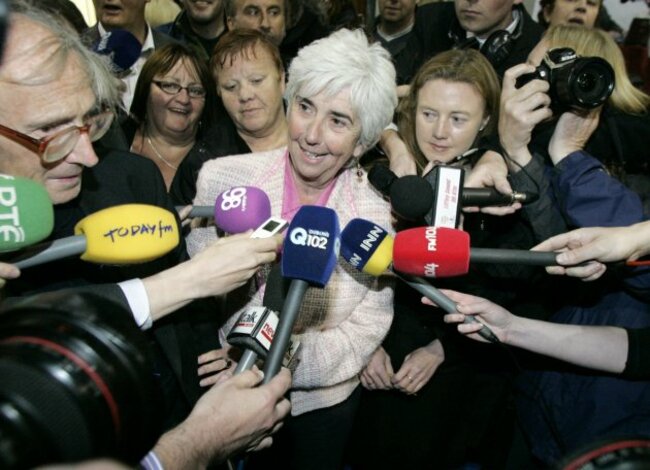
We also asked Dublin Central TD Maureen O’Sullivan who in response to the questions:
1. Would your party honour the Croke Park Agreement in its current form until it runs out in 2014?
2. Can you identify an aspect of the Croke Park Agreement that has worked well?
3. Can you identify an aspect of the Croke Park Agreement that has not worked well?
4. Explain, in a maximum of 300 words, what changes (if any) your party would seek to make in any extension/successor to the Croke Park Agreement?
Sent this:
I want to acknowledge that this is an agreement that was worked out in great detail by recognised unions on behalf of over 200,000 employees with recognised government of the day. It was agreed in a particular time which didn’t have a complete picture of how Irish society would be in crisis now. As an Independent, committed to the principle of fairness and social justice there are concerns – yes it is an agreement which should be honoured for the duration of the agreement, savings have been made but we are in a crisis. Public service reform has happened but at a slow pace.The burden of austerity is not being felt equitably – including the public service as it is the lower and middle income groups suffering the most. There are public servants on very high salaries where cuts are not as keen. The whole system of expenses continues – I have said all expenses, in this crisis, should be halved. Younger, probably more adept I.T. people, are largely cut off from entering the public service or are there on much lower levels of pay which could impact on meaningful reform.
Worked well – there is social stability and security for a good number of lower and middle income groups; public support services have been maintained, though often diminished and inadequate. There have been some efficiencies and modernisation, some reduction in unnecessary spending, greater effective automation of functions in payroll, reporting and some reduction in excessive and expensive, time consuming report publishing. Though as a former secondary teacher the amount of bureaucracy required is impacting on the real work of class engagement for teachers.
It is not efficient to look on public services in short term financial terms only as this will defer necessary costs to address medium to long term damage into the future:
- Another downside is to create pariahs out of virtually all public servants
- Other streams of income are being ignored – closing tax loopholes, collecting corporation taxes in full.
Changes sought: A more equitable distribution of financial restraints that place equality, fairness, social justice at the heart of the decisions. Re-inclusion in agreements of other social partners – community and voluntary sectors. Target the plethora of untaxed outdated public service allowances; over-all a fairer and more equitable tax system across the board.

To embed this post, copy the code below on your site














have your say